
Castelvetrano Olives
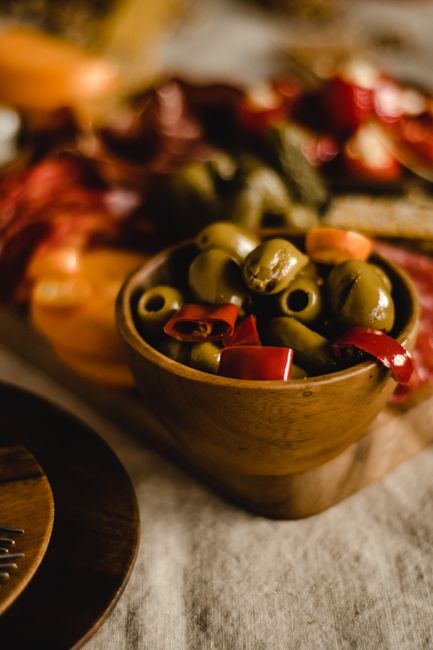
Castelvetrano olives are bright green, mild-flavored table olives from the Nocellara del Belice cultivar, traditionally cured near the town of Castelvetrano in Sicily. They're brined for a shorter time than most green olives, which keeps them from developing the sharp, bitter edge typical of Manzanilla or Picholine varieties. The result is a firm, meaty olive with a buttery, almost sweet flavor that's earned them the nickname 'butter olives.'
Varieties
Castelvetrano technically refers to a place and curing method, not a distinct olive species; the fruit is the Nocellara del Belice cultivar. This is different from Cerignola olives, which come from Puglia and are typically larger with a firmer bite, and from standard Sicilian green table olives cured longer and more assertively.
Buying tips
Look for a bright, uniform grass-green color and firm, unblemished skin; dull or yellowish olives have likely been over-brined or stored too long. Pitted versions are convenient for snacking or salads, but whole olives with pits generally have better texture and flavor for cooking.
Substitutes
Cerignola olives (green) — 1:1
Larger and meatier with a similarly mild flavor, though less buttery. A close visual match on an antipasto platter.
Picholine olives — 3:4
Firmer, saltier, and more assertively tangy. Use slightly less to avoid overpowering a dish built around Castelvetrano's mildness.
Green Manzanilla olives — 1:1
More brine-forward with a faint bitterness; common at grocery olive bars and easy to find in a pinch.
Lucques olives — 1:1
French, crescent-shaped, and similarly mild and buttery, though smaller and harder to find outside specialty shops.
Storage
Unopened jars keep at room temperature per the label until opened. Once opened, keep olives submerged in their brine in a sealed container in the refrigerator and use within about two weeks. If bought loose from an olive bar, refrigerate immediately in a covered container with enough brine or olive oil to cover them.
How to use
Serve whole as part of an antipasto spread, toss into salads and grain bowls, stir into pasta with lemon and capers, or add to a martini in place of a standard cocktail olive. They also hold up well roasted alongside chicken or fish, where the heat softens their bite and deepens the buttery flavor.
What it pairs with
Pairs well with sharp or salty cheeses like feta and pecorino, citrus segments, fennel, white beans, and dry white wine or gin. Their sweetness also balances spicy cured meats like soppressata.
Nutrition
Like most cured olives, Castelvetranos are high in monounsaturated fat and sodium from the brine. A quarter cup runs roughly 100-120 calories, mostly from fat, so they're best treated as a flavorful garnish rather than a base ingredient.
FAQ
Why do Castelvetrano olives taste so mild compared to other green olives?
They're cured for a shorter period in a milder brine, which preserves more of the olive's natural sweetness and prevents the bitterness that develops with longer fermentation.
Can you eat the skin on Castelvetrano olives?
Yes, the skin is thin and tender and is meant to be eaten along with the flesh; only the pit needs to be removed.
Do Castelvetrano olives work in a martini?
Yes, though they shift the drink's flavor toward sweet and buttery rather than sharp and salty, so expect a noticeably milder garnish than a standard green olive.
How can you tell if a jar of Castelvetrano olives has gone bad?
Cloudy or foamy brine, a sour smell beyond the normal brine tang, or soft, mushy flesh are signs to discard them, even if the jar is within its printed date.
Have castelvetrano olives on hand? Find recipes with our Recipe Generator →