
Chambord
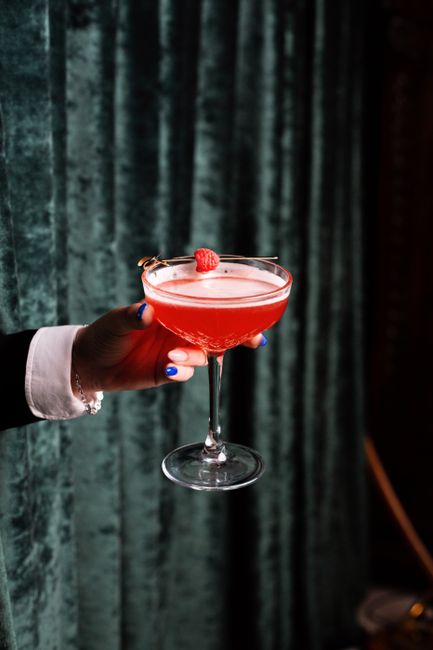
Chambord is a French black raspberry liqueur made from raspberries and blackberries macerated with Madagascar vanilla, citrus peel, honey, and a small amount of cognac, bottled at 16.5% ABV. It's distinct from generic raspberry liqueurs in that it's a specific branded product with a deep, almost jammy sweetness and a slightly herbal, honeyed finish rather than a straight fruit-syrup flavor.
Varieties
Chambord refers to one specific branded liqueur, not a style. Generic bottles labeled 'raspberry liqueur' or 'crème de framboise' vary widely in sweetness, color, and alcohol content, so results can differ noticeably from Chambord even at the same ratio.
Buying tips
Authentic Chambord comes in a round black glass bottle with a distinctive gold crown medallion on the neck; it's usually shelved with liqueurs rather than wine. A 750ml bottle costs noticeably more than generic raspberry liqueurs, which is the tradeoff for its rounder, less syrupy flavor.
Substitutes
Raspberry liqueur (generic, e.g. Chinon or a store-brand crème de framboise) — 1:1
Close in flavor family but usually thinner and less complex; add a few drops of vanilla extract to approximate Chambord's rounder finish.
Crème de Cassis — 1:1
Black currant instead of raspberry, so the fruit note shifts, but the deep purple-black color and sweetness level are a close match for cocktails.
Framboise eau-de-vie (raspberry brandy) — 3:4
Much drier and more alcohol-forward than Chambord; use slightly more and add a teaspoon of simple syrup per ounce to match the sweetness.
Raspberry syrup plus vodka — 1:1 total, mixed 3 parts syrup to 1 part vodka
A non-liqueur workaround for recipes where the alcohol content isn't critical; keeps the sweetness and color but loses Chambord's honey and vanilla depth.
Grenadine — 1:1
Non-alcoholic and much less complex, but works in a pinch for color and sweetness in cocktails where Chambord is a minor component.
Storage
An unopened bottle keeps indefinitely in a cool, dark cabinet. Once opened, Chambord's high sugar content lets it stay stable at room temperature for many months, but refrigerating it after opening preserves the fresh raspberry aroma and slows color fading; use within about a year.
How to use
Chambord is almost always used in small pours, typically a half ounce to an ounce, in cocktails like the French Martini, Kir Royale, and Chambord Royale (a splash topped with champagne). It also works drizzled over cheesecake, folded into whipped cream, brushed onto cake layers, or stirred into melted dark chocolate for a ganache.
What it pairs with
Pairs well with dark chocolate, vanilla, champagne or other sparkling wine, and citrus like lemon or orange. It also complements cream-based desserts and mild soft cheeses like brie.
Nutrition
Chambord is sugar-heavy, roughly 100 to 110 calories per 1.5-ounce serving, with no fat or protein. It's meant to be used in small measured amounts rather than poured freely.
FAQ
What is Chambord actually made of?
Red and black raspberries, blackberries, Madagascar vanilla, citrus peel, honey, and a small amount of cognac, blended into a sweet liqueur at 16.5% ABV.
Is Chambord the same thing as raspberry liqueur?
It's a specific brand of raspberry liqueur, but it's rounder and less syrupy than most generic raspberry liqueurs due to the added honey and vanilla.
Does an open bottle of Chambord need to be refrigerated?
Not strictly, since its sugar content keeps it stable at room temperature, but refrigeration slows flavor fading and is recommended if it will sit for more than a few months.
What's the best substitute for Chambord in a French Martini?
Crème de Cassis at a 1:1 ratio holds up best in that cocktail because it matches Chambord's deep color and sweetness even though the fruit flavor shifts from raspberry to black currant.
Can Chambord be drunk on its own?
Yes, it's often served chilled as a digestif or over ice, since its sweetness and lower proof make it approachable without mixing.
Have chambord on hand? Find recipes with our Recipe Generator →