
Coulis
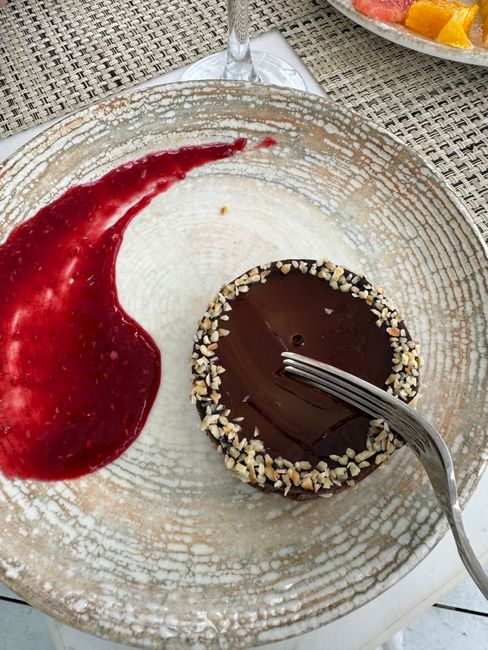
Coulis is a smooth, pourable sauce made by pureeing fruit or vegetables and then straining out the seeds, skins, and fibers. The name comes from the French verb couler, meaning to strain or flow, and that's the defining trait: a true coulis has no pulp or solid bits left in it, unlike a compote or jam. Fruit coulis (raspberry, mango, passionfruit) are the most common and are used to plate desserts, but savory versions made from roasted red peppers or tomatoes show up under grilled fish and meats.
Varieties
Fruit coulis is the most common form, but savory versions made from roasted vegetables like red peppers or tomatoes are standard in French and Mediterranean cooking, used as a sauce rather than a dessert topping. Both follow the same technique of pureeing and straining.
Buying tips
Pre-made coulis is sold in small bottles or jars near the dessert sauces or with specialty baking ingredients. Check the ingredient list: a good coulis should list mostly fruit and sugar, not corn syrup and thickeners, which give a gluey texture instead of a naturally silky one.
Substitutes
Fruit puree, unstrained — 1:1
Same flavor and body, but leave visible seeds and pulp; fine for rustic plating, not for a clean drizzle.
Fruit preserves or jam thinned with water or lemon juice — 3 tablespoons jam plus 1 tablespoon water per 1/4 cup coulis
Warm the jam slightly so it loosens, then thin gradually; strain if the jam has chunks of fruit.
Bottled dessert sauce (raspberry or mango syrup) — 1:1
Usually sweeter and thinner than a fresh coulis; cut with a squeeze of lemon juice to balance the sugar.
Compote, pureed and strained — 1:1
Simmer fruit with a little sugar and water until soft, blend, then pass through a fine sieve to remove skins and seeds.
Vinaigrette-style reduction (for savory coulis) — 1:1 by volume
For roasted pepper or tomato coulis, a reduced pan sauce blended smooth can stand in, though it will taste less pure and more savory-forward.
Storage
Fresh coulis keeps in a sealed container in the refrigerator for about 4 to 5 days. It also freezes well for up to 3 months; pour into an ice cube tray for portioned discs, then transfer to a freezer bag once solid. Thaw in the refrigerator before using.
How to use
Drizzle over cheesecake, panna cotta, ice cream, or pancakes for a bright, tart contrast to rich, sweet dishes. Swirl into yogurt or oatmeal, or use as the base layer under a plated dessert for color and moisture. Savory coulis (red pepper, tomato) works as a sauce under seared scallops, grilled chicken, or alongside a savory tart.
What it pairs with
Raspberry and passionfruit coulis pair well with chocolate and vanilla desserts. Mango coulis complements coconut-based dishes. Savory red pepper coulis pairs naturally with white fish, scallops, and goat cheese.
Nutrition
Fruit coulis is essentially strained fruit, often with added sugar, so it carries natural fruit sugars plus whatever sweetener is added during cooking; savory vegetable coulis is lower in sugar and can be made with little to no added fat.
FAQ
What's the difference between a coulis and a puree?
A puree is simply blended fruit or vegetables, seeds and skins included. A coulis is a puree that has been pushed through a fine sieve to remove all solids, leaving a completely smooth, pourable liquid.
Do I need to cook the fruit before making coulis?
Not always. Soft, ripe fruit like raspberries or mango can be blended raw and strained. Firmer or tart fruit, like rhubarb or cranberries, needs to be cooked down with a little sugar and water first to soften it before blending.
Why is my coulis too thick or too thin?
Thickness depends on the fruit's natural water content and how much it's reduced. Thin a too-thick coulis with a spoonful of water, juice, or simple syrup; thicken a too-thin one by simmering it a few minutes longer to evaporate excess liquid.
Can coulis be made without added sugar?
Yes, ripe fruit alone can be strained into a coulis with no sugar at all, though the flavor will be more tart and less glossy. A small amount of sugar also helps the sauce hold a smoother, thicker consistency.
Have coulis on hand? Find recipes with our Recipe Generator →