
Dried Chickpeas
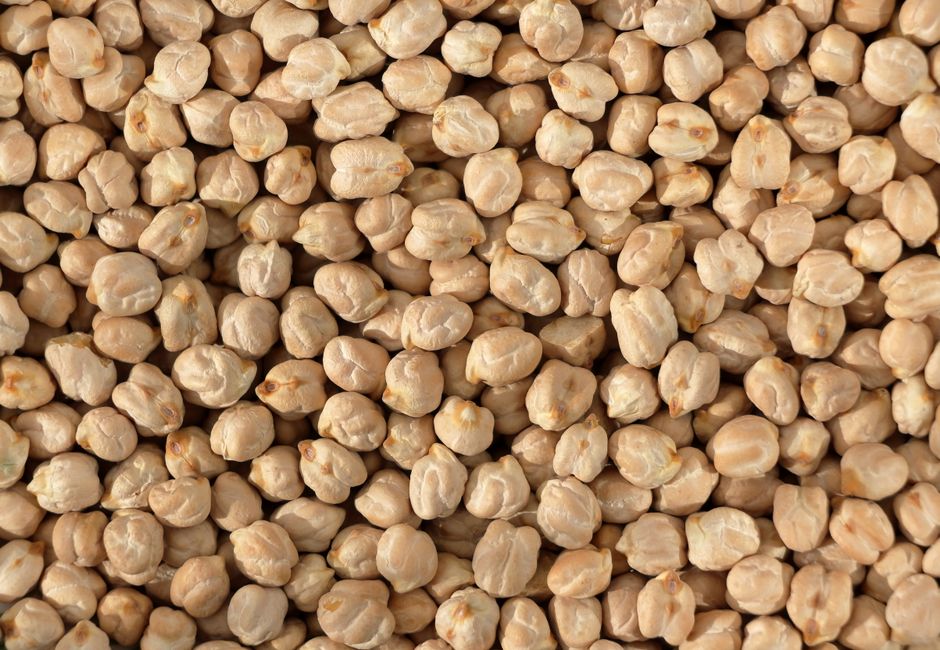
Dried chickpeas (Cicer arietinum), also called garbanzo beans, are the dehydrated form of the chickpea, sold raw and requiring soaking and simmering before eating. Compared to canned chickpeas, dried ones cost a fraction as much per serving, hold their shape better after long cooking, and give you control over texture and seasoning from the start, but they need advance planning since they're inedible straight from the bag.
Varieties
Most chickpeas sold whole in the US and Europe are the Kabuli type: larger, round, and pale cream. Desi chickpeas are smaller, darker, and more angular, and are usually split and skinned to make chana dal or ground into besan (chickpea flour); the two aren't interchangeable in recipes calling for whole chickpeas.
Buying tips
Choose chickpeas that are uniform in size and color, a pale cream to light tan; excessive wrinkling, dark spots, or a dusty smell in the bag are signs of age. Buying from bins or bags with visible harvest or packing dates helps avoid the year-plus-old stock that never softens properly.
Substitutes
Canned chickpeas, drained and rinsed — 1 cup dried chickpeas = about 3 cups canned
Canned chickpeas are already cooked, so skip soaking and simmering entirely; just drain, rinse, and add near the end of cooking. Texture is softer than home-cooked dried chickpeas.
Dried cannellini or great northern beans — 1:1 by volume
Similar soaking and simmer time, but the flavor is milder and starchier, and they break down a bit more easily, so they're better for stews than for hummus.
Dried split peas (yellow or green) — 1:1 by volume
Cooks faster and no soaking needed, but the flavor is sweeter and grassier and the texture turns soft rather than holding a firm bite, so this only works in pureed or soupy dishes, not salads.
Canned or cooked black beans — 1:1 by volume
Works in grain bowls and salads for the protein and bulk, but the earthy flavor and dark color are a noticeable departure from chickpeas, so it doesn't work for hummus or chana-based dishes.
Storage
Keep dried chickpeas in an airtight container in a cool, dark pantry; they'll stay safe to eat for a couple of years but cook more evenly and quickly within the first 12 months. Older chickpeas take noticeably longer to soften and sometimes never fully soften no matter how long they simmer, so buy from a store with decent turnover and avoid mixing old and new batches in the same pot. Cooked chickpeas keep in the refrigerator in their cooking liquid for about 4-5 days, or in the freezer for up to 6 months.
How to use
Soak dried chickpeas 8-12 hours in plenty of cold water (or use a quick-soak: boil 2 minutes, then let sit off heat for an hour), then simmer 45-90 minutes until fully tender, timing depends heavily on age and size. Use them in hummus, chana masala, soups, stews, roasted as a snack, or tossed warm into salads with olive oil and lemon.
What it pairs with
Pairs well with cumin, garlic, lemon, tahini, olive oil, smoked paprika, and rosemary, as well as with tomatoes and dark leafy greens in stews.
Nutrition
Dried chickpeas are a strong source of plant protein and fiber, along with iron, folate, and manganese. Because they're sold dry and unsalted, cooking from dried also gives full control over sodium, unlike canned versions which often contain added salt.
FAQ
Do dried chickpeas really need to be soaked before cooking?
Not strictly, but skipping the soak roughly doubles the simmer time (often 2-3 hours) and results in less even cooking, with some chickpeas mushy and others still firm.
Can you cook dried chickpeas without soaking at all?
Yes, simmer them longer, generally 2-3 hours, and check water levels regularly since they'll absorb more as they cook unsoaked.
Why do some dried chickpeas stay hard no matter how long they cook?
This usually means the chickpeas are old or were stored somewhere hot and humid; mineral-heavy hard water can also slow softening, so adding a pinch of baking soda to the soaking or cooking water helps.
Should you add salt to the soaking or cooking water?
Salting the soak or cook water lightly actually helps chickpeas cook up more evenly and with better texture; the old advice to avoid salt until the end is largely outdated, though very hard water combined with salt can still slow softening slightly.
How much dried chickpeas equal one standard 15-ounce can?
About 1/2 cup dried chickpeas, once soaked and cooked, yields roughly the same amount as one drained 15-ounce can (about 1.5 cups).
Have dried chickpeas on hand? Find recipes with our Recipe Generator →