
Dry Martini
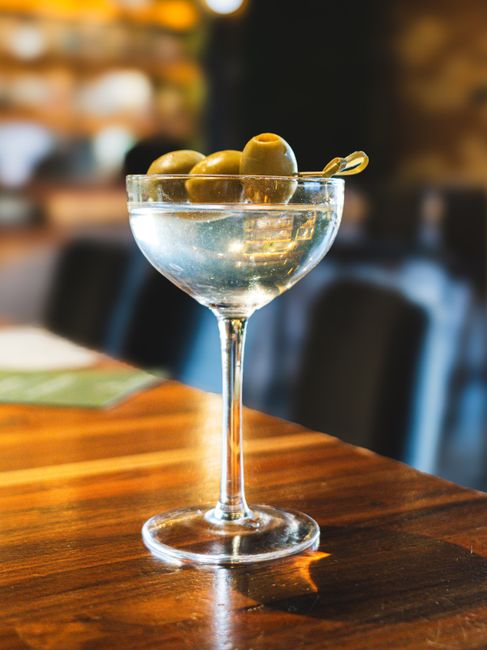
A dry martini is gin and dry vermouth stirred with ice and strained into a chilled glass, with the word "dry" referring to the small amount of vermouth used, not any added sugar. The classic ratio runs anywhere from 5:1 to 8:1 gin to vermouth, garnished with either an olive or a lemon twist. It's one of the few cocktails where the vermouth, not the spirit, sets the character of the drink.
Varieties
A "wet" martini uses more vermouth (closer to 3:1 or 4:1), a standard dry martini uses a small pour (around 5:1 to 8:1), and an "extra dry" or "bone dry" martini uses only a rinse of vermouth or none at all. Swapping gin for vodka makes it a vodka martini, a different drink with a smoother, less botanical profile.
Buying tips
For gin, a London dry style (Beefeater, Tanqueray, Plymouth) gives a classic, juniper-forward martini. For vermouth, buy a bottle you'd actually finish within a month, such as Dolin Dry or Noilly Prat, rather than a large bottle that will oxidize before you get through it.
Substitutes
Fino sherry — 1:1
Nuttier and saltier than vermouth but bone dry, works well if vermouth has oxidized past use.
Blanc (bianco) vermouth — 1:1
Sweeter and more floral than dry vermouth, so the drink will taste rounder and less austere.
Dry white wine — 1:1
Thinner and less aromatic than vermouth, but an acceptable stopgap in a pinch.
Vermouth rinse plus water — a few drops per glass
For an ultra-dry style, coat the chilled glass with vermouth and discard it, then add only a few drops of cold water instead of measured vermouth.
Storage
Gin doesn't spoil and can sit at room temperature indefinitely, though many bars keep it in the freezer for colder pours. Dry vermouth is a fortified wine, not a spirit: once opened it starts oxidizing, so refrigerate it and use it within about a month for the best flavor. If it smells flat, sherry-like, or vinegary, it's past its prime.
How to use
Combine chilled gin and dry vermouth in a mixing glass with ice, stir for about 20-30 seconds until well chilled and diluted, then strain into a chilled martini or coupe glass. Garnish with a green olive or a twist of lemon peel expressed over the surface. A dirty martini adds a splash of olive brine; a Gibson swaps the olive for a pickled cocktail onion.
What it pairs with
Pairs with briny, salty foods: olives, oysters, marcona almonds, smoked salmon, and hard aged cheeses. The dryness and cold temperature cut through fat and salt well.
Nutrition
A standard 2.5-ounce dry martini runs roughly 170-190 calories, almost entirely from alcohol, with no meaningful protein, fat, carbs, or micronutrients.
FAQ
What does "dry" actually mean in a dry martini?
It refers to the low proportion of vermouth used, not sweetness. Vermouth itself is slightly sweet, so a dry martini is really a low-vermouth martini.
Should a dry martini be shaken or stirred?
Classic preparation is stirred, which chills and dilutes the drink without clouding it or breaking up ice shards into the glass. Shaking (the famous "shaken, not stirred") produces a colder, slightly cloudier drink with more dilution.
What's a good starting ratio for a dry martini at home?
6 parts gin to 1 part dry vermouth is a reliable starting point; adjust toward 4:1 for a rounder drink or 8:1 for something closer to straight chilled gin.
Can a dry martini be made with vodka instead of gin?
Yes, it's simply called a vodka martini. It follows the same ratio and method but loses the juniper and botanical notes gin contributes.
Have dry martini on hand? Find recipes with our Recipe Generator →