
Endives
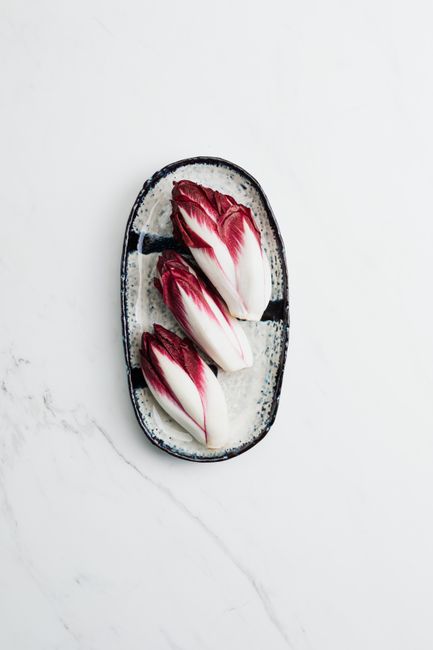
Belgian endive (Cichorium intybus) is a small, torpedo-shaped chicory grown entirely in the dark so its leaves stay pale yellow-white instead of turning green and bitter. The tightly furled heads have a crisp, slightly bitter, faintly sweet flavor that mellows when cooked and sharpens when raw.
Varieties
Belgian endive, frisée (curly endive), and escarole all belong to the chicory family but look and behave differently: Belgian endive is compact and pale from being grown in the dark, frisée has loose, curly, feathery leaves, and escarole has broad, flat leaves and the mildest bitterness of the three.
Buying tips
Choose heads that are pale yellow-white with tightly closed, unblemished leaves. Green-tinged tips signal light exposure and a more bitter, less tender leaf. Avoid heads with browning or soft spots at the base.
Substitutes
Radicchio — 1:1
More assertively bitter and deep red rather than pale, but the closest relative in flavor and crunch for salads.
Escarole — 1:1
Milder bitterness with broader, leafier leaves; works especially well braised or in cooked gratins.
Frisée (curly endive) — 1:1
Similarly bitter but with a frizzy, delicate texture; best for salads rather than braising or grilling.
Romaine hearts or Little Gem lettuce — 1:1
Much milder and sweeter with no real bitterness, but matches the crisp, boat-shaped leaves for appetizer trays and salads.
Storage
Keep endive wrapped in its original paper or a paper towel inside a perforated bag in the crisper drawer, away from light, which turns the tips green and increases bitterness. Use within about 5 days for the best texture.
How to use
Separate the leaves and use them raw as scoops for dips, cheese, or tuna salad, or slice heads lengthwise for salads with citrus and nuts. Halved or quartered heads can be braised in butter and stock, grilled cut-side down until charred, or layered into a gratin with ham and bechamel.
What it pairs with
Pairs well with blue cheese, toasted walnuts or hazelnuts, pears or apples, citrus segments, and anchovy or ham, all of which balance its bitterness with fat, sweetness, or salt.
Nutrition
Endive is very low in calories and high in water content, with a meaningful amount of vitamin K, folate, and inulin, a prebiotic fiber that also contributes to its slight bitterness.
FAQ
Why is Belgian endive white instead of green?
It's grown covered or underground to block sunlight, which prevents chlorophyll from developing and keeps the bitterness milder than it would be if the leaves greened up.
How do you make endive less bitter?
Cut out the small conical core at the base, which holds most of the bitter compounds, and pair the leaves with something sweet, fatty, or acidic like pears, cheese, or a vinaigrette.
Is endive the same thing as chicory?
Endive is a type of chicory. Cichorium intybus is the species behind Belgian endive, and other varieties in the same family produce radicchio, frisée, and coffee chicory root.
Can endive be cooked, or is it only eaten raw?
It can be cooked. Braising in butter and stock or grilling cut-side down softens the leaves and mellows the bitterness into a sweeter, caramelized flavor.
Have endives on hand? Find recipes with our Recipe Generator →