
Escarole
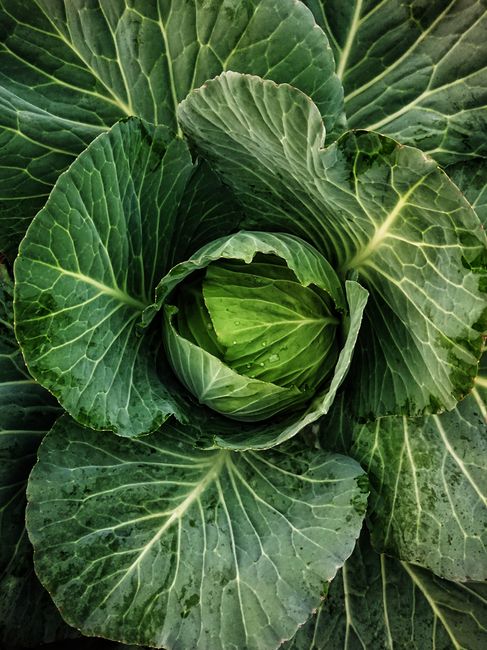
Escarole (Cichorium endivia var. latifolium) is a broad-leaved chicory, closely related to curly endive and radicchio, grown in loose, open heads of wide, slightly ruffled leaves. The outer leaves are dark green and noticeably bitter, while the inner leaves near the core are pale yellow-white and much milder and more tender. It's used both raw in salads, when young, and cooked into soups, braises, and sautes, where heat mellows its bitterness considerably.
Varieties
Escarole is a broad-leaved chicory, distinct from curly endive (frisee), which is the same species but a different variety with narrow, curly, more bitter leaves. Both differ from Belgian endive, which is a separate chicory grown blanched in the dark to produce tight, pale, torpedo-shaped heads.
Buying tips
Choose heads that feel heavy and compact with crisp, unblemished leaves. Avoid heads with browning edges, slimy spots, or leaves that look wilted or yellowed throughout, which signals age rather than the plant's natural pale inner color.
Substitutes
Curly endive (frisee) — 1:1
More bitter and more delicate, thinner leaves; works well raw in salads but wilts faster when cooked.
Radicchio — 1:1
Similar bitterness family but firmer and adds a red-purple color; best in salads or quickly sauteed rather than long-braised.
Swiss chard — 1:1
Much milder, no bitterness, but a good stand-in in soups like Italian wedding soup where escarole is mainly a cooked green.
Spinach — 1:1
Cooks down faster and lacks bitterness entirely; add later in the cooking time since it wilts almost immediately.
Kale — 0.75:1
Sturdier and needs longer cooking; use slightly less by volume since kale is denser and shrinks less than escarole.
Storage
Store unwashed in a loose or perforated plastic bag in the refrigerator crisper drawer for up to a week. Wash and dry leaves just before use, since residual moisture speeds spoilage. If leaves feel limp, revive them in a bowl of ice water for 10 to 15 minutes before using.
How to use
Sturdy enough to hold up in soups (classic in Italian wedding soup and escarole and bean soup), braises, and sautes with garlic and olive oil, where it wilts down significantly and loses much of its raw bitterness. Young inner leaves work raw in salads, especially with warm bacon dressings or alongside citrus and shaved cheese to balance the bitter edge. Older, tougher outer leaves are better cooked than raw.
What it pairs with
Pairs well with garlic, olive oil, white beans, anchovies, parmesan, and lemon, all of which balance or play off its bitterness. Also good with pancetta or bacon, whose fat and saltiness round out the flavor in warm salads and braises.
Nutrition
Escarole is low in calories and a good source of vitamin K, vitamin A, and folate, with a modest amount of fiber. Like other chicories, it contains compounds that contribute to its bitter taste and are associated with digestive benefits.
FAQ
Is escarole the same as lettuce?
No. Escarole is a chicory, related to radicchio and endive, and has a distinct bitterness that lettuce lacks. It's typically cooked far more often than lettuce, which is almost always eaten raw.
How do you reduce escarole's bitterness?
Cooking mellows it significantly, especially braising or sauteing with garlic and olive oil. For raw preparations, use the pale inner leaves rather than the darker outer ones, and pair with something acidic, sweet, or fatty like lemon, dried fruit, or bacon.
Can you eat escarole raw?
Yes, particularly the tender, pale yellow-white inner leaves, which are much milder than the dark green outer leaves. It's often used raw in salads with warm dressings that soften its texture and cut the bitterness.
Do you need to remove the core before cooking escarole?
Trim the very base of the core where it's tough and fibrous, but the rest of the core area, including the pale inner leaves attached to it, is tender and edible.
Have escarole on hand? Find recipes with our Recipe Generator →