
Figs
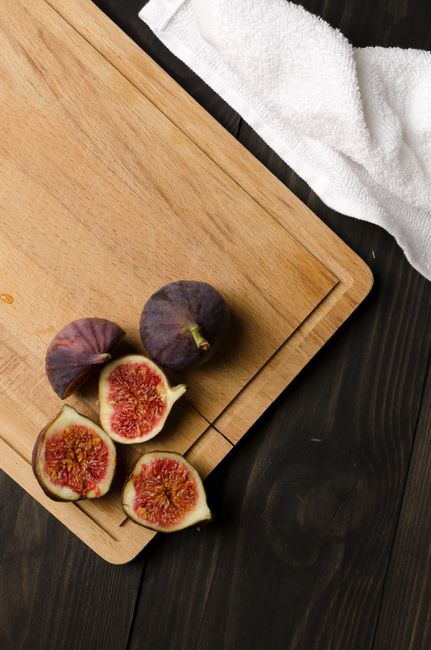
Figs are the pear-shaped fruit of the Ficus carica tree, eaten fresh or dried, with a thin edible skin, a soft jammy flesh, and hundreds of tiny edible seeds that give a faint crunch. Fresh figs have a mild, honeyed sweetness with a slightly vegetal edge, while dried figs concentrate that sweetness into something closer to caramel and raisins.
Varieties
Black Mission figs are dark purple-black with dense, sweet flesh and are the most common variety in the U.S. Brown Turkey figs are milder and less sweet with a lighter interior, and hold up better to shipping. Calimyrna (Smyrna) figs are pale green-yellow with a nuttier flavor, most often sold dried. Kadota figs are green-skinned with light flesh and fewer seeds, prized for preserves.
Buying tips
Choose fresh figs that are soft to the touch but not mushy or leaking, with skin that's slightly wrinkled rather than tight and shiny. A faint sweet smell at the stem end is a good sign; avoid any with a sour or fermented odor. For dried figs, look for ones that are pliable, not hard or crystallized with excess sugar.
Substitutes
Dried figs, rehydrated — 1:1 by weight
Simmer dried figs in water or juice for 5-10 minutes until plump, then chop; works in baked goods and compotes but lacks the fresh fruit's juiciness.
Fresh dates, chopped — 3/4:1
Denser and sweeter than figs, so use slightly less; good in salads, tarts, and cheese boards where a similar chew is wanted.
Fresh plums, quartered — 1:1
Closest fresh substitute for texture and tartness in salads or roasted alongside meat, though plums lack the seedy interior.
Prunes, chopped — 2/3:1
A reasonable stand-in for dried figs in baking; more intensely sweet and softer, so reduce the amount slightly.
Fig jam or preserves — 1/2:1
Use for spreads, glazes, or sauces where whole fruit texture isn't needed; already sweetened, so cut back other sugar in the recipe.
Storage
Fresh figs bruise easily and don't ripen further once picked. Store unwashed in a single layer in the refrigerator, ideally on a paper-towel-lined plate, and use within 2-3 days. Dried figs keep for several months in an airtight container in a cool, dark pantry, or up to a year in the refrigerator.
How to use
Eat fresh figs raw, halved or quartered, in salads with soft cheese and prosciutto, or roast or grill them briefly to deepen the sweetness for serving alongside meat or over yogurt. Dried figs work well simmered into compotes, chopped into oatmeal or granola, or blended into cakes and bars. Both forms pair well baked into tarts with a short baking time of 15-20 minutes since fresh figs collapse quickly under heat.
What it pairs with
Pairs naturally with soft or blue cheeses like goat cheese, brie, and gorgonzola, with cured meats such as prosciutto, and with honey, walnuts, balsamic vinegar, and dark leafy greens like arugula.
Nutrition
Figs are a good source of dietary fiber and potassium, and dried figs in particular are notably high in fiber per serving since the sugars and nutrients are concentrated. Fresh figs are naturally low in calories; dried figs are calorie-dense, so a serving is closer to 3-4 pieces.
FAQ
Can you eat fig skin?
Yes, the skin is thin and edible and doesn't need peeling; peeling is only necessary if the skin feels tough or you prefer a smoother texture.
Why do fresh figs spoil so quickly?
Figs have a high sugar and moisture content and no protective rind, which makes them ferment and mold faster than most other fresh fruit, often within a few days of picking.
Are dried figs as nutritious as fresh figs?
Dried figs retain most of the fiber and minerals of fresh figs but lose vitamin C during drying and have a much higher sugar concentration per gram since the water content is removed.
How do you ripen figs that are still firm?
Figs don't ripen further once picked from the tree, so a firm fig will stay firm; choose figs that are already soft if eating them raw, and save firmer ones for roasting or grilling.