
German Chocolate
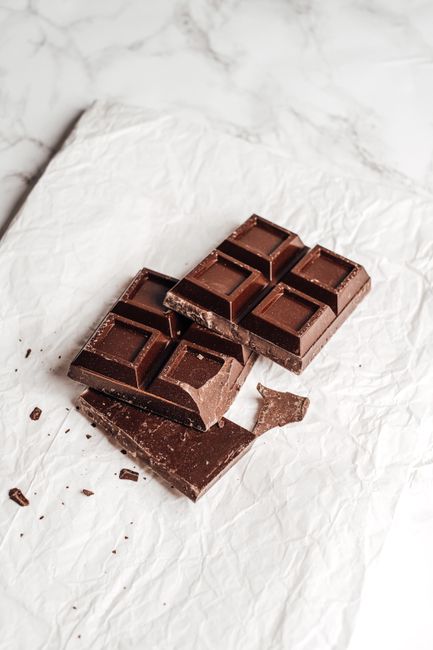
German chocolate is a sweet baking chocolate with roughly 43 to 46 percent cacao, sweeter and lighter-tasting than semisweet or bittersweet chocolate because it contains more added sugar relative to cocoa solids. Despite the name, it has nothing to do with the country of Germany. It's named after Samuel German, an English-American chocolate maker who developed the formula for Baker's Chocolate Company in 1852. The product was originally sold as "Baker's German's Sweet Chocolate," and the possessive "German's" got dropped over time, leading to the widespread misconception that it's a German import. It's the defining ingredient in German chocolate cake, a layered cake with coconut-pecan frosting that was popularized in the U.S. in the 1950s after a recipe using the chocolate ran in a Dallas newspaper.
Varieties
German chocolate isn't a category with regional or varietal differences the way cocoa or dark chocolate can be; it's a specific branded formulation. Ghirardelli and a few other manufacturers sell comparable sweet baking bars sometimes labeled "German-style sweet chocolate," which behave the same way in recipes even though they aren't the original Baker's product.
Buying tips
Baker's is the original and most widely available brand, sold in a 4-ounce box divided into individual squares, which makes measuring by the ounce straightforward. Check the label for cacao percentage if a recipe specifies it, since some store brands sell a sweeter "German-style" chocolate closer to 40 percent cacao. If it's out of stock, semisweet chocolate with a little added sugar is a more reliable stand-in than milk chocolate for cake recipes.
Substitutes
Semisweet baking chocolate plus sugar — 1 oz semisweet chocolate + 1/2 teaspoon sugar per 1 oz German chocolate
The closest working substitute. Semisweet has less sugar and a more assertive cocoa flavor, so a small amount of added sugar softens that edge to approximate German chocolate's sweetness.
Milk chocolate — 1:1
Milder and creamier than German chocolate, with less pronounced cocoa flavor. Works fine in frostings and fillings but makes the cake taste sweeter and less complex overall.
Unsweetened chocolate, sugar, and butter (homemade blend) — For every 4 oz German chocolate called for, melt 4 oz unsweetened chocolate with 1/4 cup sugar and 2 tablespoons butter
An old home-baking workaround from before German chocolate was widely stocked. It gets close in flavor and melts similarly, but the three components have to be combined and cooled together rather than swapped in as a single ingredient, so it doesn't reduce to a clean per-ounce multiplier.
Storage
Wrap tightly in its original foil or plastic and keep in a cool, dry pantry away from light, ideally below 70°F. It will keep for up to a year unopened. Once opened, rewrap in wax paper and foil; it can also be frozen for several months, though it should come fully to room temperature before unwrapping to avoid condensation forming on the surface.
How to use
Used almost exclusively in baking rather than eating out of hand, chiefly in German chocolate cake, brownies, and puddings where a milder, sweeter chocolate flavor is wanted. It melts smoothly over a double boiler or in short microwave bursts because the higher sugar content lowers its melting point slightly compared to semisweet chocolate. It's rarely used for chocolate chip cookies or anything meant to hold a firm shape, since it's softer and more prone to seizing if overheated.
What it pairs with
Pairs classically with toasted pecans, shredded coconut, and evaporated milk in traditional frosting. Also works well with vanilla, banana, and cream cheese in cakes and bars where a softer, sweeter chocolate note is preferred over a bittersweet one.
Nutrition
German chocolate runs higher in sugar and slightly lower in cocoa solids than semisweet or bittersweet chocolate, which means less of the flavanol content associated with darker chocolate. A one-ounce serving has around 145 to 150 calories and 8 to 9 grams of fat, most of it saturated, similar to other baking chocolates.
FAQ
Is German chocolate actually from Germany?
No. It's named after Samuel German, who developed the recipe for Baker's Chocolate Company in the U.S. in 1852. The country has nothing to do with it.
What's the difference between German chocolate and semisweet chocolate?
German chocolate has more added sugar relative to cocoa solids, roughly 43 to 46 percent cacao versus 55 to 65 percent for typical semisweet chocolate, making it noticeably sweeter and milder.
Can I make German chocolate cake with regular cocoa powder instead?
Not directly. Cocoa powder has no added fat or sugar built in, so a recipe would need reformulating with extra butter and sugar to mimic the texture and sweetness German chocolate provides.
Is German chocolate the same as dark chocolate?
No. Dark chocolate generally has a higher cacao percentage and less sugar. German chocolate sits closer to the sweet end, between milk chocolate and semisweet chocolate.
Have german chocolate on hand? Find recipes with our Recipe Generator →