
Gorgonzola Cheese
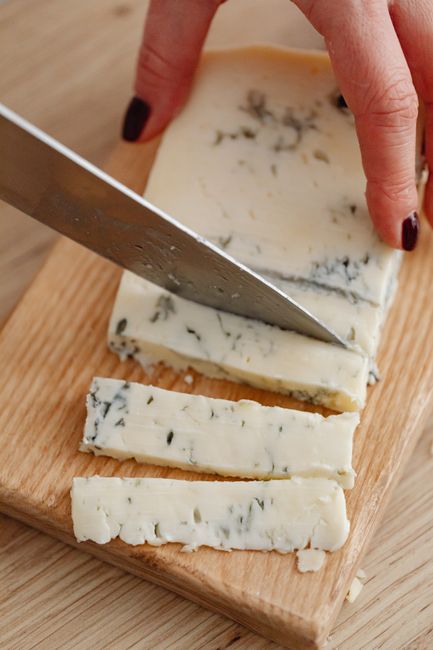
Gorgonzola is an Italian blue cheese made from cow's milk, produced mainly in the Lombardy and Piedmont regions. It's inoculated with Penicillium mold, which creates the characteristic blue-green veins as the cheese ages, and it ranges from soft and creamy to firm and crumbly depending on how long it's aged.
Varieties
Gorgonzola dolce is aged about 2 to 3 months, soft and spreadable with a mild, buttery flavor. Gorgonzola piccante is aged 3 months or longer, firmer, crumblier, and noticeably sharper and spicier. Recipes calling simply for "gorgonzola" usually mean the dolce style unless otherwise specified.
Buying tips
Look for gorgonzola with even blue-green veining and a moist, slightly sticky rind if buying a wedge; avoid pieces that look dry or have discolored, ammonia-smelling edges. Gorgonzola dolce (sweet, young) is softer and milder; gorgonzola piccante (aged, sharp) is firmer and more pungent, so check the label if a recipe assumes one or the other.
Substitutes
Roquefort — 1:1
French sheep's milk blue cheese, sharper and tangier than gorgonzola, so it stands in well for the piccante style.
Stilton — 1:1
Firmer and more crumbly with a nuttier, less spicy flavor; works best in salads and crumbled toppings rather than melted sauces.
Danish blue (Danablu) — 1:1
Softer, saltier, and more pungent; use slightly less if the recipe is sensitive to salt.
Cambozola — 1:1
A blue-brie hybrid with a milder, creamier flavor; a good option for anyone who finds gorgonzola too sharp.
Cream cheese blended with a pinch of blue cheese powder — 1:1
For a mild approximation in dips and spreads when no real blue cheese is available; lacks the actual tang and funk.
Storage
Wrap tightly in wax or parchment paper, then loosely in plastic or foil, and store in the warmest part of the refrigerator, usually a produce drawer. Rewrap after each use to keep it from drying out or absorbing other fridge odors. Soft gorgonzola dolce keeps about 2 weeks once opened; firmer gorgonzola piccante keeps 3 to 4 weeks. It also freezes reasonably well for cooking purposes, though texture suffers for eating on its own.
How to use
Crumble over salads, pizza, and risotto, melt into cream-based pasta sauces, or stir into polenta. It also blends smoothly into butter for steak toppings and pairs well baked into savory tarts or stuffed inside chicken breasts. Because it's already salty and pungent, add it toward the end of cooking and taste before adding extra salt.
What it pairs with
Pairs well with honey, walnuts, pears, and figs on a cheese board, and with radicchio, arugula, and balsamic vinegar in salads. In cooking it complements rich, slightly sweet partners like caramelized onions, roasted squash, and dried cranberries.
Nutrition
Gorgonzola is high in saturated fat and sodium relative to its serving size, but also provides a meaningful amount of calcium and protein per ounce, along with some vitamin B12.
FAQ
Is gorgonzola the same as blue cheese?
Gorgonzola is one specific type of blue cheese from Italy. All gorgonzola is blue cheese, but not all blue cheese is gorgonzola, since the term covers many varieties like Roquefort and Stilton made in different regions with different milks and methods.
Why does gorgonzola smell so strong?
The Penicillium mold used to create the veining breaks down fats and proteins as it ages, producing pungent compounds. Piccante versions smell stronger than dolce because they're aged longer.
Can you eat the rind of gorgonzola?
The rind is technically edible but most people scrape it off since it's tough, bitter, and can carry a strong ammonia smell, especially on more aged pieces.
Does gorgonzola melt well?
Gorgonzola dolce melts smoothly into sauces because of its higher moisture content, while gorgonzola piccante is drier and tends to break or turn grainy if overheated, so it's better crumbled on top after cooking.
Have gorgonzola cheese on hand? Find recipes with our Recipe Generator →