Mozzarella Balls
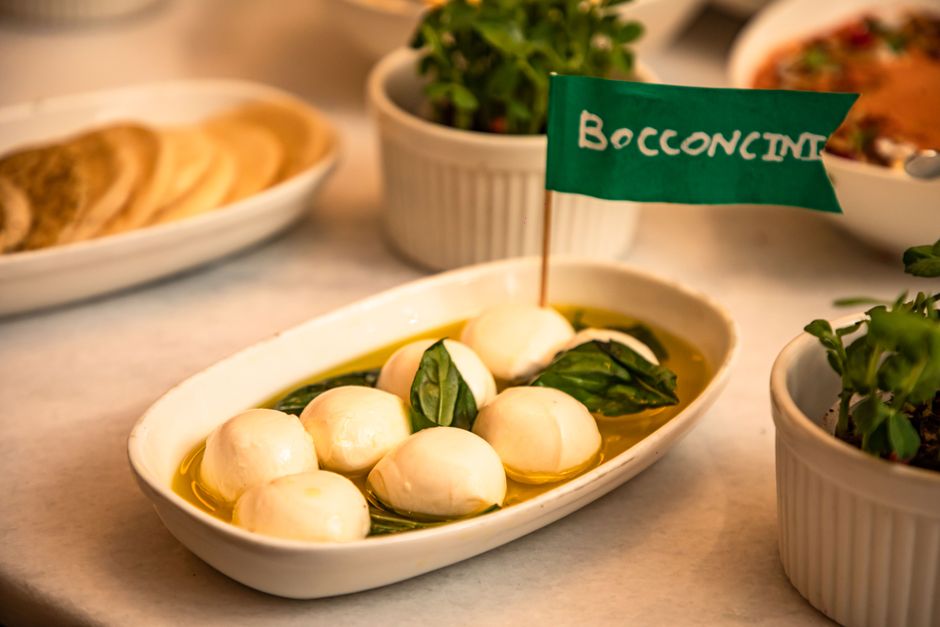
Mozzarella balls are fresh mozzarella shaped into small spheres and packed in water, whey, or a light brine to keep them soft and moist. Unlike the firm, shrink-wrapped block mozzarella used for shredding, mozzarella balls have a soft, slightly springy texture and a mild, milky flavor meant to be eaten fresh rather than melted into a topping. They're sold in a few standard sizes, from tiny pearls to larger bocconcini, and are a staple of caprese salads, antipasto platters, and pasta salads.
Varieties
Size is the main distinction sold at most grocery stores: perline (pearl-sized, good for skewers and bite-size apps), ciliegine (cherry-sized, standard for caprese salad), and bocconcini (golf-ball sized, meant to be sliced). All are the same cheese, just cut or formed at different sizes before brining.
Buying tips
Choose balls that are packed in liquid, not shrink-wrapped dry, and check that the liquid is cloudy-white and not pink or off-smelling. Ciliegine (cherry-sized) work well in salads and skewers, while larger bocconcini are easier to slice for caprese stacks.
Substitutes
Fresh mozzarella block, hand-cut into cubes — 1:1 by weight
Same cheese in a different shape. Cut it into roughly 3/4-inch cubes to mimic the size of standard bocconcini.
Burrata, torn into pieces — 1:1 by weight
Has a molten, creamy interior instead of a solid bite, so it works better torn over a finished dish than skewered or held together on a platter.
Buffalo mozzarella balls — 1:1 by weight
Made from water buffalo milk instead of cow's milk. Tangier, richer, and softer than standard fresh mozzarella; the closest upgrade for caprese salad.
Low-moisture whole milk mozzarella, cubed — 1:1 by weight
Firmer and less watery, so it holds its shape better on skewers or in baked pasta, but it lacks the soft, milky bite of fresh mozzarella balls when eaten cold.
Storage
Keep mozzarella balls submerged in their original liquid in a sealed container in the refrigerator; they dry out and turn rubbery within hours once exposed to air. Use within 3-4 days of opening, and let them come to room temperature for about 20 minutes before serving to bring out the flavor and softness.
How to use
Best served cold or at room temperature in caprese salad, antipasto skewers, pasta salads, and marinated appetizers. They can be baked or broiled briefly on pizza or in casseroles, but they release a lot of moisture when melted, so pat them dry first or halve them to reduce watery pooling.
What it pairs with
Pairs naturally with ripe tomatoes, basil, olive oil, and balsamic glaze, as well as prosciutto, roasted red peppers, and crusty bread on an antipasto board.
Nutrition
Fresh mozzarella balls run around 70-90 calories per ounce depending on whether they're made from whole or part-skim milk, with roughly 6 grams of protein and 6 grams of fat per ounce. They're lower in sodium than aged cheeses since they aren't salted and dried.
FAQ
Can I freeze mozzarella balls?
Freezing is not recommended. The high water content causes the texture to turn grainy and watery once thawed, which ruins the soft bite that makes fresh mozzarella balls worth using.
Why did my mozzarella balls turn rubbery?
This usually happens when they're stored outside their brine or exposed to air in the fridge. Once dried out, the proteins tighten and the cheese loses its soft, springy texture permanently.
Can I use the brine or liquid they're packed in for anything?
It's mostly water with some whey and salt, so it isn't useful as a cooking liquid, but it can be used to keep leftover balls submerged and fresh if transferred to a smaller container.
Is bocconcini the same as ciliegine?
Both are fresh mozzarella balls made the same way; the only real difference is size. Bocconcini are roughly golf-ball sized, while ciliegine are cherry-sized, making ciliegine easier to skewer or toss whole into a salad.
Have mozzarella balls on hand? Find recipes with our Recipe Generator →