
Persian Cucumber
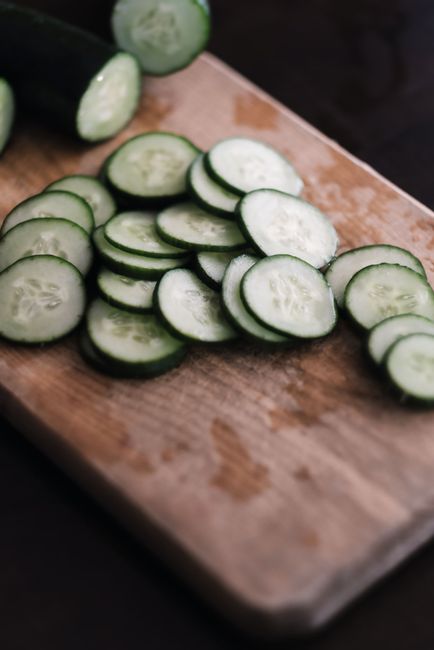
Persian cucumbers are a small, thin-skinned variety, typically 5 to 6 inches long, bred to be nearly seedless and never bitter. Unlike standard slicing cucumbers, they don't need peeling or seeding, have thinner skin that stays crisp, and hold up well in both raw salads and quick pickles.
Varieties
Persian cucumbers are sometimes confused with Lebanese cucumbers, a closely related but slightly shorter and rounder variety with a similar thin skin and few seeds; the two can be substituted for each other interchangeably.
Buying tips
Choose ones that feel firm and heavy for their size with taut, unwrinkled skin. Avoid any with soft spots or yellowing, which signal they're past peak freshness.
Substitutes
English (hothouse) cucumber — 1:1 by weight
Nearly identical texture and low seed count; cut a longer English cucumber into similar-length pieces since it's much larger overall.
Kirby cucumber — 1:1 by weight
Bumpier skin and slightly more seeds, but the closest match in size and crunch; good for pickling.
Standard slicing cucumber, peeled and seeded — 1:1 by weight after prep
Thicker skin and watery core mean it needs peeling and scooping to match the texture of Persian cucumber.
Storage
Store unwashed in a perforated plastic bag in the refrigerator crisper drawer, where they'll stay firm for about a week. Keep them away from apples, bananas, and tomatoes, which release ethylene gas and speed up softening.
How to use
Eat raw with the skin on in salads, slaws, and yogurt sauces like tzatziki. Slice into rounds or spears for snacking and lunchboxes since the skin needs no peeling. They also hold their crunch well in quick pickles and refrigerator pickles because the low water and seed content keeps them from turning limp.
What it pairs with
Pairs well with dill, mint, feta, yogurt, lemon, and rice vinegar. Works especially well alongside tomatoes, chickpeas, and grilled meats in summer salads.
Nutrition
Persian cucumbers are about 95% water and low in calories, roughly 15 calories per 100 grams, with small amounts of vitamin K and potassium.
FAQ
Do you need to peel Persian cucumbers?
No. The skin is thin and tender enough to eat raw and adds a slight crunch, unlike the thicker, sometimes waxed skin on standard slicing cucumbers.
Why don't Persian cucumbers taste bitter?
They're bred to have consistently low levels of cucurbitacin, the compound responsible for bitterness in cucumber skin and stem ends, so they rarely need trimming or peeling to avoid it.
Can Persian cucumbers be used for pickling?
Yes, and they're a common choice for quick refrigerator pickles because their low seed and water content keeps slices crisp instead of turning mushy in brine.
Are Persian cucumbers the same as mini cucumbers sold in snack packs?
Usually yes. Most snack-pack 'mini cucumbers' sold in grocery stores are Persian cucumbers, sorted for uniform small size.
Have persian cucumber on hand? Find recipes with our Recipe Generator →