
Negitoro
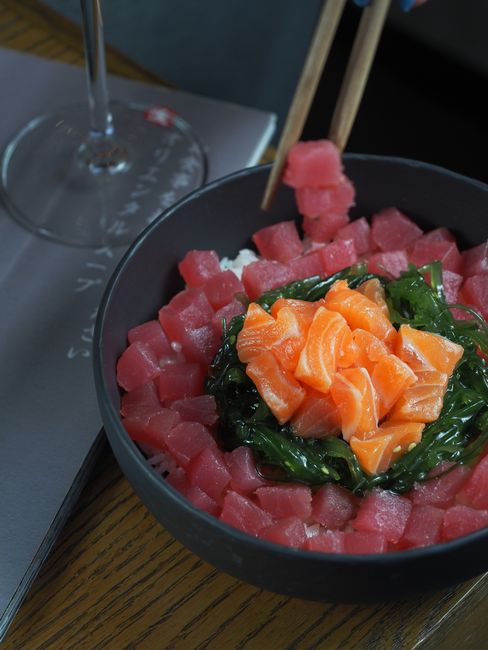
Negitoro is a Japanese preparation of finely minced fatty tuna mixed with chopped scallion (negi). The name combines negi (scallion) and toro (fatty tuna belly), though most negitoro sold at fish counters is made from tuna scraps and trim scraped off the bones rather than true premium toro. It's soft, almost paste-like in texture, and eaten raw as a topping for rice bowls, hand rolls, and gunkan-style sushi.
Varieties
Traditional negitoro is made from tuna scraps trimmed from the bones (called negitoro-yō), which is fattier and less expensive than whole toro cuts. Restaurant menus sometimes use the term more loosely to describe any minced fatty fish and scallion mix, including salmon (sake negitoro) or yellowtail versions.
Buying tips
Buy negitoro only from a fish counter or market that explicitly labels it sushi-grade or sashimi-grade, and ask whether it was previously frozen to the temperature required to kill parasites (this is required for legal raw sale in most places). It should look glossy and pink-red with no browning, and smell clean and oceanic, not fishy or sour.
Substitutes
Fresh sushi-grade tuna belly, hand-minced with scallion — 1:1
The closest match if you're making it yourself. Use a sharp knife to mince the tuna into a rough paste rather than a food processor, which turns it mushy.
Minced yellowtail (hamachi) with scallion — 1:1
Slightly buttery and fattier than lean tuna trim, common at izakayas as a negitoro alternative called negi-hamachi.
Minced sushi-grade salmon with scallion — 1:1
Milder and sweeter than tuna, sold as sake negitoro in Japan. A good option when tuna belly isn't available.
Canned tuna mixed with mayonnaise and scallion — 1:1 by volume
Not raw and not traditional, but works as a cooked stand-in for a negitoro-style rice bowl when sashimi-grade fish isn't accessible.
Mashed avocado folded with a small amount of minced tuna and scallion — to taste
A lower-fish, higher-avocado version sometimes served as a lighter rice bowl topping; texture is close but flavor is much milder.
Storage
Negitoro is raw ground fish and spoils quickly. Keep it packed in ice or at the coldest part of the refrigerator and eat it the same day it's purchased or prepared. Once minced, tuna has much more surface area exposed to air and bacteria than a whole fillet, so it doesn't hold as long as sashimi-cut steaks.
How to use
Spoon over warm or sushi-seasoned rice for negitoro-don, pack into nori for temaki hand rolls, mound into gunkan (battleship) sushi, or stir into chirashi. It's often finished with a drizzle of soy sauce, a touch of sesame oil, and sometimes a raw egg yolk or ikura on top.
What it pairs with
Pairs with soy sauce, wasabi, toasted nori, sesame seeds, pickled ginger, avocado, and ikura (salmon roe). A few drops of sesame oil or a touch of yuzu juice brighten the richness of the fat.
Nutrition
Negitoro is high in protein and rich in omega-3 fats, especially when made from fattier cuts of tuna belly. Calorie and fat content vary a lot depending on how much fatty trim versus lean tuna is used in the mix.
FAQ
Does negitoro always contain real toro (fatty tuna belly)?
Not usually. Most commercial negitoro is made from tuna trim and scraps scraped off the carcass, which is fattier than lean tuna but not the same premium cut as sliced otoro sashimi.
Can you make negitoro at home?
Yes, but only with tuna that has been previously frozen to sashimi-safe temperatures and sold specifically for raw consumption. Regular fresh tuna from a standard fish counter is not safe to eat raw.
Why is negitoro chopped instead of sliced like other sashimi?
The trim used for negitoro comes from small, irregular pieces left after filleting, so mincing it into a uniform paste is more practical than trying to slice it and also gives it a distinct soft, spreadable texture.
How long does negitoro keep in the fridge?
Plan to eat it the day it's bought or prepared. Minced raw fish has far more exposed surface area than a whole fillet and loses freshness within hours, not days.
Have negitoro on hand? Find recipes with our Recipe Generator →