
Raki
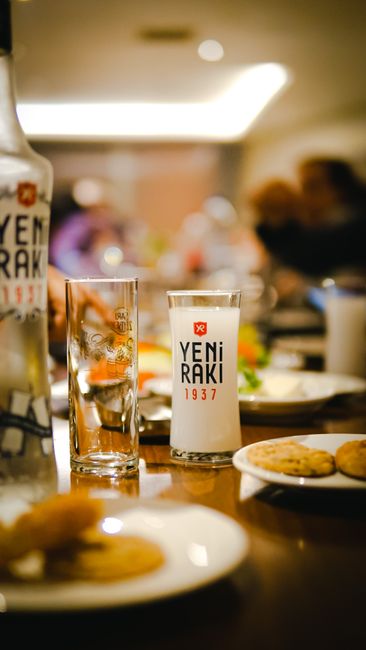
Raki is a Turkish anise-flavored spirit distilled from grapes (sometimes figs), typically bottled around 40-50% ABV. It's closely related to Greek ouzo and French pastis but usually has a stronger, more assertive anise character and a heavier body from its grape-based distillate. Raki is served neat or, more commonly, diluted with water, which triggers the louche effect that turns the clear liquid milky white, earning it the nickname 'aslan sütü' or 'lion's milk.'
Varieties
Raki, ouzo, and arak are all grape-based anise spirits from different regions (Turkey, Greece, and the Levant respectively) with very similar production, while pastis and sambuca differ more, pastis uses a neutral spirit base and sambuca is noticeably sweeter and syrupier.
Buying tips
Look for Turkish-made bottles labeled 'raki' rather than generic anise liqueur; well-known producers include Yeni Raki and Tekirdağ. Double-distilled versions tend to be smoother and less harsh, and clear, sediment-free liquid is a sign of proper filtration.
Substitutes
Ouzo — 1:1
Closest substitute in both flavor and function; slightly lighter body and often a touch sweeter than raki.
Pastis (such as Ricard or Pernod) — 1:1
Strong anise flavor but made from a neutral spirit base rather than grapes, so the mouthfeel is thinner.
Sambuca — 3:4
Much sweeter and more syrupy than raki, so use slightly less to avoid an overly sugary result.
Arak (Levantine) — 1:1
Very similar production method and flavor profile; a near-identical substitute in both cooking and serving.
Anise extract mixed with vodka — 1/4 tsp extract per 1.5 oz vodka
Not a true substitute for drinking neat, but works for flavoring marinades or desserts when no anise spirit is on hand.
Storage
Keep the bottle tightly sealed at room temperature away from direct sunlight; the high alcohol content means it won't spoil. Some drinkers store an opened bottle in the freezer since the alcohol content keeps it from solidifying and it's traditionally served very cold.
How to use
Most often served neat or diluted about 1:2 with cold water in a tall narrow glass, sipped slowly alongside meze rather than shot back. In cooking, a splash can flavor seafood marinades, some braised dishes, or anise-scented desserts, though it's used far more as a drink than an ingredient.
What it pairs with
Traditionally paired with meze: beyaz peynir (white brined cheese), melon, grilled or cured fish like lakerda, and olives. The anise flavor also complements grilled octopus and other seafood mains.
Nutrition
A standard 1.5 oz (45 ml) pour of raki has roughly 100-110 calories from alcohol alone, with no meaningful fat, protein, or carbohydrate content. Diluting with water lowers the alcohol concentration per sip but not the total calories in the pour.
FAQ
Is raki the same as ouzo?
They're closely related but not identical. Both are grape-based anise spirits, but raki is typically higher proof and has a heavier, more robust anise flavor, while ouzo tends to be lighter and slightly sweeter.
Why does raki turn cloudy when you add water?
The anethole (anise oil) in raki dissolves in alcohol but not in water. Adding water lowers the alcohol concentration enough that the oil comes out of solution and forms tiny droplets, scattering light and turning the drink milky white.
Can raki be used in cooking, not just drinking?
Yes, though sparingly. A small splash works well in seafood marinades or to deglaze a pan for a dish with Turkish or eastern Mediterranean leanings, but it's mainly consumed as a drink rather than a cooking ingredient.
What's a good non-alcoholic way to get a similar flavor?
Anise extract or crushed anise seed steeped in warm water can approximate the flavor for cooking purposes, but there's no true non-alcoholic substitute for serving raki as a drink.