
Red Chimichurri
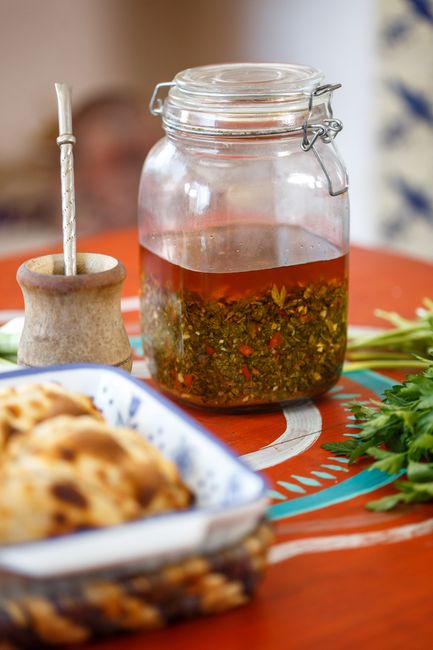
Red chimichurri (chimichurri rojo) is an Argentine and Uruguayan sauce built on the same base as classic parsley chimichurri, olive oil, red wine vinegar, garlic, and oregano, but colored and flavored with smoked paprika, ground ancho or red chile, and sometimes a spoonful of tomato paste or finely minced red bell pepper. The result is smokier, slightly sweeter, and often a bit spicier than the green version, with a deep rust color instead of bright green. It's the traditional accompaniment to choripán (grilled chorizo sandwiches) at Argentine asados, though it works on any grilled meat.
Varieties
Chimichurri rojo and chimichurri verde share the same oil, vinegar, garlic, and oregano base but diverge in the main flavoring: green chimichurri is built around fresh parsley, while red chimichurri swaps most or all of the parsley for smoked paprika, ground ancho or red chile, and sometimes tomato paste or minced red bell pepper. Some Uruguayan versions add a small amount of both parsley and paprika, landing in between.
Buying tips
Jarred red chimichurri is sold in some Latin grocery stores; check the ingredient list for real smoked paprika or dried ancho rather than just red food coloring or excessive citric acid, which flattens the flavor.
Substitutes
Classic green chimichurri — 1:1
Same acidity and oil base, but grassy and herbal instead of smoky; add a pinch of smoked paprika to bridge the gap.
Romesco sauce — 3:4 (use slightly less)
Roasted red pepper and almond base gives a similar red color and smokiness but is thicker and nuttier; thin with extra vinegar and oil to loosen.
Ajvar thinned with vinegar and oil — 1:1, after thinning
Ajvar is a roasted red pepper spread; whisk in red wine vinegar, olive oil, and a little minced garlic until it reaches a pourable consistency.
Harissa loosened with olive oil and vinegar — 1:2 (use less harissa, add oil and vinegar to volume)
Much spicier and more concentrated than red chimichurri, so dilute significantly and taste before adding more.
Salsa criolla — 1:1
A South American relish of diced tomato, onion, and bell pepper in vinegar and oil; chunkier texture but a similar sweet-acidic profile.
Storage
Store in an airtight jar in the refrigerator with a thin layer of olive oil on top to limit oxidation. It keeps well for 1 to 2 weeks; the flavor actually improves after the first day as the garlic and paprika mellow into the oil. Bring to room temperature before serving since cold olive oil solidifies and clouds.
How to use
Spoon over grilled steak, chorizo, or chicken right after it comes off the grill so the residual heat blooms the paprika. Also good brushed onto meat during the last few minutes of grilling as a baste, stirred into scrambled eggs, or spread on crusty bread under a sandwich instead of mayonnaise.
What it pairs with
Built for grilled beef and pork, especially chorizo, skirt steak, and short ribs. Also works well spooned over roasted potatoes, grilled corn, or firm white fish.
Nutrition
Mostly olive oil and vinegar, so it's calorie-dense in small amounts but contributes little beyond fat; the red pepper or paprika adds a modest dose of vitamin A and vitamin C.
FAQ
Is red chimichurri spicy?
Traditional versions are mild to moderately warm from paprika or ancho chile, not fiery. Heat level depends on the chile used; cayenne or aji molido will make it noticeably spicier than sweet smoked paprika alone.
Can you freeze red chimichurri?
Freezing is not recommended since the emulsified oil separates and turns grainy on thawing. It's better to make a fresh batch, which takes about 10 minutes.
Does red chimichurri contain tomato?
Some recipes include a spoonful of tomato paste or finely diced tomato for color and sweetness, but many rely entirely on smoked paprika and red chile for the red hue without any tomato at all.
Why did my red chimichurri turn out bitter?
Bitterness usually comes from garlic that was minced too far in advance and oxidized, or from paprika that was toasted or cooked directly in hot oil rather than stirred in off heat.
Have red chimichurri on hand? Find recipes with our Recipe Generator →