
Rice Flour
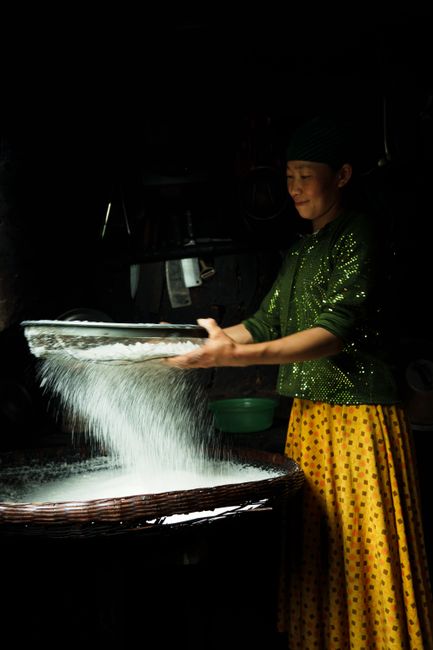
Rice flour is a fine, gluten-free flour milled from ground white or brown rice. It has a neutral, faintly sweet flavor and a light, powdery texture, and it's a staple in gluten-free baking, Asian noodle and dumpling doughs, and as a crisping agent for fried batters.
Varieties
White rice flour and brown rice flour are milled from the same grain minus or plus the bran, giving brown rice flour more fiber and a coarser texture. Glutinous (sweet) rice flour, sometimes called mochiko, comes from short-grain sticky rice and produces a chewy, stretchy texture entirely different from the crumbly texture of regular rice flour, despite containing no gluten.
Buying tips
Check the label for 'white rice flour' versus 'glutinous (sweet) rice flour,' since they behave very differently despite similar packaging. For the finest, most cake-friendly texture, look for flour labeled 'superfine' or stone-ground versions common in Asian grocery stores.
Substitutes
All-purpose wheat flour — 1:1 by volume
Only for cooks who don't need the dish gluten-free; adds gluten structure and a slightly denser bite than rice flour gives.
Cornstarch — 1:1 for thickening, not baking
Works well as a swap in fried batters and as a sauce thickener, but has no protein or fiber so it won't work alone in bread or cake recipes.
Sweet (glutinous) rice flour — 1:1 by volume
Milled from short-grain glutinous rice; despite the name it's gluten-free, but it's much stickier and chewier, so best in mochi and dumplings rather than cakes.
Tapioca flour — 3/4 cup per 1 cup rice flour
Lighter and starchier with more chew; blend with another gluten-free flour for structure in baked goods.
Sorghum flour — 1:1 by volume
Slightly nutty and heavier than rice flour; works in gluten-free bread blends but changes flavor more than a starch-based swap.
Cornmeal, finely ground — 1:1 by volume
Good for crisping fried foods, but coarser and more textured, with a distinct corn flavor unsuited to delicate cakes or dumplings.
Storage
Keep rice flour in an airtight container in a cool, dry pantry, where it stays fresh for up to a year. Brown rice flour has more oil in the bran and turns rancid faster, so store it in the refrigerator or freezer and use within about six months.
How to use
Used to make gluten-free cakes, cookies, and bread (often blended with a starch and a binder like xanthan gum), to dust fried chicken or tempura for extra crispiness, to make Asian rice noodles, rice paper, and mochi, and as a thickener for soups and sauces.
What it pairs with
Blends well with tapioca starch and potato starch in gluten-free baking mixes, and pairs naturally with coconut milk, pandan, and sesame in Asian desserts like mochi and rice cakes.
Nutrition
Rice flour is naturally gluten-free and lower in protein than wheat flour. White rice flour is mostly starch with little fiber; brown rice flour retains the bran, adding fiber, B vitamins, and a slightly nuttier taste.
FAQ
Does rice flour contain gluten?
No. Both white and brown rice flour, as well as glutinous rice flour, are naturally gluten-free; 'glutinous' refers to the sticky, glue-like texture of the starch, not to gluten protein.
Can rice flour replace all-purpose flour one for one in baking?
Not reliably on its own. Rice flour lacks gluten's elasticity, so baked goods made entirely with it tend to be crumbly; most gluten-free recipes blend it with a starch like tapioca and a binder like xanthan gum.
Why does fried food get extra crispy with rice flour?
Rice flour absorbs less oil than wheat flour and forms a thinner, more brittle coating, which is why it's used in Korean fried chicken and Japanese tempura batters for a lighter crunch.
Is rice flour the same as rice starch?
No. Rice flour is the whole ground grain, including some protein and fiber, while rice starch has had those components removed, leaving a purer, finer thickening powder.
Have rice flour on hand? Find recipes with our Recipe Generator →
