Rigatoni
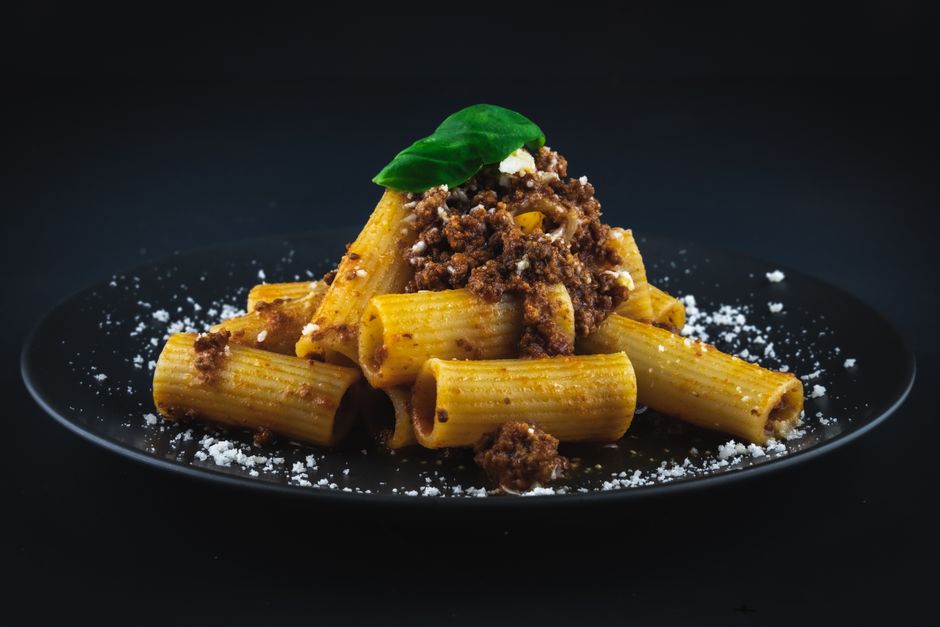
Rigatoni is a short, wide tube pasta with a ridged exterior and squared-off ends, thicker than penne and slightly curved. The ridges (rigatura in Italian) and hollow center are built to trap thick, clingy sauces, which is why it's a standard pairing for meat-based sauces like bolognese, where the ragu needs to coat the pasta rather than pool at the bottom of the bowl.
Varieties
Rigatoni and tortiglioni are frequently confused; both are ridged tubes of similar size, but tortiglioni has a slight spiral twist while rigatoni is straight. Some regions also sell a smaller version labeled "rigatoncini," which cooks a couple minutes faster and suits lighter sauces better than a full bolognese.
Buying tips
Check that the pasta is a matte, pale gold color rather than very smooth and shiny, which usually indicates it was extruded through a bronze die that gives the ridges more texture for sauce to grip. Bronze-die rigatoni costs more but makes a noticeable difference with a sauce as heavy as bolognese.
Substitutes
Paccheri — 1:1
Larger, smoother tubes that hold even more sauce inside; cut cooking time down by a minute or two since they're thinner-walled than they look.
Tortiglioni — 1:1
Nearly identical to rigatoni but with spiral ridges instead of straight ones; cooks in the same time and behaves the same with heavy sauces.
Penne rigate — 1:1
Smaller and pointed rather than tube-ended, so it picks up less sauce per bite, but the ridges still grip a bolognese reasonably well.
Ziti — 1:1
Smooth-sided and narrower, so sauce clings less; works fine but the final dish will taste slightly lighter since less bolognese ends up on each piece.
Mezze maniche — 1:1
Short, wide, and ridged like a stubby rigatoni; a good match if you want the same sauce-holding effect in a smaller bite.
Storage
Dry rigatoni keeps for a year or more in a sealed container in a cool, dry pantry. Cooked rigatoni holds in an airtight container in the refrigerator for 3 to 4 days; toss with a little olive oil before storing so the tubes don't stick together.
How to use
Rigatoni is built for baked pasta dishes and thick, chunky sauces, bolognese, sausage ragu, or a vodka sauce with pieces of pancetta, since the ridges and wide opening catch bits of meat rather than letting them slide off. Cook it a minute short of package directions if it's going into the oven with sauce, since it keeps cooking there. For bolognese specifically, reserve a cup of pasta water and finish the rigatoni in the sauce for a minute or two off the heat so it absorbs some of the ragu instead of just being topped with it.
What it pairs with
Beyond bolognese, rigatoni pairs well with baked four-cheese dishes, roasted vegetable sauces with eggplant or squash, and creamy sauces with sausage or mushrooms. A generous grating of Parmigiano-Reggiano or Pecorino Romano finishes it well since the ridges hold onto the cheese as much as the sauce.
Nutrition
A 2-ounce dry serving of rigatoni has around 200 calories and 7 grams of protein, similar to most dried semolina pasta. Whole wheat rigatoni adds roughly 4 to 6 grams of fiber per serving and holds up well in bolognese since the sauce's richness balances its nuttier flavor.
FAQ
Why is rigatoni used for bolognese instead of spaghetti?
Bolognese is a thick, meat-heavy sauce that slides off thin strands like spaghetti. Rigatoni's ridged surface and hollow tube trap the meat and sauce inside and along the ridges, so each bite gets more sauce.
How much bolognese sauce per pound of rigatoni?
A good ratio is about 3 to 4 cups of bolognese per pound of dry rigatoni, enough to coat the pasta generously without leaving excess pooling in the bowl.
Can you use gluten-free rigatoni for bolognese?
Yes, but corn or rice-based gluten-free rigatoni tends to break down faster in a hot sauce, so add it to the bolognese only right before serving rather than simmering it in the pot.
Should rigatoni be cooked al dente for bolognese?
Yes, cook it a minute under the package time and finish it in the sauce over low heat for another minute or two; this lets the pasta absorb flavor without turning mushy.
Have rigatoni on hand? Find recipes with our Recipe Generator →