
Roquefort Cheese
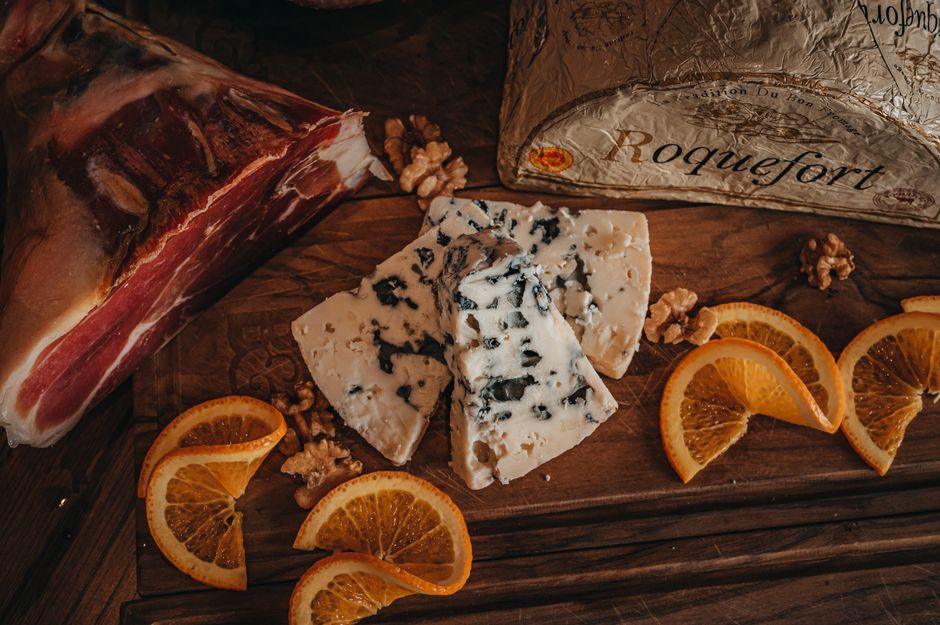
Roquefort is a French blue cheese made exclusively from raw sheep's milk, produced in the Aveyron region and aged in the natural limestone caves of Combalou near the village of Roquefort-sur-Soulzon. It's injected or layered with spores of Penicillium roqueforti, which develop into the cheese's signature blue-green veining as it ages, typically for a minimum of three months. The result is crumbly, moist, and tangy, with a sharp, peppery, salty flavor and a richer, more buttery mouthfeel than cow's-milk blues thanks to the higher fat content of sheep's milk. It's a protected designation of origin (AOC/PDO) product, meaning only cheese made in that specific region under specific conditions can legally be called Roquefort.
Varieties
Roquefort is one of only a handful of blue cheeses made from sheep's milk rather than cow's milk, which is what gives it a richer, more buttery texture than Gorgonzola, Stilton, or Danish blue. Unlike those cheeses, which can be produced anywhere following a general recipe, true Roquefort must be made and aged specifically in the Combalou caves under AOC rules.
Buying tips
Look for the AOC seal and the words 'Roquefort' with a red sheep logo, which confirms it was made in the protected region from raw sheep's milk. The interior should be ivory to pale yellow with even blue-green veining throughout, moist but not wet, and crumbly rather than rubbery. Avoid pieces that look dried out at the edges or have an ammonia smell, which signals overripening.
Substitutes
Stilton — 1:1
English cow's-milk blue with a similarly firm, crumbly texture, though less salty and slightly milder than true Roquefort.
Gorgonzola (piccante, not dolce) — 1:1
Italian cow's-milk blue; the piccante style is sharper and closer to Roquefort's bite, while dolce is much creamier and milder.
Danish blue (Danablu) — 1:1
Sharper and saltier than Roquefort with a softer, more spreadable texture; widely available and less expensive.
Bleu d'Auvergne — 1:1
French cow's-milk blue, moister and slightly less pungent, but a close cultural and flavor match for cooking.
Feta mixed with a pinch of garlic powder and black pepper — 1:1
Not a true flavor match since feta isn't a blue cheese, but it mimics the salty, tangy crumble in salads when blue cheese isn't wanted or available.
Storage
Wrap Roquefort loosely in wax or parchment paper, then place in a partially sealed plastic bag or container so it can still breathe; wrapping it airtight in plastic traps moisture and speeds spoilage. Store in the warmest part of the refrigerator, ideally a dedicated cheese drawer, and use within 1 to 2 weeks of opening for best texture. It can be frozen for up to 3 months for cooking purposes, but freezing breaks down the texture, making it grainy and better suited to sauces and dressings than for eating on its own afterward.
How to use
Crumble over salads with pears, walnuts, and a sherry vinaigrette. Melt into cream for a classic steak or beef fillet sauce, whisk into salad dressings, or fold into butter for finishing grilled meats. It's also a standard component of a cheese board, served with honey, fig jam, or fresh fruit to offset its saltiness.
What it pairs with
Pairs well with sweet, fatty, or acidic counterpoints: ripe pears, figs, honey, candied walnuts, and dessert wines like Sauternes or port. In savory dishes it works with bacon, steak, and bitter greens like endive or radicchio, which balance its salt and funk.
Nutrition
Roquefort is high in sodium and saturated fat due to its sheep's-milk base and aging process, but it's also a good source of calcium and protein in small servings; a typical serving size is about 1 ounce (28g).
FAQ
Why is Roquefort so much saltier than other blue cheeses?
The cheese is salted heavily during production to control moisture and encourage the right mold growth in the caves, which also helps preserve it during its long aging period.
Is Roquefort safe to eat during pregnancy?
Most guidelines advise avoiding it because it's made from unpasteurized (raw) sheep's milk, which carries a higher listeria risk than pasteurized blue cheeses.
Can Roquefort be substituted with a cow's-milk blue cheese without changing a recipe much?
Yes for most cooked applications like sauces and dressings; the main difference is a slightly less rich, less tangy result since cow's milk has less fat than sheep's milk.
What causes the blue-green veins in Roquefort?
They come from Penicillium roqueforti mold spores introduced into the curd, which grow along air pockets created when the cheese is pierced with needles during aging.
Have roquefort cheese on hand? Find recipes with our Recipe Generator →