
Salmon Roe
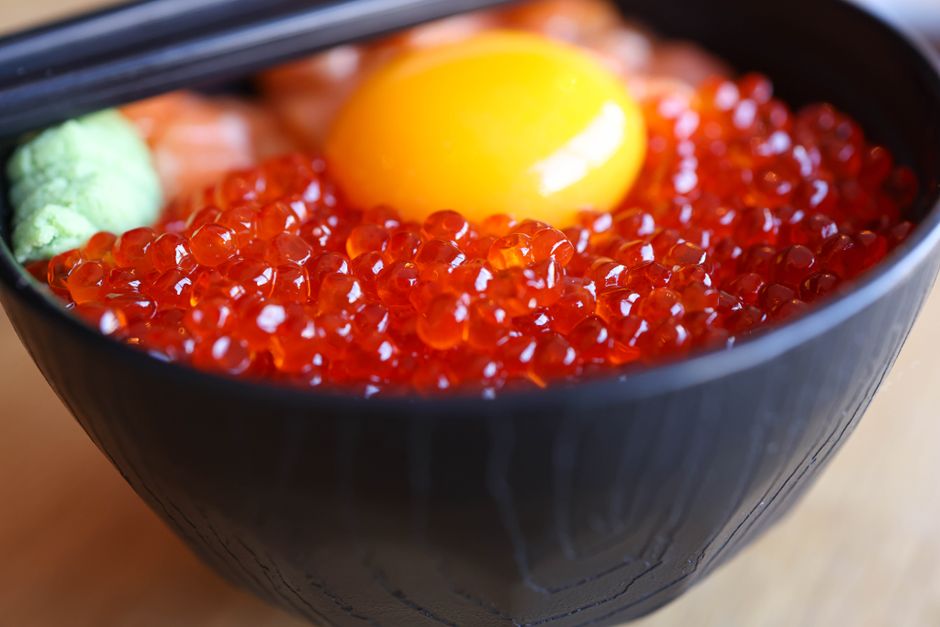
Salmon roe, known in Japanese cooking as ikura, is the cured eggs of salmon: large, translucent orange-red spheres roughly the size of a small pea. Each egg has a thin outer membrane that holds a liquid center, so it bursts with a briny, faintly sweet, oceanic flavor when bitten. It is typically cured in a salt brine (shio) or a soy-sauce marinade (shoyu) rather than cooked, and it is noticeably larger and softer than other fish roes used in sushi.
Varieties
Ikura (salmon roe) is often confused with other fish eggs but they are distinct: tobiko comes from flying fish and is much smaller and crunchier, masago comes from capelin and is the smallest and mildest, and true caviar comes specifically from sturgeon and carries a different price point and flavor entirely. Roe from keta (chum) salmon tends to run larger and paler orange, while sockeye roe is smaller and deeper red.
Buying tips
Look for eggs that are plump, glossy, and separate from each other rather than clumped together or sitting in a lot of excess liquid, which signals broken membranes. Fresh roe should smell clean and oceanic, never sharply fishy or ammonia-like. Check the label for shio (salt-cured) versus shoyu (soy-marinated) style, and note that wild sockeye or chum salmon roe tends to have deeper color and firmer eggs than farmed sources.
Substitutes
Trout roe — 1:1
Very close in size and pop; the flavor is a little milder and less briny than salmon roe.
Tobiko (flying fish roe) — 1:1 by volume
Much smaller and crunchier than salmon roe, with a smokier, saltier flavor. Works as a garnish substitute but won't match the texture.
Masago (capelin roe) — 1:1 by volume
Smaller than tobiko, often dyed bright orange, and milder and cheaper than either salmon roe or tobiko.
Whitefish roe — 1:1
Small, golden, and mild; a common budget substitute on blini and canapés.
Lumpfish roe — 1:1
Tiny, dyed black or red, and firmer with a more rubbery bite. Best used only as a garnish, not as a main feature.
Storage
Keep an unopened jar refrigerated toward the back of the fridge, not the door, and use by the date on the label. Once opened, press plastic wrap directly against the surface, seal tightly, and use within 2 to 3 days; the eggs degrade and start to weep liquid quickly once exposed to air. Fresh (never-frozen) roe can be frozen in an airtight container for up to 3 months and should be thawed slowly in the refrigerator, not at room temperature, to keep the eggs intact.
How to use
Spoon it over sushi rice for gunkan-maki, layer it on blini with crème fraîche, fold it gently into pasta with butter and lemon off the heat, top deviled eggs or avocado toast, or serve ikura-don style over warm rice with a sheet of nori and a drizzle of soy sauce. Always add it as a finishing garnish since heat toughens the membrane and turns the eggs opaque and rubbery.
What it pairs with
Pairs well with steamed rice, nori, soy sauce, lemon, crème fraîche, butter, cucumber, avocado, and chives. A squeeze of citrus or a touch of butter balances its saltiness without masking the pop.
Nutrition
Salmon roe is rich in omega-3 fatty acids (EPA and DHA), vitamin D, and vitamin B12, but it's also high in sodium from curing, so it's typically eaten in small spoonfuls rather than by the cupful.
FAQ
What's the difference between salmon roe and caviar?
Caviar traditionally refers only to roe from sturgeon. Salmon roe is a different, much larger, and far less expensive egg, though it's sometimes marketed loosely as 'salmon caviar.'
Can you eat salmon roe raw?
Yes. It's cured in a salt or soy brine rather than cooked, and it's meant to be eaten straight from the jar or spooned over rice, not heated.
Why does salmon roe pop in your mouth?
Each egg is enclosed in a thin membrane holding a liquid, gel-like center; the pop is that membrane rupturing under light pressure from the teeth.
How long does salmon roe last once opened?
About 2 to 3 days in the refrigerator if tightly sealed with plastic wrap pressed against the surface to limit air exposure.
Is salmon roe the same as tobiko?
No. Tobiko comes from flying fish and is much smaller and crunchier; salmon roe is roughly five times the size with a softer, juicier burst.
Have salmon roe on hand? Find recipes with our Recipe Generator →