
Vinegar
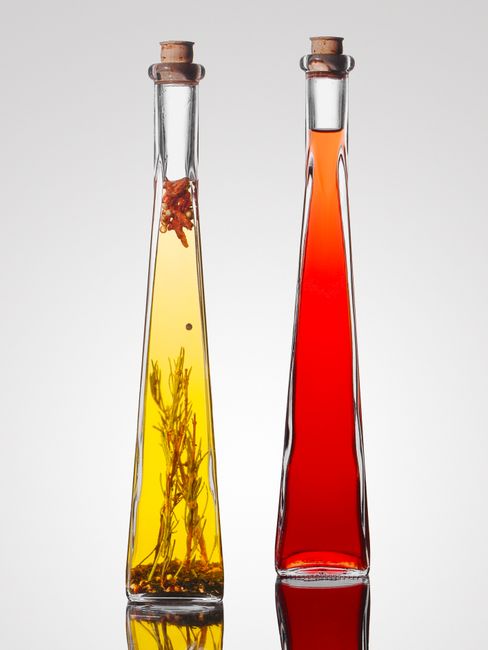
Vinegar is a sour liquid made by fermenting sugars into alcohol, then fermenting that alcohol into acetic acid with the help of bacteria. The result is an acidic ingredient, usually 4 to 7 percent acetic acid, used to add sharpness, cut richness, preserve food, and balance sweetness. What it's made from (grapes, apples, rice, malted grain, sugarcane) determines its flavor and color far more than the acid itself does.
Varieties
Distilled white vinegar is the sharpest and most neutral, best for pickling and cleaning. Apple cider vinegar has a mellow, fruity tang suited to dressings and marinades. Balsamic is aged and syrupy-sweet, best drizzled rather than used for sharp acidity. Rice vinegar is mild and slightly sweet, standard in Japanese and Chinese cooking. Red and white wine vinegars sit in between, sharp but with wine's fruitiness, and malt vinegar is dark, malty, and traditional with fried foods.
Buying tips
Check the label for acidity percentage; 5% is standard for most cooking and pickling, and safe canning recipes assume this level. For apple cider vinegar, unfiltered "with the mother" versions have more flavor than clear filtered ones. Avoid flavored vinegars with added sugar syrups if you want to control sweetness yourself.
Substitutes
Fresh lemon juice — 1:1
Brighter and more fruity than vinegar, with slightly less acidity. Works well in dressings and pan sauces but isn't reliable for shelf-stable pickling.
Fresh lime juice — 1:1
Similar acidity to lemon juice with a more citrusy, slightly bitter edge. Best in Latin American and Southeast Asian dishes where vinegar isn't traditional anyway.
Verjus (unfermented grape juice) — 1:1
Much gentler and fruitier acidity, common in French cooking. Good in delicate vinaigrettes where sharp vinegar would overpower.
Dry white wine — 2:1 (use double the amount)
Far less acidic than vinegar, so it needs to be used in greater volume and reduced slightly. Only suitable for deglazing pans or braises, not for dressings or pickling.
Cream of tartar mixed with water — 1/2 tsp cream of tartar plus 1 tsp water per 1 tsp vinegar
Only replicates vinegar's acidity for baking leavening (activating baking soda), not its flavor. Won't work in dressings or pickles.
Storage
Unopened vinegar is shelf-stable almost indefinitely in a cool, dark pantry. Once opened, keep it tightly capped away from direct sunlight; it doesn't need refrigeration. A cloudy strand or film that forms over time (the "mother") is harmless and can be strained out or left in.
How to use
Vinegar's main jobs are acidifying dressings and marinades, brightening finished dishes, preserving vegetables in pickling brines, deglazing pans after searing meat, and reacting with baking soda to leaven quick breads and cakes. Add small amounts and taste as you go since concentration varies by type.
What it pairs with
Balsamic and red wine vinegar pair well with olive oil, garlic, and Dijon mustard in vinaigrettes. Rice vinegar pairs with soy sauce, sesame oil, and sugar in Asian dressings. Malt vinegar is the classic partner for fried fish and chips, and apple cider vinegar works well with honey and mustard in slaws.
Nutrition
Vinegar is essentially calorie-free in the small amounts typically used and contains negligible vitamins or minerals. Claims about health benefits from acetic acid are mostly based on studies using much larger daily doses than a recipe calls for.
FAQ
Can you substitute one type of vinegar for another?
Usually yes at a 1:1 ratio by volume, but expect a flavor shift. Swapping balsamic for white vinegar in a pickle brine, for example, keeps the acidity but changes the color and adds sweetness that wasn't there before.
Does vinegar ever go bad?
Properly stored vinegar doesn't spoil because its acidity prevents bacterial growth. Flavor can mellow slightly over years and sediment may form, but it remains safe to use.
Why is acidity percentage important when substituting?
Standard cooking and pickling recipes assume 5% acidity. Some specialty vinegars, like certain balsamics, run lower, which can weaken a pickle brine's preserving power even if the flavor tastes similar.
Can vinegar replace buttermilk in baking?
Not directly, but a small amount of vinegar (about 1 tablespoon per cup of milk) can sour regular milk into a buttermilk substitute for pancakes and quick breads.
Have vinegar on hand? Find recipes with our Recipe Generator →