
Baked Salmon Recipe (with Internal Temp Guide)
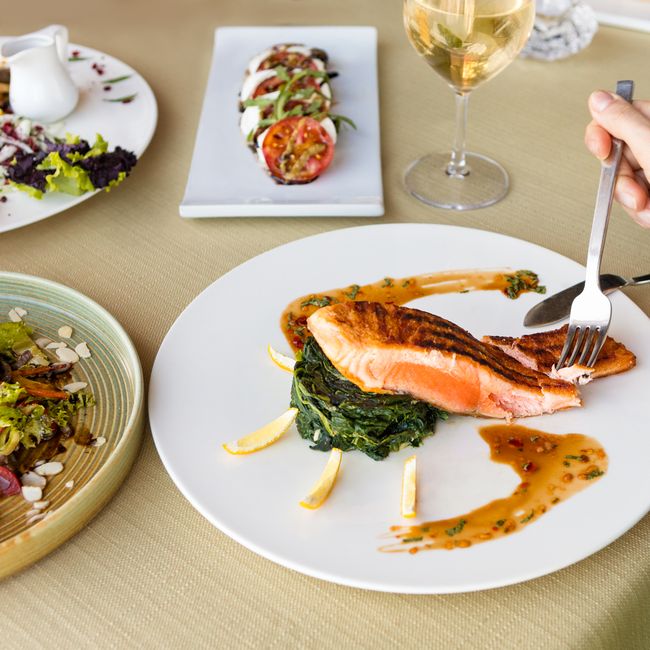
Salmon goes from moist to dry in a narrow window, so pulling it at the right internal temperature (not a fixed bake time) is what actually separates a flaky, silky fillet from a chalky, overcooked one.
- Prep
- 10 min
- Cook
- 15 min
- Total
- 25 min
- Servings
- 4
Ingredients
- 4 fillets (6 oz each) salmon fillets, skin-on
- 1 tablespoon olive oil
- 1 lemon lemon, sliced
- 3/4 teaspoon kosher salt
- 1/2 teaspoon black pepper, cracked
- 2 cloves garlic, minced
Nutrition per serving
- Calories
- 391
- Protein
- 39g
- Carbs
- 2g
- Fat
- 25g
Based on the recipe as written, one serving. Recalculates if you swap an ingredient above. An estimate only, exact values depend on the specific ingredients used.
Need different units or a different yield? Try our Conversion Calculator →
Instructions
- 1Preheat the oven to 400°F (205°C). Line a rimmed sheet pan with parchment or foil.
- 2Pat the salmon fillets dry with paper towels and place them skin-side down on the pan.
- 3Rub each fillet with olive oil, then sprinkle with salt, pepper, and minced garlic. Tuck lemon slices around and on top of the fillets.
- 4Bake for 12-15 minutes for 6-ounce fillets about 1 inch thick, until the thickest part of the fillet reaches 125°F (52°C) on an instant-read thermometer for medium, or 130-135°F (54-57°C) for well-done but still moist.USDA safe minimum for fish & shellfish: 145°F (63°C), or until opaque and firm
- 5Remove from the oven and let the salmon rest on the pan for 3 minutes; the temperature will climb another 3-5°F as it rests.
- 6Serve immediately with the roasted lemon slices.
Tips & variations
- Insert the thermometer probe sideways into the thickest part of the fillet, parallel to the pan, so the tip sits at the true center rather than passing through to the pan underneath.
- Fillets under an inch thick cook faster and can hit target temp in as little as 8-10 minutes; check early rather than trusting the time alone.
- For a glaze, brush fillets with a mix of soy sauce, honey, and rice vinegar during the last 5 minutes of baking instead of using plain olive oil.
- Frozen fillets can go straight into the oven at the same temperature, but add roughly 50% more time and rely on the thermometer rather than the clock.
Storage & reheating
Refrigerate cooked salmon in an airtight container for up to 3 days. Reheat gently in a 275°F (135°C) oven for about 10 minutes, or eat cold flaked into a salad; microwaving tends to overcook the edges before the center warms through.
Tips from the Tulo kitchen
- A thin, fast instant-read thermometer gives a more accurate reading than a dial thermometer, since the dial's larger sensor area can average in cooler surrounding flesh.
- White, chalky-looking beads (albumin) pushing out of the surface are a visual sign the fillet has already gone past medium; pull it sooner next time.
FAQ
What internal temperature should salmon be cooked to?
For moist, flaky salmon, most cooks pull fillets between 125°F and 135°F (52-57°C), which reads as medium to medium-well. The USDA's official food-safety minimum is 145°F (63°C), which is safer for higher-risk eaters but produces a noticeably drier, firmer texture.
Is it safe to eat salmon at 125°F?
For most healthy adults, yes, salmon carries a lower parasite and bacterial risk than poultry, and 125-130°F is a common target for restaurant-style medium salmon. Pregnant, elderly, or immunocompromised eaters should still cook to the USDA-recommended 145°F.
How do I check salmon's temperature without a thermometer?
Press a fork gently into the thickest part; if the flesh separates into large, glossy flakes and looks opaque but still slightly translucent at the very center, it's likely in the 125-135°F range. This method is far less reliable than an actual thermometer reading, though.
Why does my salmon look dry even though I followed the time in the recipe?
Bake times vary with fillet thickness, starting temperature, and oven calibration, so a fixed time is only ever an estimate. Checking internal temperature directly is the only reliable way to hit the same result every time.