Braised Beef Shank Recipe
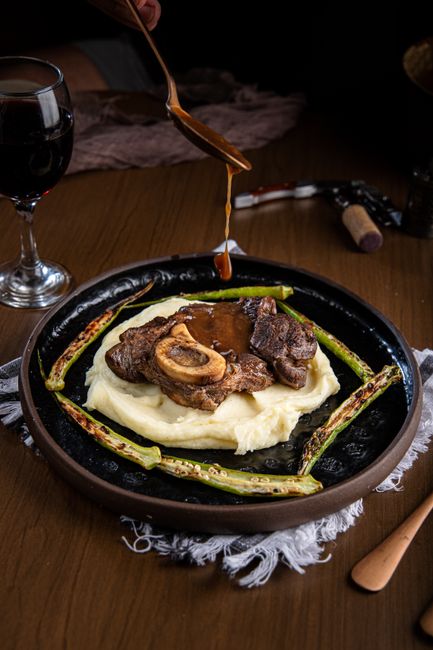
Beef shank is loaded with collagen-rich connective tissue that needs low, slow, moist heat to break down, so a long braise in wine and tomatoes turns a tough, inexpensive cut into meat that falls off the bone, while the marrow bone enriches the sauce as it cooks.
- Prep
- 20 min
- Cook
- 180 min
- Total
- 200 min
- Servings
- 4
Ingredients
- 4 pieces (about 3 lbs total) beef shanks, cross-cut, bone-in (1.5-inch thick)
- 1/3 cup all-purpose flour, for dredging
- 3 tbsp olive oil
- 1 medium yellow onion, diced
- 2 medium carrot, diced
- 2 stalks celery, diced
- 4 cloves garlic, minced
- 1 cup dry red wine
- 1 can (14.5 oz) crushed tomatoes
- 1 1/2 cups beef broth
- 2 leaves bay leaves
- 4 sprigs fresh thyme sprigs
- 1 tsp lemon zest, finely grated
- 1/4 cup fresh parsley, chopped (for gremolata)
- 1 1/2 tsp kosher salt
- 1/2 tsp black pepper
Nutrition per serving
- Calories
- 469
- Protein
- 34g
- Carbs
- 21g
- Fat
- 25g
Based on the recipe as written, one serving. Recalculates if you swap an ingredient above. An estimate only, exact values depend on the specific ingredients used.
Need different units or a different yield? Try our Conversion Calculator →
Instructions
- 1Pat the beef shanks dry with paper towels and season both sides generously with salt and pepper. Dredge each piece in flour, shaking off the excess.
- 2Heat the olive oil in a large Dutch oven over medium-high heat. Sear the shanks in batches, 3-4 minutes per side, until deeply browned. Transfer to a plate and set aside; don't crowd the pot or the meat will steam instead of brown.
- 3Add the onion, carrot, and celery to the same pot and cook, stirring occasionally, for 5-6 minutes until softened. Add the garlic and cook 1 minute more.
- 4Pour in the red wine, scraping up the browned bits stuck to the bottom of the pot with a wooden spoon. Let it simmer for 2-3 minutes to cook off the raw alcohol smell.
- 5Stir in the crushed tomatoes, beef broth, bay leaves, and thyme. Return the shanks to the pot, nestling them into the liquid so they're at least two-thirds submerged.
- 6Bring to a simmer, then cover and either transfer to a 325°F (165°C) oven or reduce the stovetop heat to low. Braise for 2.5 to 3 hours, turning the shanks once halfway through, until the meat is fork-tender and pulling away from the bone.
- 7While the shanks finish braising, stir together the lemon zest, parsley, and a pinch of salt in a small bowl to make the gremolata.
- 8Remove the shanks from the pot and discard the bay leaves and thyme stems. If the sauce is thin, simmer it uncovered over medium heat for 5-10 minutes to reduce and thicken.
- 9Return the shanks to the sauce to warm through, then serve topped with the gremolata.
Tips & variations
- Ask the butcher for shanks cut 1.5 to 2 inches thick, this is the classic osso buco cut and holds together better through a long braise than thinner slices.
- The marrow inside the bone is edible and delicious; scoop it out with a small spoon and stir it into the sauce for extra richness.
- No red wine on hand? Substitute an equal amount of additional beef broth plus 1 tablespoon of red wine vinegar.
- This braise can be made a day ahead; the flavor actually improves overnight, and the fat that rises to the top is easy to skim off once chilled.
- Leftover shredded shank meat and sauce make an excellent pasta ragu; just pull the meat off the bone and toss with pappardelle.
Storage & reheating
Store cooled shanks and sauce in an airtight container in the refrigerator for up to 4 days. Reheat gently on the stovetop over low heat, covered, until warmed through, adding a splash of broth if the sauce has thickened too much. Freeze in the sauce for up to 3 months; thaw overnight in the refrigerator before reheating.
Tips from the Tulo kitchen
- Tie each shank around the middle with kitchen twine before searing so it holds its shape through the long braise instead of falling apart into loose muscle groups.
- A splash of balsamic vinegar stirred in at the very end brightens the sauce if it tastes flat after reducing.
FAQ
What is beef shank and where does it come from?
Beef shank comes from the leg of the cow, just above the ankle, a heavily worked muscle that's tough when cooked quickly but becomes very tender with long, moist braising.
How do I know when beef shank is done?
Check for tenderness, not temperature: the meat should offer almost no resistance when pierced with a fork and should be starting to separate from the bone, usually after 2.5 to 3 hours at a low simmer.
Can I make this in a slow cooker or pressure cooker?
Yes. For a slow cooker, sear the shanks and build the sauce on the stovetop as directed, then transfer everything to the slow cooker and cook on low for 7-8 hours. For a pressure cooker, cook on high pressure for 45 minutes with a natural release.
Can I use boneless beef shank instead?
Yes, boneless shank works and braises the same way, though the sauce will be slightly less rich since it loses the marrow that bone-in shank contributes during cooking.
Why is my braising liquid thin instead of saucy?
This usually means the shanks were submerged too deeply and diluted the sauce, or the lid was on too tight during the final reduction; simmer the sauce uncovered for 5-10 minutes after removing the meat to thicken it.