Cajeta (Mexican Goat's Milk Caramel) Recipe
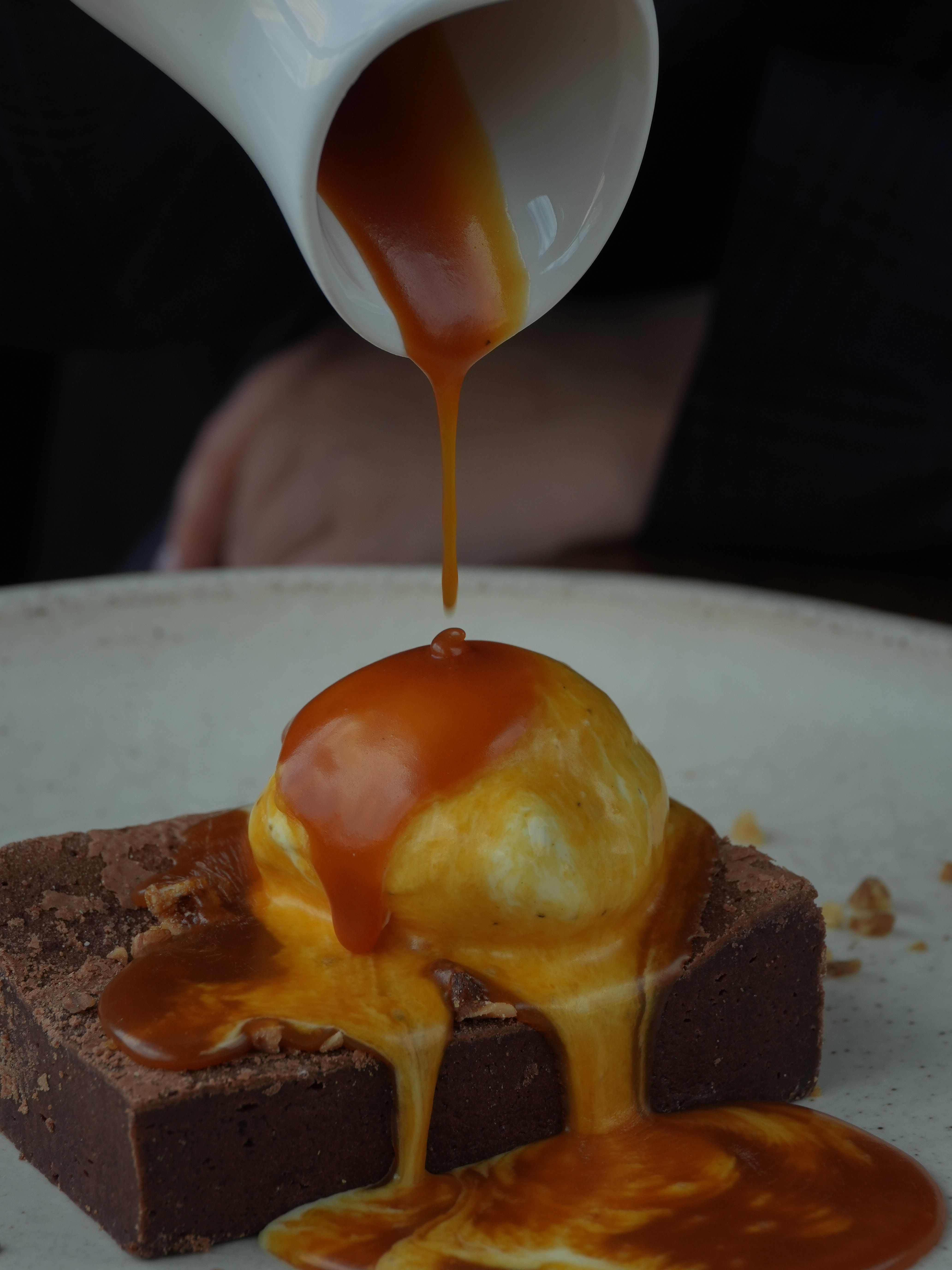
Cajeta is goat's milk slowly cooked down with sugar until the milk sugars caramelize on their own, no added caramel or corn syrup needed. A pinch of baking soda raises the milk's pH slightly, which speeds browning and keeps the proteins from curdling into gritty bits as the liquid reduces. In English there isn't one exact word for it: it's most often translated as goat's milk caramel or Mexican goat milk caramel sauce, and while it's closely related to dulce de leche, cajeta specifically means the goat milk version, not the cow's milk one.
- Prep
- 10 min
- Cook
- 1 hr 30 min
- Total
- 1 hr 40 min
- Servings
- 16
Ingredients
- 8 cups goat milk, whole
- 1 1/2 cups granulated sugar
- 1 teaspoon baking soda
- 1 tablespoon water, for dissolving baking soda
- 1 stick cinnamon stick
- 1/4 teaspoon fine sea salt
- 1 teaspoon vanilla extract
Nutrition per serving
- Calories
- 121
- Protein
- 4g
- Carbs
- 15g
- Fat
- 5g
Based on the recipe as written, one serving. Recalculates if you swap an ingredient above. An estimate only, exact values depend on the specific ingredients used.
Need different units or a different yield? Try our Conversion Calculator →
Instructions
- 1Stir the baking soda into the tablespoon of water in a small dish until fully dissolved and set aside.
- 2Pour the goat milk into a wide, heavy-bottomed pot (not a narrow saucepan, the wide surface helps the liquid reduce faster). Add the sugar, cinnamon stick, and salt, and set over medium heat.
- 3Bring the milk just to a bare simmer, stirring so the sugar dissolves, then slowly pour in the dissolved baking soda while stirring. The milk will foam up and rise dramatically, so use a pot that's at least twice as tall as the liquid.
- 4Once the foam settles back down, reduce the heat to medium-low and let the milk simmer gently, uncovered, stirring every 5 to 10 minutes at first.
- 5As the mixture thickens and darkens, after roughly 45 minutes, stir more frequently, every 2 to 3 minutes, scraping the bottom and sides so nothing scorches.
- 6Continue cooking until the cajeta is a deep caramel color and coats the back of a spoon in a thick, slow-moving ribbon, another 30 to 45 minutes. It will thicken further as it cools, so pull it slightly before it looks fully done.
- 7Remove the cinnamon stick, stir in the vanilla extract, and strain the cajeta through a fine-mesh sieve into a heatproof jar to catch any small curdled bits or cinnamon debris.
- 8Let the cajeta cool uncovered at room temperature for about an hour, then cap and refrigerate.
Tips & variations
- If goat milk isn't available, cow's milk makes a similar caramel, but it's technically dulce de leche rather than cajeta once goat milk is out of the mix.
- A splash of dark rum or a shot of orange liqueur stirred in at the end (in place of some of the vanilla) is a traditional variation in central Mexico.
- Watch color more than the clock: stove heat and pot width vary enough that cook times can swing by 20 minutes or more between kitchens.
- For a thinner sauce meant for pouring over ice cream, pull the cajeta a few minutes earlier, it firms up noticeably as it cools.
Storage & reheating
Store cajeta in an airtight jar in the refrigerator for up to 1 month. It thickens significantly when cold, so warm it gently in the microwave in 10-second bursts, or set the jar in a bowl of warm water, stirring between intervals until pourable again. Avoid direct high heat, which can scorch the sugar a second time.
Tips from the Tulo kitchen
- Skimming off the foam that rises right after adding the baking soda keeps the finished cajeta smoother; leaving it can leave tiny bubbles trapped in the set caramel.
- A candy thermometer isn't necessary, but if used, cajeta is typically done between 215°F and 220°F (102°C to 104°C).
FAQ
What is cajeta called in English?
There's no single-word English equivalent; it's usually translated as goat's milk caramel or Mexican goat milk caramel sauce. It's in the same family as caramel sauce and dulce de leche, but made specifically from goat's milk rather than cow's milk.
Is cajeta the same as dulce de leche?
They're made the same way, by slowly cooking sweetened milk until it caramelizes, but dulce de leche is traditionally made with cow's milk while cajeta is made with goat's milk, which gives it a slightly tangier, more complex flavor.
Why did my cajeta curdle or turn grainy?
This usually happens if the baking soda wasn't fully dissolved before adding it, or if the milk was allowed to boil hard rather than simmer gently. Straining the finished caramel through a fine sieve removes small curdled specks without affecting the flavor.
Can I make cajeta with canned goat milk?
Yes, canned or evaporated goat milk works and actually shortens the cooking time since it's already partially reduced; start checking for doneness around 30 minutes in rather than 45.
Why is my cajeta too thin even after an hour of cooking?
Low heat that never gets past a gentle simmer will stall the reduction. Raise the heat slightly to maintain a steady, visible simmer (not a rolling boil) and it should thicken within another 15 to 20 minutes.