Cast Iron Skillet Steak Recipe
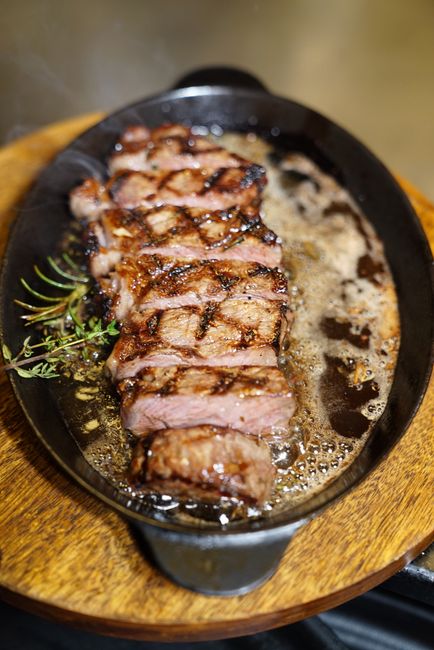
A screaming-hot cast iron pan holds and retains heat far better than stainless or nonstick, so the steak's surface sears and browns before the inside overcooks, and a butter-and-garlic baste at the end adds richness without steaming the crust away.
- Prep
- 15 min
- Cook
- 10 min
- Total
- 25 min
- Servings
- 2
Ingredients
- 2 steaks (10-12 oz each) ribeye steaks, about 1.25 inches thick
- 1 1/2 tsp kosher salt
- 1 tsp black pepper, coarsely ground
- 2 tbsp avocado oil or other high-smoke-point oil
- 3 tbsp unsalted butter
- 4 cloves garlic cloves, smashed
- 4 sprigs fresh thyme or rosemary sprigs
Nutrition per serving
- Calories
- 1040
- Protein
- 63g
- Carbs
- 3g
- Fat
- 87g
Based on the recipe as written, one serving. Recalculates if you swap an ingredient above. An estimate only, exact values depend on the specific ingredients used.
Need different units or a different yield? Try our Conversion Calculator →
Instructions
- 1Pat the steaks completely dry with paper towels and let them sit at room temperature for 30-40 minutes; a dry, tempered surface sears far better than a cold, damp one.
- 2Season both sides generously with kosher salt and pepper, pressing it into the meat.
- 3Set a cast iron skillet over high heat for a full 4-5 minutes until it's smoking hot. Add the oil and swirl to coat.
- 4Lay the steaks in the pan away from you and don't move them. Sear undisturbed for 3-4 minutes until a deep brown crust forms.
- 5Flip the steaks and sear the second side for another 3-4 minutes.
- 6Reduce the heat to medium-low, push the steaks to one side, and add the butter, garlic, and herb sprigs. Tilt the pan and spoon the melted butter over the steaks repeatedly for 1-2 minutes.
- 7Check internal temperature with a meat thermometer inserted into the thickest part: 125°F (52°C) for rare, 135°F (57°C) for medium-rare, 145°F (63°C) for medium.
- 8Transfer the steaks to a cutting board or plate and rest for 5-8 minutes before slicing against the grain.
Tips & variations
- Choose a steak at least 1 inch thick; thinner cuts overcook in the time it takes to build a proper crust.
- If the kitchen fills with smoke, that's normal at this heat; crack a window or run the exhaust fan rather than lowering the temperature.
- Swap ribeye for New York strip or top sirloin using the same timing, adjusting a minute or two for thickness.
- For a reverse sear on very thick steaks (over 1.5 inches), bake at 250°F (120°C) until 15°F below the target temperature first, then sear hard in the skillet for 60-90 seconds per side.
Storage & reheating
Store leftover steak in an airtight container in the refrigerator for up to 4 days. Reheat gently in a low oven (275°F/135°C) until just warmed through, or slice thin and add cold to salads and sandwiches; a hot pan will overcook already-cooked steak fast.
Tips from the Tulo kitchen
- Salting the steak well ahead of time, even the night before and left uncovered in the fridge, draws out moisture that then reabsorbs and seasons the meat all the way through, giving a better crust than salting right before cooking.
- A splatter screen or turning on the range hood before starting keeps the smoke and mess manageable without lowering the pan temperature.
FAQ
Why isn't my steak getting a good crust in a cast iron skillet?
The most common cause is a pan that isn't hot enough or a steak that's still wet on the surface; preheat the empty skillet for a full 4-5 minutes on high and pat the steak bone-dry before it goes in.
Do I need to oil the pan or the steak?
Oil the pan, not the steak. Adding oil directly to the meat washes off during searing and doesn't help browning; a thin layer of oil in the hot pan does the work.
Can I use a nonstick or stainless pan instead of cast iron?
Stainless steel works well since it also tolerates high heat, but nonstick pans shouldn't be used for high-heat searing; their coatings degrade above roughly 500°F, well below searing temperature.
How do I clean a cast iron skillet after searing steak?
Wipe out excess fat while the pan is still warm, scrub with hot water and a stiff brush (skip soap if the seasoning is thin), dry completely, and rub in a very thin coat of oil before storing.