Fresh Cherry Pie Recipe
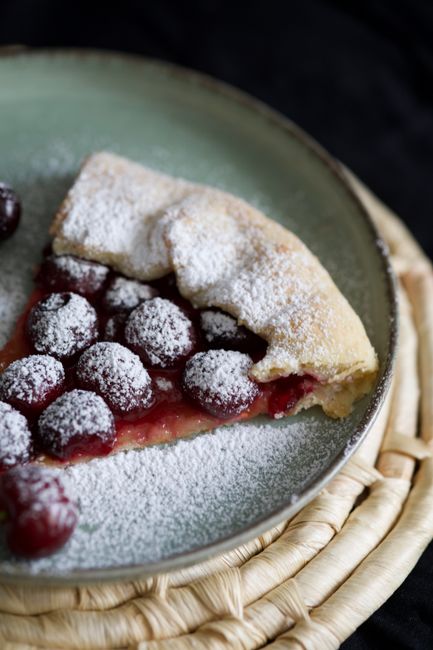
Fresh sweet cherries are only at their juiciest and most flavorful for a few months a year, roughly June through August across most of the US, so this pie leans entirely on that short window instead of masking underripe fruit with extra sugar. Macerating the pitted cherries first draws out their juice, and cornstarch (not flour) sets that juice into a filling that slices cleanly instead of running everywhere.
- Prep
- 35 min
- Cook
- 55 min
- Total
- 1 hr 30 min
- Servings
- 8
Ingredients
- 5 cups fresh sweet cherries, pitted
- 3/4 cup granulated sugar
- 3 tablespoons cornstarch
- 1 tablespoon fresh lemon juice
- 1/4 teaspoon almond extract
- 1/4 teaspoon salt
- 2 rounds pie dough, rolled into 9-inch rounds
- 1 large egg, beaten (for egg wash)
- 1 tablespoon coarse sugar, for topping
Nutrition per serving
- Calories
- 370
- Protein
- 4g
- Carbs
- 58g
- Fat
- 14g
Based on the recipe as written, one serving. Recalculates if you swap an ingredient above. An estimate only, exact values depend on the specific ingredients used.
Need different units or a different yield? Try our Conversion Calculator →
Instructions
- 1Pit the cherries over a bowl to catch the juice; a cherry pitter is fastest, but a clean paperclip hooked through the stem end works too.
- 2In a large bowl, toss the pitted cherries with sugar, cornstarch, lemon juice, almond extract, and salt. Let the mixture sit at room temperature for 15-20 minutes so the fruit releases its juice.
- 3Preheat the oven to 400°F (205°C). Roll out one round of pie dough and fit it into a 9-inch pie dish, letting the excess hang over the edge.
- 4Pour the cherry filling (including all the released juice) into the crust, mounding it slightly in the center.
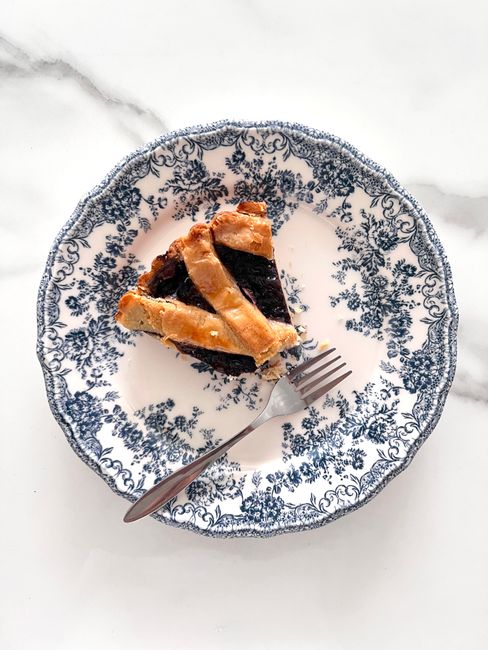
- 5Roll out the second round of dough and either cut it into strips for a lattice or lay it whole on top with several slits cut for steam. Trim and crimp the edges to seal.
- 6Brush the top crust with the beaten egg and sprinkle with coarse sugar.
- 7Bake at 400°F (205°C) for 20 minutes, then reduce the oven to 375°F (190°C) and continue baking for 30-35 minutes, until the crust is deep golden brown and juices bubble up through the vents.
- 8Cool the pie on a wire rack for at least 3 hours before slicing to let the filling fully set.
Tips & variations
- Sour (tart) cherries, usually available for a much shorter window in late June and early July, make a more tart pie; if using them, increase the sugar to 1 cup.
- Frozen pitted cherries work in the off-season. Thaw them completely, drain off the liquid, and add an extra tablespoon of cornstarch since frozen fruit releases more juice.
- Swap the almond extract for a teaspoon of vanilla extract or a pinch of cinnamon if almond flavor isn't wanted.
- A lattice top lets more steam escape than a solid crust, which helps prevent a soupy filling.
Storage & reheating
Cover the cooled pie loosely and store at room temperature for up to 2 days, or refrigerate for up to 5 days. Reheat individual slices in a 350°F (175°C) oven for about 10 minutes to re-crisp the crust; microwaving softens it.
Tips from the Tulo kitchen
- Line up a bowl of ice water next to the pitting station; dropping pitted cherries in immediately keeps their color and firmness while the rest get pitted.
- If the crust edges brown too fast during the first 20 minutes, cover just the rim with strips of foil and remove them for the final bake.
FAQ
When are cherries in season?
Fresh sweet cherries (like Bing) are in season roughly late May through August in the US, with California crops starting earliest and Washington and Michigan extending the season into August. Sour or tart cherries, used more often for pie filling, have a shorter window, typically mid-June to mid-July.
Can I use frozen cherries instead of fresh?
Yes. Thaw them fully and drain off the excess liquid before macerating, and add an extra tablespoon of cornstarch to account for the additional moisture frozen fruit holds.
Why is my cherry pie filling runny after baking?
Runny filling usually means the pie was sliced before it cooled, or it didn't bake long enough for the juices to visibly bubble through the vents. Both signs, full cooling and visible bubbling, need to happen before the cornstarch fully sets.
Do I need to blind-bake the bottom crust?
No. At 400°F the bottom crust cooks through in the same bake as the filling; blind-baking is only necessary for custard-style pies that would otherwise leave the bottom crust raw.