
Fresh Tomato and Basil Salad Recipe
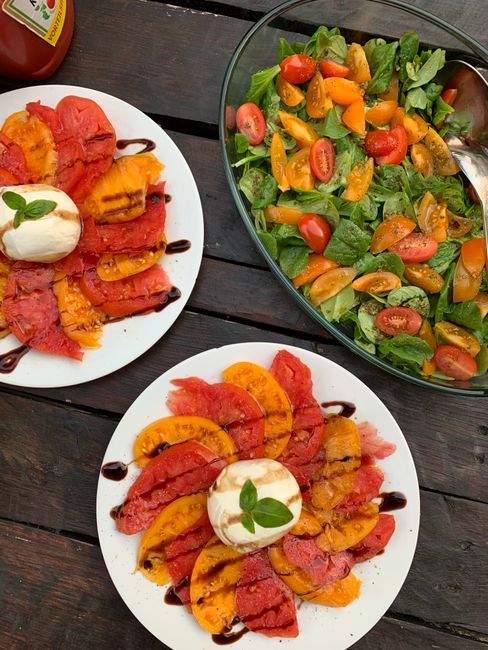
Botanically, a tomato is a fruit, since it develops from the flower of the plant and holds the seeds, which is exactly why this salad treats it like one: barely dressed, lightly salted, and served at room temperature so its natural sugars and acidity carry the whole dish instead of being buried under cooking or heavy sauces.
- Prep
- 15 min
- Cook
- 0 min
- Total
- 15 min
- Servings
- 4
Ingredients
- 4 large ripe heirloom or beefsteak tomatoes
- 8 oz fresh mozzarella
- 1/4 cup fresh basil leaves
- 3 tbsp extra-virgin olive oil
- 1 tbsp balsamic vinegar
- 1/2 tsp flaky sea salt
- 1/4 tsp black pepper, freshly cracked
Nutrition per serving
- Calories
- 287
- Protein
- 14g
- Carbs
- 7g
- Fat
- 23g
Based on the recipe as written, one serving. Recalculates if you swap an ingredient above. An estimate only, exact values depend on the specific ingredients used.
Need different units or a different yield? Try our Conversion Calculator →
Instructions
- 1Slice the tomatoes into 1/4-inch rounds and arrange them on a large platter, overlapping slightly.
- 2Tear the mozzarella into rough pieces and tuck them between the tomato slices.
- 3Scatter the basil leaves over the top, tearing any larger leaves.
- 4Sprinkle the flaky salt evenly over the tomatoes and let the salad sit for 5 minutes at room temperature.
- 5Drizzle with the olive oil and balsamic vinegar, then finish with cracked black pepper just before serving.
Tips & variations
- Use a mix of tomato varieties and colors (yellow, orange, and red) so the differences in sweetness and acidity show up in every bite.
- Swap the balsamic vinegar for a squeeze of fresh lemon juice for a brighter, less sweet finish.
- Add a few thin slices of red onion or shallot if the salad needs some bite.
- Skip the mozzarella for a dairy-free version and add a handful of toasted pine nuts instead.
Storage & reheating
This salad is best eaten within an hour of assembling, since salted tomatoes continue to release liquid and soften. Leftovers can be refrigerated in an airtight container for up to a day, but expect softer texture and a puddle of juices at the bottom; drain before serving again.
Tips from the Tulo kitchen
- Never store whole tomatoes in the refrigerator before using them; cold temperatures break down the texture and dull the flavor. Keep them at room temperature and only refrigerate leftovers once cut.
- Choose tomatoes that feel heavy for their size and give slightly to gentle pressure near the stem; that's a better ripeness test than color alone.
FAQ
Is a tomato a fruit or a vegetable?
Botanically, a tomato is a fruit because it develops from the ovary of a flowering plant and contains seeds, the same definition that covers cucumbers, peppers, and squash. Culinarily and legally in some contexts (including a famous 1893 U.S. Supreme Court tariff case), it's classified as a vegetable because of how it's used in savory cooking rather than eaten as a sweet dessert item.
Why does this recipe use room-temperature tomatoes instead of chilled ones?
Cold temperatures suppress the volatile compounds that give tomatoes their aroma and flavor, and refrigeration also breaks down the cell walls, leading to a mealy texture. Slicing them at room temperature preserves both the flavor and the firm, juicy bite.
Can I make this salad ahead of time?
Slice the tomatoes and prep the mozzarella and basil up to a few hours ahead, but keep them separate and don't salt or dress the tomatoes until just before serving, since salt draws out moisture quickly and softens the slices.
What's the best way to pick ripe tomatoes for a salad like this?
Look for tomatoes that are firm but yield slightly to gentle pressure, feel heavy for their size, and have a faint sweet smell at the stem end. Avoid any with soft spots, cracks, or a green tinge near the stem, which signals underripe fruit.