
Homemade Egg Noodles Recipe
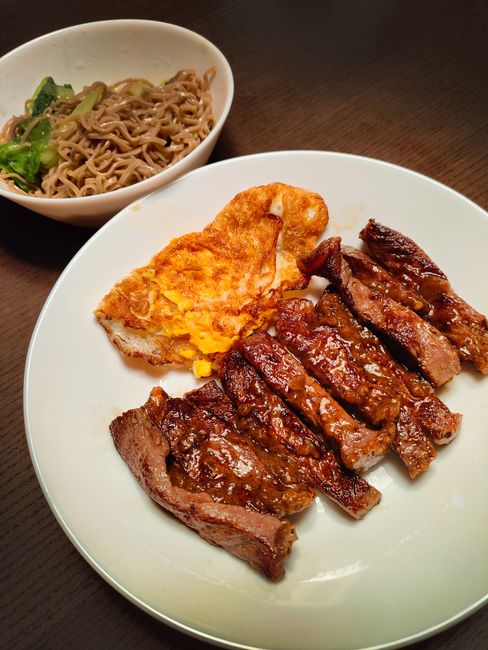
A high egg-to-flour ratio and no added liquid beyond the eggs themselves gives the dough enough structure to roll paper-thin without tearing, while a short rest lets the gluten relax so the sheets don't spring back when cut.
- Prep
- 45 min
- Cook
- 5 min
- Total
- 50 min
- Servings
- 6
Ingredients
- 2 cups all-purpose flour, plus more for dusting
- 3 whole large eggs
- 1/2 tsp salt
- 2 tbsp water, plus more as needed
- 2 tbsp butter, melted, for tossing (optional)
Nutrition per serving
- Calories
- 222
- Protein
- 8g
- Carbs
- 32g
- Fat
- 7g
Based on the recipe as written, one serving. Recalculates if you swap an ingredient above. An estimate only, exact values depend on the specific ingredients used.
Need different units or a different yield? Try our Conversion Calculator →
Instructions
- 1Mound the flour on a clean work surface or in a large bowl and make a well in the center. Crack the eggs into the well and add the salt.
- 2Using a fork, gently beat the eggs, gradually drawing in flour from the inner edges of the well until a shaggy, sticky dough starts to form.
- 3Knead the dough by hand for 5-8 minutes until smooth and elastic, working in the water a teaspoon at a time if the dough won't come together, or a little extra flour if it feels sticky.
- 4Wrap the dough tightly in plastic wrap and let it rest at room temperature for 20-30 minutes.
- 5Divide the dough into 2-3 pieces. On a well-floured surface, roll each piece out as thin as possible, about 1/16 inch thick.
- 6Let the rolled sheets air-dry, uncovered, for about 20 minutes, until the surface feels slightly leathery but isn't brittle or cracking.
- 7Dust each sheet generously with flour, loosely roll it up like a jelly roll, and slice crosswise into strips as narrow or wide as you like.
- 8Unroll the cut strips and toss them with a little extra flour to keep them from sticking together. Cook right away, or spread them out to dry fully for storage.
- 9Bring a large pot of well-salted water to a boil. Add the noodles and cook for 2-4 minutes, until tender but still with a slight bite.
- 10Drain and toss with melted butter if serving on their own, or lift the noodles straight from the pot into a simmering soup or stew.
Tips & variations
- Swap one whole egg for two egg yolks for a richer, more golden noodle with a firmer bite.
- Skip the boiling step entirely and drop the cut noodles straight into simmering chicken broth or a stew during the last few minutes of cooking; they'll thicken the liquid slightly as they cook.
- Cut the sheets wider, about 3/4 inch, for a pappardelle-style noodle, or very narrow for a delicate soup noodle.
- A pasta machine's roller attachment works fine here in place of a rolling pin if the dough feels too elastic to roll thin by hand.
Storage & reheating
Fresh, undried noodles keep in the refrigerator, well-floured and loosely covered, for up to 2 days. To store longer, spread the cut noodles in a single layer and let them air-dry completely (several hours to overnight) before transferring to an airtight container; they'll keep at room temperature for about a month or in the freezer for up to 3 months. Cook dried or frozen noodles straight from storage, no thawing needed, adding a minute or two to the boiling time.
Tips from the Tulo kitchen
- Dusting the rolled sheets with semolina flour instead of all-purpose keeps the noodles from clumping better, since semolina doesn't absorb as much surface moisture.
- Weigh the flour rather than scooping it by the cup; a packed cup can throw off the egg-to-flour ratio and make the dough too stiff to roll thin.
FAQ
Do I need a pasta machine to make egg noodles?
No. The dough can be rolled thin with a regular rolling pin, though a pasta machine's rollers make it easier to get an even thickness across the whole sheet.
Why did my noodles turn out tough or chewy?
This is usually from over-kneading past the point of smooth elasticity, or from skipping the rest period, which leaves the gluten too tight and springy when the dough hits boiling water.
Can I make the dough ahead of time?
Yes. The wrapped, rested dough keeps in the refrigerator for up to 24 hours before rolling; let it sit at room temperature for 15 minutes to soften slightly before rolling it out.
Can I use whole wheat flour instead of all-purpose?
Yes, though the dough will be denser and may need an extra teaspoon or two of water since whole wheat flour absorbs more liquid.