
Korean Ramyun Recipe
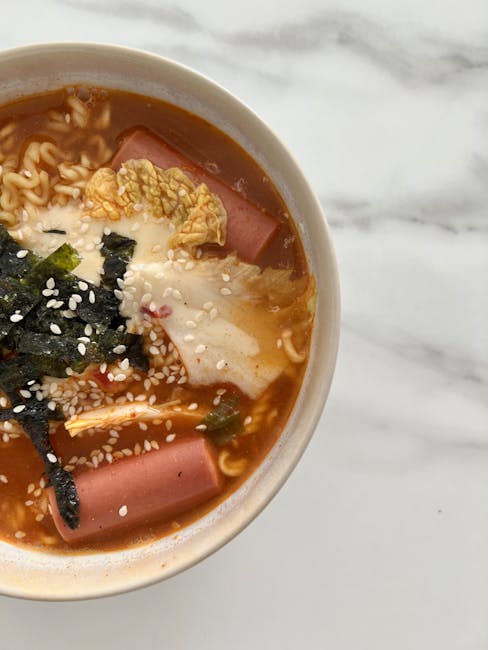
Instant ramyun noodles already carry a concentrated, well-seasoned broth base, so a few minutes of doctoring, an egg cracked in at the right moment, a slice of melted cheese, a spoonful of gochujang, turns a packet noodle into something that tastes like it came from a Seoul convenience store counter rather than a dorm room.
- Prep
- 5 min
- Cook
- 10 min
- Total
- 15 min
- Servings
- 2
Ingredients
- 2 packets Korean instant ramyun noodle packets (with seasoning packet)
- 3 1/2 cups water
- 2 large eggs
- 2 slices American cheese slices
- 1 tablespoon gochujang (Korean chili paste)
- 1/2 cup kimchi, chopped, plus a splash of its juice
- 2 stalks scallions, thinly sliced
- 4 ounces sliced Spam or precooked sausage (optional)
- 1 teaspoon toasted sesame oil
Nutrition per serving
- Calories
- 848
- Protein
- 28g
- Carbs
- 82g
- Fat
- 45g
Based on the recipe as written, one serving. Recalculates if you swap an ingredient above. An estimate only, exact values depend on the specific ingredients used.
Need different units or a different yield? Try our Conversion Calculator →
Instructions
- 1Bring the water to a rolling boil in a small pot over high heat.
- 2Add the noodle blocks and the seasoning packets, along with the gochujang. Stir to break up the seasoning and dissolve it into the broth.
- 3Boil the noodles for 2 minutes, separating the strands with chopsticks or tongs as they soften.
- 4Add the sliced Spam or sausage, if using, and the chopped kimchi with a splash of its juice. Simmer for 1 more minute.
- 5Crack the eggs directly into the pot, spacing them apart. Let them sit undisturbed for 30 to 45 seconds so the whites start to set before stirring gently, this keeps them from scrambling into shreds.
- 6Turn off the heat, lay the cheese slices over the top of the noodles, and cover the pot for 1 minute so the cheese melts into the broth.
- 7Ladle into bowls, drizzle with sesame oil, and scatter scallions over the top before serving immediately.
Tips & variations
- For a less spicy bowl, skip the gochujang and use only the seasoning packet, or cut it to a half teaspoon.
- Swap the American cheese for a slice of mozzarella or a handful of shredded cheddar for a stretchier melt.
- Add a handful of frozen dumplings or thin-sliced rice cakes (tteok) along with the noodles for a heartier bowl.
- Two packets of noodles but only one seasoning packet keeps the broth from turning too salty if using rich add-ins like Spam or cheese.
Storage & reheating
Ramyun is best eaten fresh since the noodles keep absorbing broth and turn soft and swollen within an hour. If needed, refrigerate leftover broth and noodles separately in airtight containers for up to a day and reheat gently on the stovetop with a splash of extra water; the texture will be softer than fresh but still edible.
Tips from the Tulo kitchen
- A splash of the kimchi's own brine, not just the chopped kimchi, does more for the broth's tang than the vegetable itself.
- Cracking the egg into a small dish first and sliding it in gently gives more control over where it lands than cracking straight over the pot.
FAQ
What makes ramyun different from regular instant ramen?
Ramyun refers specifically to Korean-style instant noodles, which tend to have a spicier, more intensely seasoned broth base built around gochugaru or gochujang, compared to the milder soy or miso bases common in Japanese instant ramen.
Can I make this without the seasoning packet, using only gochujang?
The seasoning packet supplies most of the salt and umami base, so skipping it entirely will taste flat even with gochujang added; use at least half the packet if cutting sodium.
Why did my egg turn rubbery instead of soft?
Boiling the egg directly in an actively bubbling pot cooks it too fast and toughens the white; turn the heat down to a gentle simmer right before adding the egg.
Can I use ramyun noodles without any broth, stir-fry style?
Yes, this is the basis for rose or fire noodle-style dishes: cook the noodles in less water, drain most of it off, then toss with the seasoning packet, a spoonful of gochujang, and a pat of butter.