
Over Hard Eggs Recipe
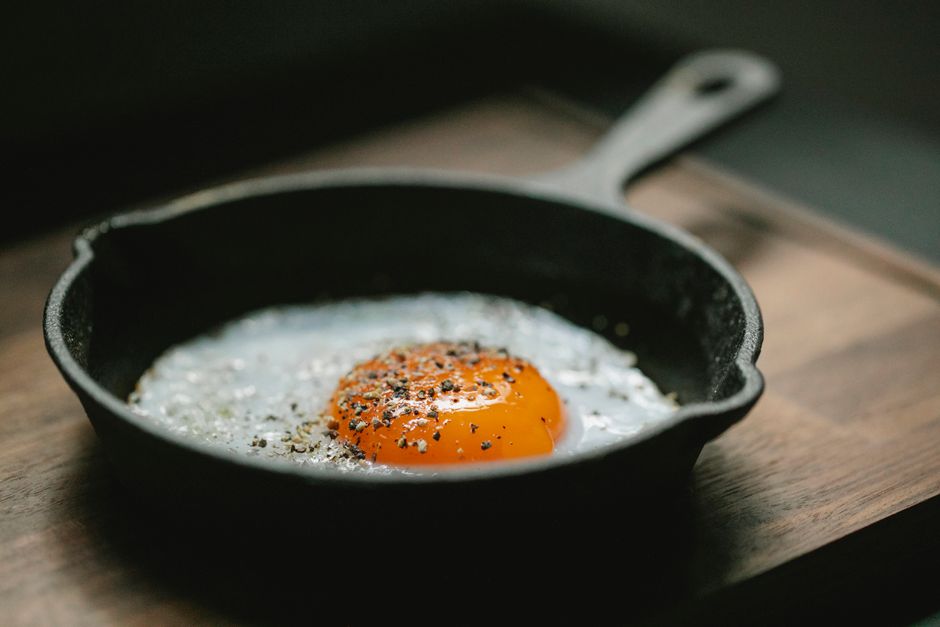
Cooking the eggs low and slow after the flip sets the yolk all the way through without scorching the whites, and breaking the yolk membrane partway through cooking keeps it from bursting messily on the flip.
- Prep
- 3 min
- Cook
- 6 min
- Total
- 9 min
- Servings
- 2
Ingredients
- 4 large large eggs
- 1 tbsp unsalted butter
- 1/4 tsp salt
- 1/4 tsp black pepper, freshly cracked
Nutrition per serving
- Calories
- 196
- Protein
- 13g
- Carbs
- 1g
- Fat
- 15g
Based on the recipe as written, one serving. Recalculates if you swap an ingredient above. An estimate only, exact values depend on the specific ingredients used.
Need different units or a different yield? Try our Conversion Calculator →
Instructions
- 1Set a nonstick or well-seasoned cast iron skillet over medium-low heat and add the butter, swirling to coat the bottom as it melts.
- 2Crack the eggs into the pan, spacing them apart so they don't touch. Season with salt and pepper.
- 3Cook undisturbed for 2-3 minutes, until the whites are set around the edges but still slightly glossy on top and the yolks have started to firm at the base.
- 4Using a thin spatula, gently flip each egg. As you flip, press the yolk lightly with the spatula edge to break the membrane so it flattens slightly.
- 5Cook for another 2-3 minutes, pressing the yolk gently once or twice more, until the yolk is completely opaque and firm all the way through and the whites are fully set with no translucent spots.
- 6Slide onto a plate immediately and serve right away, since the residual heat continues to firm the eggs even off the heat.
Tips & variations
- Use a thin, flexible fish spatula for the flip, a rigid spatula is more likely to tear the white and split the yolk unevenly.
- If the yolk still looks glossy after pressing, give it another 60-90 seconds rather than turning up the heat, which will burn the bottom before the yolk finishes.
- For a firmer, more crumbly yolk texture similar to a hard-boiled egg, press and flatten the yolk more aggressively right after the first flip.
Storage & reheating
Over hard eggs are best eaten immediately, since the fully set yolk turns rubbery on reheating. If needed, store cooled eggs in an airtight container in the refrigerator for up to 2 days and reheat gently in a covered skillet over low heat for about a minute, just enough to warm through.
Tips from the Tulo kitchen
- Crack each egg into a small dish first rather than straight into the pan, so a stray shell fragment doesn't end up in the skillet.
- A splash of water added to the pan just before flipping, then covered for 30 seconds, helps steam the top of the egg and speeds up how quickly the yolk firms.
FAQ
What's the difference between over hard and over medium eggs?
Over medium eggs are flipped and cooked briefly so the yolk stays soft and slightly runny in the center, while over hard eggs are cooked longer with the yolk pressed and flattened until it's completely firm and opaque all the way through.
Why did my egg yolk burst when I flipped it?
The membrane around the yolk is thin and tears easily once the egg has cooked a minute or two; flipping too aggressively or using a thick, rigid spatula tends to rupture it. A thin fish spatula and a gentle, quick flip usually keep it intact.
How do I know when the yolk is fully cooked?
Press the center gently with a spatula, a fully set yolk feels firm and springs back slightly rather than feeling soft or wet. Cutting into one to check is the most reliable way if unsure; it should look uniformly pale yellow with no glossy or translucent center.
Can I make over hard eggs without flipping them?
Yes, covering the pan with a lid for the last 2-3 minutes of cooking traps steam and cooks the yolk through from the top without needing to flip, though the yolk won't be flattened the way a pressed flip produces.