Pad Kra Pao Recipe
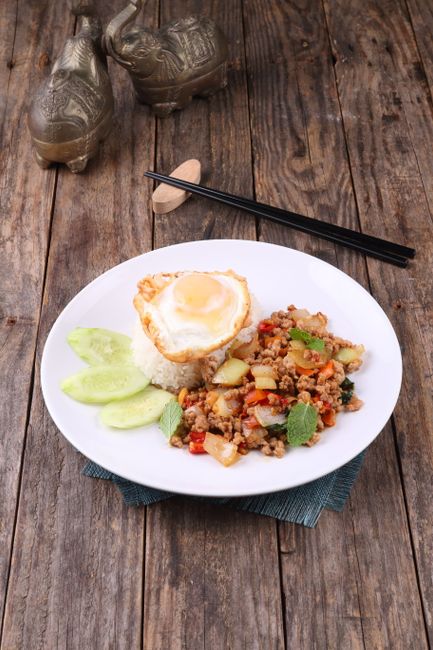
Cooking the garlic and chilies in hot oil first builds the aromatic base fast, and stirring in the holy basil only at the very end keeps its peppery, anise-like flavor from turning bitter or flat over prolonged heat.
- Prep
- 10 min
- Cook
- 15 min
- Total
- 25 min
- Servings
- 4
Ingredients
- 1 lb ground pork
- 6 cloves garlic, roughly chopped
- 6 chilies Thai bird's eye chilies, sliced
- 3 tbsp vegetable oil
- 2 tbsp oyster sauce
- 1 tbsp soy sauce
- 1 tbsp fish sauce
- 1 tsp granulated sugar
- 1 1/2 cups holy basil leaves (bai kra pao), packed
- 4 large eggs, for frying
- 4 cups jasmine rice, cooked
Nutrition per serving
- Calories
- 700
- Protein
- 36g
- Carbs
- 52g
- Fat
- 39g
Based on the recipe as written, one serving. Recalculates if you swap an ingredient above. An estimate only, exact values depend on the specific ingredients used.
Need different units or a different yield? Try our Conversion Calculator →
Instructions
- 1Cook the jasmine rice according to package directions and keep it warm.
- 2Heat 1 tablespoon of the oil in a small skillet over medium-high heat. Fry the eggs one at a time, spooning hot oil over the whites, until the edges are crisp and lacy and the yolk is still runny, about 2 minutes each. Transfer to a plate and set aside.
- 3In a mortar and pestle or mini food processor, pound or pulse the garlic and chilies into a coarse, chunky paste.
- 4Heat the remaining 2 tablespoons of oil in a wok or large skillet over high heat until it just starts to shimmer.
- 5Add the garlic-chili paste and stir-fry for 20-30 seconds, until fragrant but not browned.
- 6Add the ground pork, breaking it up with a spatula, and stir-fry for 4-5 minutes until fully cooked through and no longer pink.
- 7Stir in the oyster sauce, soy sauce, fish sauce, and sugar, and toss until the meat is evenly coated and the sauce has mostly reduced, about 1 minute.
- 8Remove the wok from the heat, add the holy basil leaves, and toss just until wilted, about 15 seconds.
- 9Spoon the pork over bowls of jasmine rice and top each with a crispy fried egg. Serve immediately.
Tips & variations
- Holy basil (bai kra pao) has a sharper, more peppery and clove-like flavor than the sweeter Thai basil sold at most grocery stores; use Thai basil only as a backup, since it changes the dish's signature flavor.
- Adjust the chilies to taste: 2-3 give a mild version, 6 or more matches the heat level served at most Thai street stalls.
- Ground chicken or ground turkey both work well as a lighter substitute for pork; ground beef also works but has a heavier flavor.
- For a vegetarian version, swap the meat for crumbled firm tofu or a mix of mushrooms, and use soy sauce in place of the fish sauce and oyster sauce.
Storage & reheating
Store the cooked pork mixture (without the egg) in an airtight container in the refrigerator for up to 3 days. Reheat in a hot skillet or wok with a splash of water until warmed through, then fry a fresh egg to serve on top, since fried eggs don't reheat well.
Tips from the Tulo kitchen
- Have all the sauces measured out before starting the stir-fry; the whole cooking process moves in under 10 minutes once the wok is hot.
- A well-seasoned wok or well-heated heavy skillet helps the pork sear rather than steam, which keeps the dish from turning watery.
FAQ
What is the difference between pad kra pao and pad Thai basil?
They're often the same dish; "pad kra pao" is the Thai name, referring specifically to holy basil (kra pao), while "Thai basil" on English menus sometimes loosely refers to a similar stir-fry made with the sweeter Thai basil variety instead.
Can I make pad kra pao without holy basil?
Thai basil can be substituted in a pinch, but it has a milder, more anise-forward flavor and lacks the peppery bite of true holy basil, so the dish will taste noticeably sweeter and less sharp.
Why is my pad kra pao watery instead of glossy and dry?
This usually happens when the wok isn't hot enough or too much meat is added at once, causing it to steam rather than sear; cook in batches if using a smaller pan and keep the heat on high throughout.
What rice is traditionally served with pad kra pao?
Jasmine rice is standard, though some street vendors in Thailand serve it over broken rice or with sticky rice on the side.