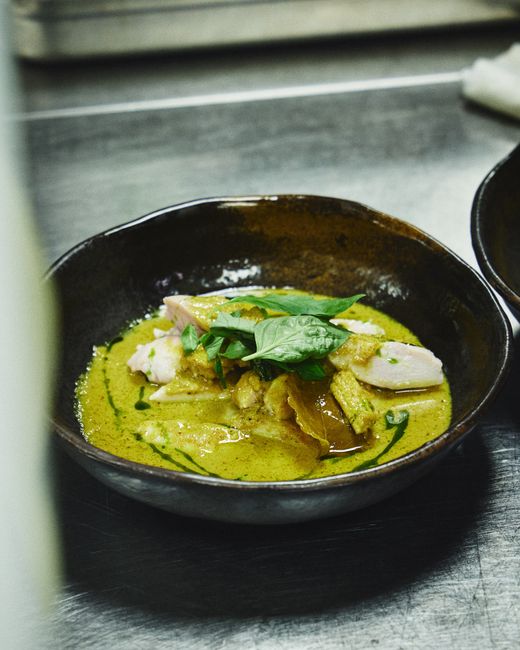
Pad Thai Recipe

Balancing tamarind's sourness against fish sauce's saltiness and palm sugar's sweetness in the right proportions is what makes the sauce taste like real pad Thai rather than a generic sweet noodle stir-fry, and cooking everything fast over high heat keeps the noodles from turning gummy.
- Prep
- 30 min
- Cook
- 15 min
- Total
- 45 min
- Servings
- 4
Ingredients
- 8 oz dried flat rice noodles (pad Thai noodles)
- 3 tbsp tamarind paste
- 3 tbsp fish sauce
- 3 tbsp palm sugar or light brown sugar
- 3 tbsp vegetable oil
- 3 cloves garlic, minced
- 1 small shallot, thinly sliced
- 4 oz firm tofu, cubed
- 12 oz medium shrimp, peeled and deveined
- 2 large eggs
- 2 cups bean sprouts, divided
- 1 cup garlic chives or scallions, cut into 2-inch lengths
- 1/3 cup roasted peanuts, crushed
- 4 wedges lime wedges, for serving
- 1 tsp dried chili flakes, for serving
Need different units or a different yield? Try our Conversion Calculator →
Instructions
- 1Soak the rice noodles in room-temperature or lukewarm water for 30-40 minutes, until pliable but still firm, then drain.
- 2Whisk together the tamarind paste, fish sauce, and palm sugar in a small bowl until the sugar dissolves, this is your pad Thai sauce.
- 3Heat the oil in a large wok or skillet over high heat.
- 4Add the garlic and shallot and stir-fry 30 seconds, until fragrant.
- 5Add the tofu and shrimp, stir-frying until the shrimp turn pink, about 2 minutes.
- 6Push everything to one side of the wok, crack the eggs into the empty space, and scramble briefly before folding into the rest.
- 7Add the drained noodles and the sauce, tossing constantly, and stir-fry 2-3 minutes, until the noodles are tender and have absorbed the sauce.
- 8Add half the bean sprouts and the garlic chives, tossing another minute, until just wilted.
- 9Remove from heat and plate, topping with the remaining raw bean sprouts, crushed peanuts, lime wedges, and chili flakes.
Tips & variations
- No tamarind paste, a mix of lime juice and a touch of brown sugar approximates the sourness, though the flavor won't be quite as deep.
- Chicken or a fully vegetarian version with extra tofu and mushrooms in place of the shrimp both work well with the same sauce.
- Palm sugar has a rounder, less sharp sweetness than white sugar, light brown sugar is the closest common substitute.
- Keep the raw bean sprouts and peanuts as a garnish added at the very end, cooking them into the noodles loses their crunch.
Storage & reheating
Refrigerate leftovers in an airtight container up to 3 days. Reheat in a hot skillet or wok with a splash of water to loosen the noodles, a microwave works but the noodles turn softer and less distinct.
Nutrition
A balanced dish with protein from the shrimp, tofu, and eggs alongside the carbohydrate-heavy rice noodles.
Tips from the Tulo kitchen
- Have every ingredient prepped and within arm's reach before you turn on the heat, pad Thai moves fast once the wok is hot and there's no time to chop mid-cook.
- Undersoak the noodles slightly rather than oversoak them, they keep cooking in the wok and mushy noodles can't be fixed once they're overcooked.
FAQ
What can I use instead of tamarind paste?
A mix of fresh lime juice and a little brown sugar can stand in, it won't have quite the same fruity depth, but it gets close to the sweet-sour balance tamarind provides.
Why are my pad Thai noodles mushy?
This usually comes from oversoaking the dried noodles before cooking, or stir-frying them too long in the sauce, aim for noodles that are still slightly firm going into the wok.
Can I make pad Thai vegetarian?
Yes, swap the fish sauce for soy sauce or a vegetarian fish sauce substitute, skip the shrimp, and add extra tofu and vegetables like mushrooms or bell peppers.