
Pan de Bono Recipe
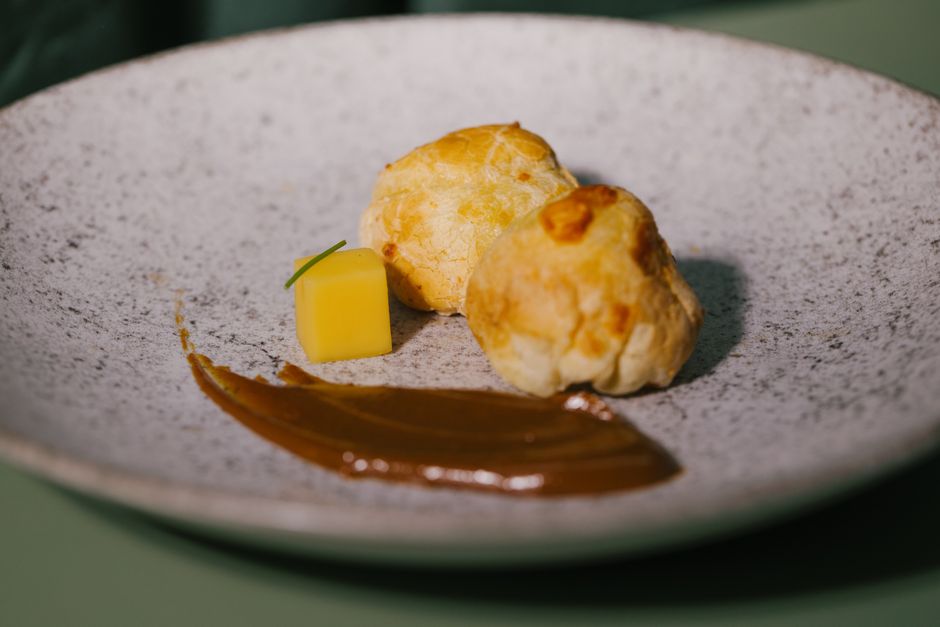
Tapioca starch has no gluten, so the dough relies on melted cheese and egg for structure, which is what gives pan de bono its stretchy, chewy crumb instead of a bready one, and a hot oven sets the crust fast so the rings puff before they can spread flat.
- Prep
- 20 min
- Cook
- 20 min
- Total
- 40 min
- Servings
- 12
Ingredients
- 2 cups tapioca starch (yuca starch)
- 1 cup queso fresco, crumbled
- 1/2 cup Parmesan cheese, finely grated
- 2 eggs large eggs
- 3 tbsp unsalted butter, softened
- 1 tbsp granulated sugar
- 1 tsp baking powder
- 1/2 tsp salt
Nutrition per serving
- Calories
- 165
- Protein
- 4g
- Carbs
- 20g
- Fat
- 7g
Based on the recipe as written, one serving. Recalculates if you swap an ingredient above. An estimate only, exact values depend on the specific ingredients used.
Need different units or a different yield? Try our Conversion Calculator →
Instructions
- 1Preheat the oven to 400°F (200°C) and line a baking sheet with parchment paper.
- 2In a food processor or large bowl, combine the tapioca starch, queso fresco, Parmesan, sugar, baking powder, and salt.
- 3Add the eggs and softened butter, then pulse in short bursts (or knead by hand) until the mixture just comes together into a smooth, slightly sticky dough. Stop as soon as it's uniform.
- 4If the dough feels too wet to shape, work in more tapioca starch a tablespoon at a time.
- 5Divide the dough into 12 equal pieces. Roll each into a ball, then roll into a rope about 6 inches long and pinch the ends together to form a ring, or leave as a ball; both shapes are traditional.
- 6Arrange the rings on the prepared baking sheet, spacing them about 2 inches apart.
- 7Bake for 18-22 minutes, until puffed and deep golden brown with a firm, slightly cracked crust.
- 8Cool on the pan for 5 minutes, then serve warm.
Tips & variations
- Traditional versions use queso costeño or cuajada, both salty, semi-firm Colombian cheeses. A mix of queso fresco and low-moisture mozzarella gets close to the same salt level and stretch.
- Tapioca starch and cassava flour are not interchangeable: tapioca starch is the extracted starch (fine, white, no fiber), while cassava flour is the whole dried root. Cassava flour will make the dough dry and crumbly instead of stretchy.
- For a crustier top, brush the rings with a beaten egg or scatter extra grated Parmesan over them right before baking.
Storage & reheating
Pan de bono is best eaten warm the day it's baked, since the chewy texture firms up as it cools. Store leftovers airtight at room temperature for up to 1 day or refrigerate up to 3 days. Reheat in a 350°F (175°C) oven for 8-10 minutes to bring back the crackly crust; microwaving works in a pinch but softens the crust.
Tips from the Tulo kitchen
- Some cooks blend sour and sweet tapioca starch (agria and dulce) for more tang and a slightly more open crumb; using only sweet starch still works fine and is easier to find outside Colombia.
- Letting the shaped dough rest on the baking sheet for 10 minutes before it goes into the oven helps the rings hold their shape instead of slumping as they bake.
FAQ
What's the difference between pan de bono and pan de yuca?
Pan de yuca is made purely from yuca starch, cheese, and egg, giving a denser, more elastic chew. Pan de bono adds a little sugar and often a touch more egg, which makes it lighter and slightly sweeter with a more open crumb.
Can I substitute cassava flour for the tapioca starch?
No. Cassava flour includes the fiber from the whole root and absorbs liquid very differently, so it produces a dry, crumbly dough instead of the smooth, stretchy one this recipe needs.
Why did my pan de bono turn out greasy or flat?
Overmixing melts the cheese and butter fat before baking, so it separates out in the oven instead of staying emulsified in the dough. Mix just until the dough comes together and keep the cheese cold going in.
Can I make the dough ahead or freeze it?
Yes. Shaped, unbaked rings can be refrigerated up to 24 hours or frozen up to 2 months. Bake frozen rings straight from the freezer, adding 4-5 extra minutes to the bake time.