Pan Seared Pork Chops Recipe
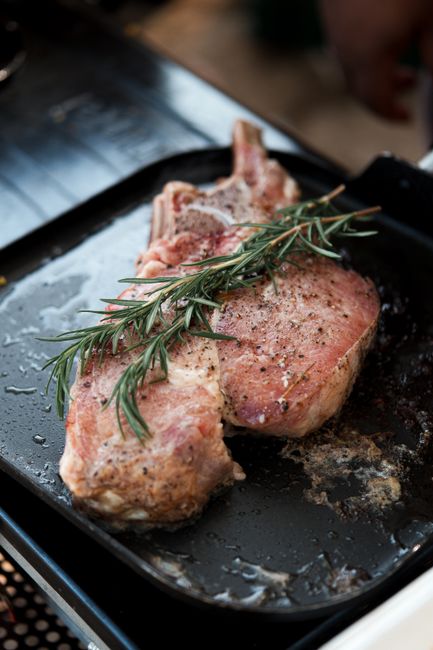
Patting the chops bone-dry and letting them sit at room temperature before searing means the surface hits the pan hot and dry instead of steaming, so a real crust forms fast. Butter-basting with garlic and thyme in the last few minutes adds flavor and helps carry heat to the top of the chop without overcooking it, and a rest afterward lets the juices redistribute instead of running out onto the cutting board.
- Prep
- 10 min
- Cook
- 15 min
- Total
- 25 min
- Servings
- 4
Ingredients
- 4 chops (8 oz each) bone-in pork chops, about 1 to 1.25 inches thick
- 2 tsp kosher salt
- 1 tsp black pepper, freshly ground
- 2 tbsp neutral oil (avocado or vegetable)
- 3 tbsp unsalted butter
- 4 cloves garlic cloves, smashed
- 4 sprigs fresh thyme sprigs
Nutrition per serving
- Calories
- 555
- Protein
- 48g
- Carbs
- 2g
- Fat
- 39g
Based on the recipe as written, one serving. Recalculates if you swap an ingredient above. An estimate only, exact values depend on the specific ingredients used.
Need different units or a different yield? Try our Conversion Calculator →
Instructions
- 1Take the pork chops out of the refrigerator 20 to 30 minutes before cooking so they come closer to room temperature, which helps them cook more evenly.
- 2Pat the chops completely dry with paper towels on both sides, then season generously with salt and pepper.
- 3Heat the oil in a large heavy skillet, cast iron works well, over medium-high heat until it shimmers and just starts to smoke lightly.
- 4Lay the chops in the pan away from you and don't move them; sear for 3 to 4 minutes undisturbed until a deep brown crust forms.
- 5Flip the chops and sear the second side for another 3 to 4 minutes.
- 6Reduce the heat to medium-low, add the butter, garlic, and thyme to the pan, and tilt the skillet slightly so the butter pools. Spoon the melted butter over the chops continuously for 2 to 3 minutes.
- 7Check the internal temperature with a meat thermometer inserted into the thickest part, not touching bone; pull the chops at 140-142°F (60-61°C), since they'll continue to rise a few degrees while resting.USDA safe minimum for beef, pork, lamb, veal: 145°F (63°C), plus a 3-minute rest
- 8Transfer the chops to a plate or cutting board and rest for 5 minutes before serving.
Tips & variations
- Buy chops at least 1 inch thick if possible; thin chops (under 3/4 inch) go from seared to overcooked in the time it takes to build a crust.
- If the chops have a fat cap along one edge, hold them fat-side down against the pan with tongs for 30 to 60 seconds at the start to render and crisp it.
- Swap the thyme for rosemary or sage, and add a splash of apple cider vinegar to the butter at the end for a tangy pan sauce.
- For extra-thick chops (over 1.5 inches), sear on the stovetop as directed, then finish in a 400°F (200°C) oven for 5 to 8 minutes to bring the center up to temperature without burning the crust.
Storage & reheating
Store cooled pork chops in an airtight container in the refrigerator for up to 3 days. Reheat gently in a covered skillet over low heat with a splash of broth, or in a 300°F (150°C) oven until just warmed through, to avoid drying them out. Freezing is not recommended, as it toughens the seared crust.
Tips from the Tulo kitchen
- A splatter screen over the pan during the initial sear cuts down on mess without trapping steam the way a solid lid would.
- Letting the seasoned chops sit uncovered in the fridge for an hour or more before cooking dries the surface further and improves the crust, similar to dry-brining a steak.
FAQ
What temperature should pan seared pork chops be cooked to?
Pull them from the heat at 140-142°F (60-61°C) internal, checked with a meat thermometer in the thickest part away from the bone. Carryover heat during the rest brings them up to the USDA-recommended 145°F (63°C).
Why are my pork chops tough after searing?
Overcooking is the usual cause; pork chops have very little fat marbling compared to beef, so even a few extra minutes past 145°F internal dries them out quickly. Using a thermometer instead of judging by time or color prevents this.
Should I use bone-in or boneless chops for pan searing?
Bone-in chops hold moisture better and are more forgiving of a few extra minutes in the pan, since the bone slows heat penetration near it. Boneless chops cook faster and need closer attention to avoid overshooting the target temperature.
Do I need to flour or dredge the chops before searing?
No, a plain sear with just salt, pepper, and a hot dry surface produces a better crust than a flour dredge, which tends to gum up and separate from the meat in a skillet sear.