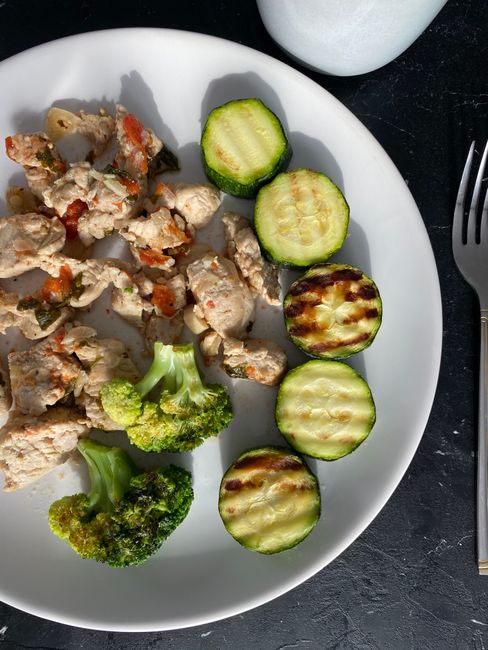
Pan-Seared Swordfish Recipe with Lemon Caper Butter
Swordfish is dense and meaty enough to take a hard, fast sear without falling apart, and its mild flavor holds up to the bright, briny lemon caper butter instead of getting lost under it. Searing in a screaming-hot pan builds a real crust in minutes while keeping the center just barely opaque.
- Prep
- 10 min
- Cook
- 15 min
- Total
- 25 min
- Servings
- 4
Ingredients
- 4 steaks (6 oz each) swordfish steaks, about 1-inch thick
- 2 tablespoons olive oil
- 3 tablespoons unsalted butter
- 2 cloves garlic, minced
- 2 tablespoons capers, rinsed and drained
- 1 cup cherry tomatoes, halved
- 1/3 cup kalamata olives, pitted and halved
- 1 lemon lemon, zested and juiced
- 2 tablespoons fresh parsley, chopped
- 1 teaspoon salt, plus pepper to taste salt and black pepper
Nutrition per serving
- Calories
- 369
- Protein
- 33g
- Carbs
- 4g
- Fat
- 24g
Based on the recipe as written, one serving. Recalculates if you swap an ingredient above. An estimate only, exact values depend on the specific ingredients used.
Need different units or a different yield? Try our Conversion Calculator →
Instructions
- 1Pat the swordfish steaks completely dry with paper towels and season both sides generously with salt and pepper. Let them sit at room temperature for 10 minutes while you prep the other ingredients.
- 2Heat the olive oil in a large heavy skillet (cast iron or stainless steel) over medium-high heat until it shimmers and just starts to smoke.
- 3Lay the steaks in the pan without crowding them and sear undisturbed for 3-4 minutes per side, until a deep golden crust forms and the fish releases easily from the pan.
- 4Check for doneness by inserting an instant-read thermometer into the thickest part; pull the steaks at 130-135°F (54-57°C), since they'll continue cooking as they rest. Transfer to a plate and tent loosely with foil.
- 5Lower the heat to medium and add the butter and garlic to the same skillet, scraping up any browned bits. Cook for 30 seconds, just until fragrant.
- 6Stir in the capers, cherry tomatoes, and olives, and cook for 2-3 minutes, until the tomatoes soften and start to release their juices.
- 7Remove the pan from heat and stir in the lemon zest and lemon juice. Taste and adjust salt and pepper.
- 8Spoon the warm sauce over the swordfish steaks and scatter parsley on top before serving.
Tips & variations
- Frozen swordfish steaks work well; thaw them fully in the fridge overnight and pat them extra dry before searing, since surface moisture stops the crust from forming.
- Swap the olives and capers for a simple chimichurri if a brighter, herbier sauce is preferred.
- A splash of dry white wine added right after the garlic, before the tomatoes, deglazes the pan and adds acidity to the sauce.
- Halibut or mahi-mahi can substitute for swordfish in this exact method; both are similarly dense and firm.
Storage & reheating
Refrigerate leftover swordfish and sauce separately in airtight containers for up to 2 days. Reheat the fish gently in a covered skillet over low heat with a splash of water, or in a 275°F (135°C) oven, just until warmed through; high heat or the microwave will overcook it and turn it rubbery.
Tips from the Tulo kitchen
- Buying steaks of even thickness (all about 1-inch) means they finish cooking at the same time, which matters more with swordfish than with thinner fillets since it's easy to overshoot doneness.
- Rinsing capers before adding them cuts the brininess so the sauce doesn't turn overly salty once it reduces.
FAQ
How do I know when swordfish is done?
Pull it from the heat at 130-135°F (54-57°C) on an instant-read thermometer inserted into the thickest part; it will climb to a safe, moist 140-145°F as it rests. Cooked much past that, swordfish turns dry and chalky because it has very little internal fat to buffer overcooking.
Can I grill swordfish instead of pan-searing it?
Yes. Brush the steaks with oil and grill over direct high heat for 3-4 minutes per side on a well-oiled grate; swordfish's firm, meaty texture holds together on the grill better than most fish.
Why did my swordfish turn out tough or rubbery?
This almost always comes from overcooking. Swordfish has less fat than salmon or tuna belly, so it dries out and toughens quickly once it passes about 145°F internally.
Do I need to marinate swordfish before cooking?
No, marinating is optional. A short 15-20 minute soak in olive oil, lemon, and garlic adds flavor, but longer than that and the acid starts to firm up the surface texture before it even hits the pan.