Panettone Recipe
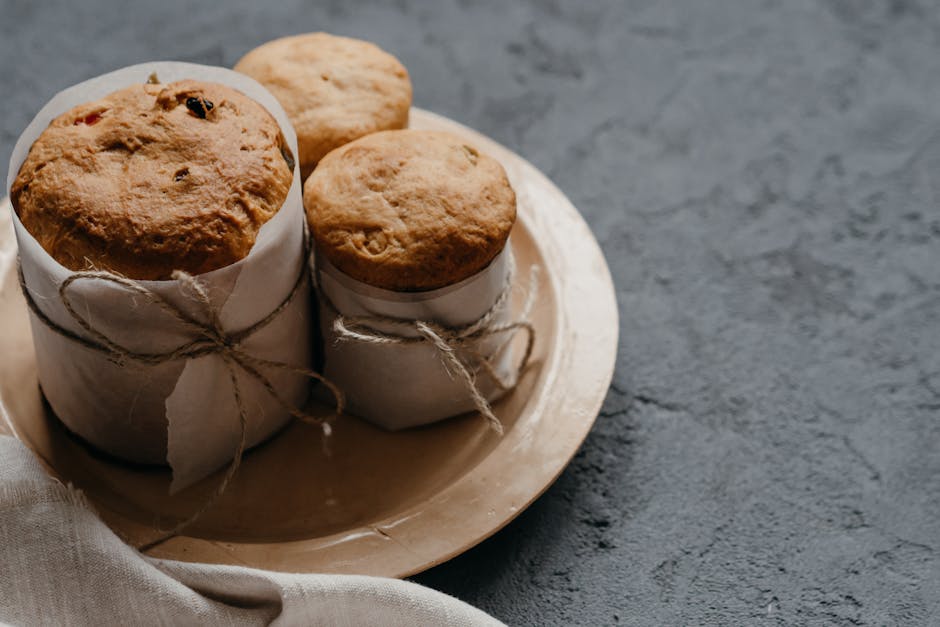
A yeasted sponge started well before the enriched dough gives the yeast a head start against all the sugar and fat that follow, and adding the butter gradually, in small additions once the gluten is developed, keeps the dough from turning greasy or collapsing. The long, slow final proof builds the deep fermented flavor panettone is known for, and hanging the baked loaf upside down while it cools keeps the delicate, butter-heavy crumb from sinking under its own weight.
- Prep
- 12 hr 30 min
- Cook
- 50 min
- Total
- 17 hr 20 min
- Servings
- 12
Ingredients
- 3/4 cup raisins
- 2 tbsp dark rum
- 1/2 cup whole milk, warm
- 2 1/4 tsp active dry yeast
- 4 cups bread flour
- 3/4 cup granulated sugar
- 6 large egg yolks
- 2 large whole eggs
- 2 tbsp honey
- 1 tbsp orange zest
- 1 tsp vanilla extract
- 1 tsp salt
- 3/4 cup unsalted butter, softened
- 1/2 cup candied orange peel, chopped
- 1/2 cup candied citron, chopped
Nutrition per serving
- Calories
- 434
- Protein
- 8g
- Carbs
- 64g
- Fat
- 15g
Based on the recipe as written, one serving. Recalculates if you swap an ingredient above. An estimate only, exact values depend on the specific ingredients used.
Need different units or a different yield? Try our Conversion Calculator →
Instructions
- 1Soak the raisins in the rum for at least 30 minutes, then drain and set aside.
- 2Make the sponge: in a small bowl, stir together the warm milk, 1 tablespoon of the sugar, and the yeast. Let stand until foamy, about 10 minutes.
- 3In a stand mixer fitted with the dough hook, combine 2 cups of the flour with the sponge. Mix until a shaggy dough forms, cover the bowl, and let rise in a warm spot until doubled, about 1 hour.
- 4Add the remaining flour, remaining sugar, egg yolks, whole eggs, honey, orange zest, vanilla, and salt to the risen sponge. Mix on low speed until combined, then knead on medium speed for 8-10 minutes until smooth and elastic.
- 5With the mixer still running, add the softened butter one tablespoon at a time, waiting until each piece is fully absorbed before adding the next. Continue kneading for another 8-10 minutes until the dough is glossy, very soft, and pulls cleanly away from the sides of the bowl.
- 6By hand, knead in the drained raisins, candied orange peel, and candied citron until evenly distributed throughout the dough.
- 7Shape the dough into a tight ball, place in a large buttered bowl, cover, and let rise in a warm spot until tripled in size, 3-4 hours.
- 8Punch down the dough, reshape into a tight ball, and place it seam-side down in a 6-inch panettone paper mold. Cover loosely and let rise again at cool room temperature until the dough reaches about an inch from the top of the mold, 6-8 hours or overnight.
- 9Preheat the oven to 350°F (175°C). Using a razor blade or very sharp knife, cut a shallow cross into the top of the dough and set a small pat of butter in the center of the cross.
- 10Bake for 45-55 minutes, tenting loosely with foil after 25 minutes if the top is browning too quickly, until a skewer inserted into the center comes out clean and a thermometer reads about 190°F (88°C).
- 11Immediately push two long metal skewers through the base of the loaf, perpendicular to each other, and suspend the panettone upside down between two pots or stacked books so it hangs freely without touching any surface. Let cool completely upside down, about 4 hours, before removing the skewers.
Tips & variations
- Swap the raisins for dried cranberries or dark chocolate chips for a less traditional but popular variation.
- If candied citron isn't available, use an equal amount of additional candied orange peel or diced dried apricots.
- A splash of the raisin-soaking rum brushed over the finished loaf while it's still warm adds extra flavor and a bit of shine.
- Long metal knitting needles or wooden skewers both work for the upside-down cooling step; just make sure they're long enough to clear the widest part of the mold on both sides.
Storage & reheating
Once fully cooled, wrap the panettone tightly in cellophane or plastic wrap and store at room temperature for up to a week; the high sugar, butter, and alcohol content keep it from drying out or molding as quickly as a lean bread. To freeze, wrap the whole loaf or individual slices tightly in plastic and foil for up to 2 months, then thaw at room temperature. Stale slices toast well and are good split and buttered.
Tips from the Tulo kitchen
- Bring the eggs and egg yolks to room temperature before mixing them in; cold eggs can cause the softened butter to seize and separate from the dough.
- If the paper mold seems flimsy once the dough is in, set it inside a metal ring or tall can for support during both the final proof and the bake.
FAQ
Why did my panettone collapse after baking?
This almost always means it wasn't cooled upside down. The crumb is so light and fat-rich that it sinks under its own weight while still hot unless the loaf is hung inverted until fully cooled.
Can I make panettone without a stand mixer?
Yes, but expect to knead by hand for 20-25 minutes total across the two kneading stages; the dough needs to become smooth and elastic before the butter goes in, and glossy and non-sticky afterward.
What size paper mold do I need for this recipe?
This recipe fits a 6-inch diameter panettone paper mold sized for about 1 kilogram of dough. Smaller 4-inch molds (500 grams) or larger 8-inch molds (1.5 kilograms) both work if the dough is divided or scaled accordingly.
Can I skip the candied fruit?
Yes. Omit the candied orange peel and citron and increase the raisins to about 1 1/4 cups for a simpler, less traditional loaf.