Reverse-Seared Garlic Butter Ribeye Steak Recipe
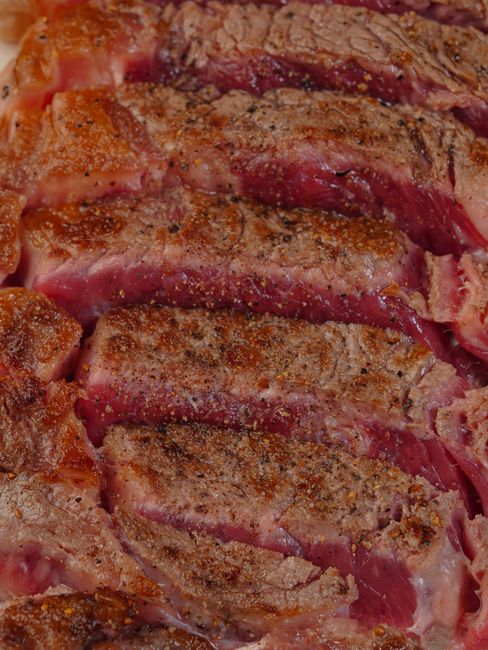
Cooking the steak low and slow in the oven first brings the whole interior up to temperature gradually, so there's no gray overcooked band under the crust. A short, screaming-hot sear at the end builds a deep crust fast, before the inside has any chance to overcook, and basting with garlic butter during that sear adds flavor the low-oven stage can't.
- Prep
- 15 min
- Cook
- 30 min
- Total
- 45 min
- Servings
- 2
Ingredients
- 2 steaks (12 oz each) ribeye steaks, about 1.5 inches thick
- 1 tbsp kosher salt
- 1 tsp black pepper, coarsely ground
- 1 tbsp neutral oil, high smoke point (avocado or grapeseed)
- 3 tbsp unsalted butter
- 4 cloves garlic cloves, smashed
- 4 sprigs fresh thyme sprigs
Nutrition per serving
- Calories
- 1126
- Protein
- 69g
- Carbs
- 3g
- Fat
- 94g
Based on the recipe as written, one serving. Recalculates if you swap an ingredient above. An estimate only, exact values depend on the specific ingredients used.
Need different units or a different yield? Try our Conversion Calculator →
Instructions
- 1Pat the steaks completely dry, then season all over with the salt. Set on a wire rack over a baking sheet, uncovered, in the refrigerator for at least 1 hour or up to overnight.
- 2About 45 minutes before cooking, pull the steaks out to come toward room temperature. Preheat the oven to 275°F (135°C).
- 3Season the steaks with the pepper. Set the rack of steaks in the oven and cook until an instant-read thermometer inserted into the thickest part reads 115°F (46°C) for medium-rare, 20-30 minutes depending on thickness.
- 4Remove the steaks and let rest for 5 minutes while a cast iron or stainless steel skillet heats over high heat until just smoking.
- 5Add the oil to the skillet, then lay in the steaks. Sear for 60-90 seconds per side, pressing down lightly for even contact, until a deep brown crust forms.
- 6Reduce the heat to medium, add the butter, garlic, and thyme, and tilt the pan to pool the melted butter. Spoon the foaming butter over the steaks continuously for 60-90 seconds.
- 7Transfer the steaks to a cutting board and rest for 5 minutes before slicing against the grain.
Tips & variations
- Salting at least an hour ahead (a dry brine) draws moisture to the surface, which then reabsorbs and seasons the meat all the way through, and it dries the surface for a better sear.
- A 1.5-inch-thick steak gives the low oven stage enough time to work; thinner steaks skip straight to a hot pan sear since there isn't enough mass to justify the oven step.
- Swap the thyme for rosemary, or add a smashed shallot to the butter baste for a sharper, sweeter note.
- For a smoke-free indoor sear, finish the steaks on a very hot outdoor grill instead of the skillet.
Storage & reheating
Refrigerate leftover steak in an airtight container for up to 3 days. Reheat gently in a 250°F (120°C) oven until warmed through, about 10-15 minutes, then finish with a 30-second sear in a hot skillet to re-crisp the crust. Avoid the microwave, which turns the crust rubbery and pushes the interior past medium-rare.
Tips from the Tulo kitchen
- A wire rack under the steak during the dry-brine stage keeps air circulating on all sides, so the surface dries evenly instead of sitting in its own moisture.
- Let the skillet get fully smoking hot before the steak goes in; a pan that's only warm will steam the surface instead of searing it, and the crust never fully forms.
FAQ
What temperature should I pull the steak for medium-rare?
Pull it from the oven at 115°F (46°C) internal, then the sear carries it up to a finished 130-135°F (54-57°C), which is medium-rare.
Can I skip the low-oven step and just pan-sear?
Yes for steaks under an inch thick, but for anything 1.5 inches or thicker, skipping the reverse sear usually means a gray overcooked band under the crust before the center reaches temperature.
Do I need a meat thermometer for this method?
Yes, an instant-read thermometer is what makes reverse searing reliable; without one, it's very easy to either underdo the oven stage or pull the steak too late and overshoot doneness during the sear.
Is cast iron necessary, or will stainless steel work?
Both work well; cast iron holds heat slightly longer through multiple sears, while stainless steel heats a bit faster and is easier to deglaze for a pan sauce.
Why rest the steak twice?
The short rest after the oven stage lets the surface cool slightly so the sear builds a crust instead of continuing to cook the interior, and the final rest after searing lets the juices redistribute before slicing.