Salt and Pepper Squid Recipe
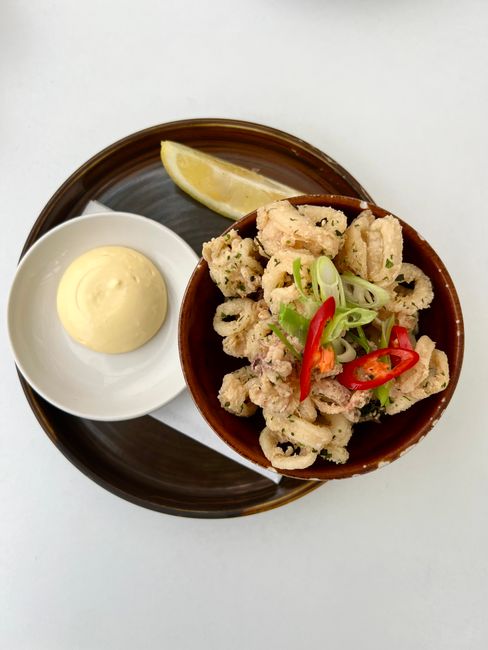
Double-frying the squid, once at a lower temperature to cook it through and again at a higher temperature to crisp the crust, keeps the inside tender while the cornstarch coating turns shatteringly crunchy. Toasting the salt and Sichuan peppercorns before grinding wakes up their oils, so the seasoning actually tastes like something instead of just tasting salty.
- Prep
- 20 min
- Cook
- 20 min
- Total
- 40 min
- Servings
- 4
Ingredients
- 1 1/2 lb squid, cleaned, bodies scored and cut into rings, tentacles left whole
- 1 large egg white
- 1 cup cornstarch
- 1 tbsp kosher salt
- 1 tbsp Sichuan peppercorns
- 1 tsp white pepper, ground
- 1/2 tsp five-spice powder
- 4 cloves garlic, minced
- 2 peppers Thai chile or jalapeno, thinly sliced
- 3 each scallions, sliced into rounds
- 4 cups vegetable oil, for frying
Nutrition per serving
- Calories
- 2226
- Protein
- 28g
- Carbs
- 38g
- Fat
- 221g
Based on the recipe as written, one serving. Recalculates if you swap an ingredient above. An estimate only, exact values depend on the specific ingredients used.
Need different units or a different yield? Try our Conversion Calculator →
Instructions
- 1Pat the squid completely dry with paper towels, this matters more than any other step for getting a crisp crust instead of a soggy one.
- 2In a bowl, toss the squid with the egg white until evenly coated.
- 3In a small dry skillet over medium heat, toast the Sichuan peppercorns and kosher salt together, shaking the pan, until the peppercorns smell fragrant and the salt takes on a faint golden color, about 2 minutes. Let cool slightly, then grind coarsely in a spice grinder or with a mortar and pestle. Stir in the white pepper and five-spice powder.
- 4Heat 3 inches of vegetable oil in a heavy pot or wok to 325°F (165°C).
- 5Working in small batches, dredge the squid in cornstarch, shaking off the excess, and fry for 60-90 seconds until just cooked through but pale. Remove to a wire rack; do not crowd the pot, or the oil temperature will drop and the coating will turn greasy instead of crisp.
- 6Raise the oil temperature to 375°F (190°C). Return the squid to the oil in batches and fry a second time for 45-60 seconds, until deep golden and audibly crisp when tapped with tongs. Drain on the rack again.
- 7Pour off all but 1 tablespoon of oil from a clean skillet, add the garlic and chile, and stir-fry over medium-high heat for 30 seconds until fragrant but not browned.
- 8Add the fried squid to the skillet along with 2 to 3 teaspoons of the toasted salt and peppercorn mix (to taste), and toss to coat.
- 9Fold in the scallions, toss once more, and serve immediately.
Tips & variations
- Shrimp (peeled, deveined, tail-on) works as a 1:1 swap for squid; fry for about 2 minutes total since there's no need to double-fry raw shrimp.
- For more heat, leave the chile seeds in, or add a pinch of dried chile flakes to the salt and peppercorn mix.
- If Sichuan peppercorns aren't available, black peppercorns toasted the same way will still give a fragrant, if less numbing, seasoning.
- Keep the fried squid on a wire rack rather than paper towels between fryings; paper towels trap steam underneath and soften the crust.
Storage & reheating
This dish is best eaten immediately, since the crust softens quickly once tossed with the seasoning. Leftovers can be refrigerated in an airtight container for up to 2 days; reheat in a 400°F (200°C) oven or air fryer for 5-6 minutes to recrisp. Avoid the microwave, which turns the coating chewy.
Tips from the Tulo kitchen
- Score the squid bodies in a shallow crosshatch pattern before cutting into rings; it helps the pieces curl into tight circles as they fry and gives the cornstarch coating more surface to grip.
- Use a thermometer to check oil temperature between batches, since it drops each time squid goes in, and frying below temperature is the most common reason the crust turns oily instead of crisp.
FAQ
What is salt and pepper seasoning made of?
The classic Cantonese version is toasted kosher or sea salt ground together with Sichuan peppercorns, white pepper, and a touch of five-spice powder. Toasting the salt and peppercorns together before grinding is what gives the mix its aroma rather than a flat, purely salty taste.
Why fry the squid twice?
The first fry at a lower temperature cooks the squid through without overcooking it, and the second, hotter fry crisps and dries out the crust in under a minute. Frying only once at high heat tends to overcook the squid before the coating browns properly.
Can I use frozen squid?
Yes. Thaw it fully in the refrigerator and pat it very dry before coating; excess moisture is the main reason frozen squid turns soggy instead of crisp when fried.
Is this dish very spicy?
As written it's mild to moderately spicy from the chile and white pepper. Sichuan peppercorns add a tingling, numbing sensation rather than heat, so the dish can taste more intense than it actually is in straight spiciness.