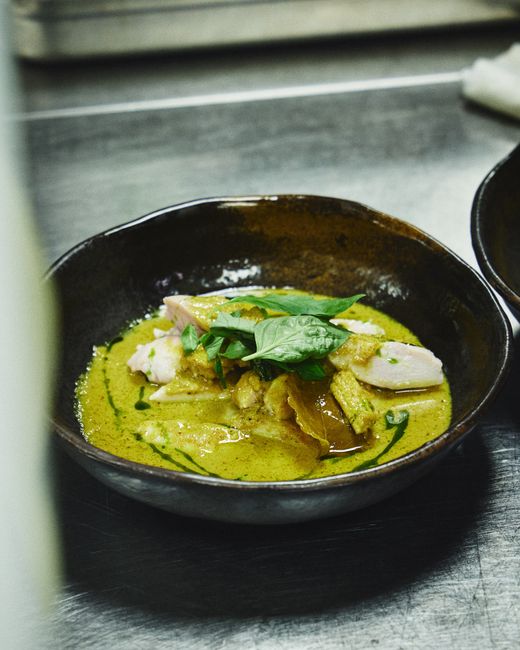
Thai Basil Chicken (Pad Kra Pao) Recipe
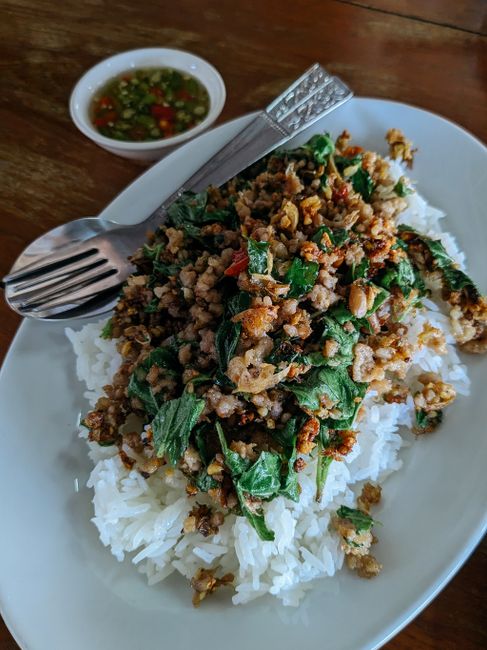
Pounding the garlic and chilies into a rough paste rather than mincing them releases far more of their oils into the hot pan almost immediately, letting the whole dish cook in just a few fast minutes without the aromatics tasting raw.
- Prep
- 15 min
- Cook
- 10 min
- Total
- 25 min
- Servings
- 4
Ingredients
- 5 cloves garlic cloves
- 4 chilies Thai bird's eye chilies, to taste
- 3 tbsp vegetable oil
- 1 lb ground chicken
- 1 small shallot, thinly sliced
- 1/2 cup green beans, cut into 1-inch pieces
- 2 tbsp oyster sauce
- 1 1/2 tbsp fish sauce
- 1 tbsp soy sauce
- 1 tsp sugar
- 1 1/2 cups fresh Thai holy basil (or Thai basil) leaves
- 4 large eggs, for frying
- 4 cups cooked jasmine rice, for serving
Need different units or a different yield? Try our Conversion Calculator →
Instructions
- 1Pound the garlic and chilies together in a mortar and pestle, or pulse in a food processor, until roughly broken down into a coarse paste.
- 2Heat 2 tablespoons of the oil in a wok or large skillet over high heat until shimmering.
- 3Add the garlic-chili paste and stir-fry 20-30 seconds, until very fragrant, taking care not to let the garlic burn.
- 4Add the ground chicken and shallot, breaking the chicken up with a spatula, and stir-fry until mostly cooked through, 3-4 minutes.
- 5Add the green beans and stir-fry 1-2 minutes, until just tender-crisp.
- 6Stir in the oyster sauce, fish sauce, soy sauce, and sugar, tossing to coat everything evenly.
- 7Cook another 1-2 minutes, until the chicken is fully cooked and the sauce has mostly reduced and coats the meat.
- 8Remove from heat and fold in the basil leaves just until wilted.
- 9In a separate pan, fry the eggs in the remaining oil over medium-high heat until the whites are crisp at the edges and the yolks are still runny.
- 10Serve the basil chicken hot over jasmine rice, each portion topped with a fried egg.
Tips & variations
- Holy basil (bai kra pao) has a peppery, slightly clove-like flavor that's traditional here, but Thai basil (with its anise note) is the common, widely available substitute and still tastes great.
- Ground pork, beef, or turkey all work in place of chicken using the same technique and timing.
- Adjust the chili count up or down freely, this dish ranges from mild to very spicy depending entirely on how many chilies go into the paste.
- Skip the fried egg for a lighter meal, though it's traditional and adds a rich, sauce-like element once broken over the rice.
Storage & reheating
Refrigerate the chicken (without a fried egg) in an airtight container up to 3 days. Reheat in a hot skillet or wok for a minute or two, a microwave works but the basil loses some of its brightness. Fry a fresh egg for each reheated portion rather than storing it.
Nutrition
A protein-forward stir-fry, ground chicken keeps it leaner than versions made with pork or beef, while the fried egg adds extra richness.
Tips from the Tulo kitchen
- Have the sauce ingredients measured out and the rice already cooked before you start the stir-fry, this whole dish moves from raw to plated in under 10 minutes once the wok is hot.
- Fold the basil in off the heat, or in just the last few seconds over heat, cooking it too long turns the leaves dark and bitter instead of keeping them bright and fragrant.
FAQ
What's the difference between Thai basil and holy basil?
Holy basil (bai kra pao) is spicier and slightly peppery with a clove-like note, and is what the dish is traditionally named for, Thai basil has a milder anise flavor and is the easier-to-find substitute most home cooks use.
Is pad kra pao the same as pad Thai?
No, they're different dishes entirely, pad Thai is a sweet-sour stir-fried noodle dish, while pad kra pao is a spicy, savory ground meat and basil stir-fry served over plain rice.
How spicy is Thai basil chicken traditionally?
It's typically quite spicy in Thailand, made with a generous number of bird's eye chilies, but the heat scales easily by adjusting how many chilies go into the paste.