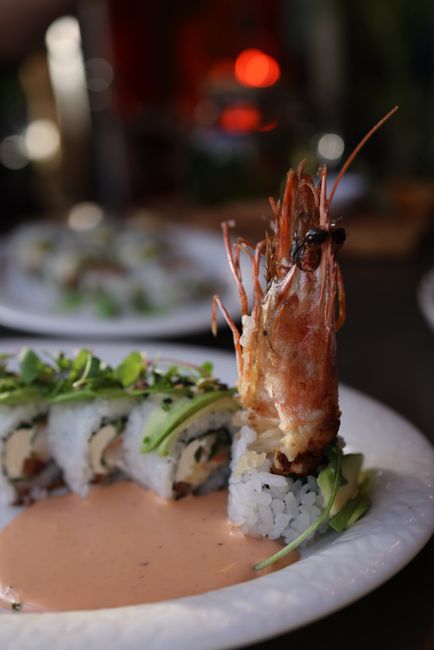
What Is Tempura? (And How to Make It)
Tempura is a Japanese cooking technique in which seafood or vegetables are dipped in a thin, cold batter of flour, egg, and ice water, then deep-fried briefly until the coating turns light, crisp, and lacy rather than thick or bready.

More detail
The defining feature of tempura is the batter itself, which is mixed as little as possible and kept ice-cold right up until frying. Overmixing or letting the batter warm develops gluten in the flour, which makes the coating heavy and bread-like instead of the shatteringly light, almost translucent crust tempura is known for. The batter is typically just flour (sometimes cut with cornstarch or rice flour), a beaten egg, and very cold water, mixed with a few quick strokes so lumps remain. Ingredients are dipped and fried in hot oil, usually around 340 to 350°F (170 to 177°C), for just one to three minutes depending on size, then drained immediately on a rack rather than paper towels, which trap steam and soften the crust.
Where it's used
Tempura is thought to have arrived in Japan in the 16th century through Portuguese traders and missionaries, who introduced the technique of frying battered food. Japanese cooks refined it over centuries into the delicate, minimal-batter style known today, distinct from its European ancestors. It's now a standalone dish (tempura served over rice as tendon, or with dipping sauce and grated daikon) and a technique applied to shrimp, white fish, sweet potato, kabocha squash, shiso leaves, and mushrooms.
Substitutes
There's no true substitute for tempura batter if the goal is that specific light, crisp texture, but a simple mix of cornstarch and ice water in place of flour produces an even more delicate, cracker-like crust for those avoiding gluten.
FAQ
Why is tempura batter kept cold?
Cold batter slows gluten development in the flour and keeps the batter from absorbing too much oil, which is what produces the light, crisp texture instead of a dense, greasy coating.
What's the difference between tempura and regular fried batter?
Standard fried batters (like those used for fish and chips) are often thicker, sometimes leavened with baking powder or beer, and produce a heavier, more golden-brown crust. Tempura batter is thin, unleavened, and fried to a pale, lacy finish.
What dipping sauce is traditionally served with tempura?
Tentsuyu, a light sauce made from dashi, soy sauce, and mirin, is the classic accompaniment, often served with grated daikon radish stirred in.
Can tempura be made ahead of time?
Tempura is best eaten within minutes of frying since the crust softens quickly as it cools. It doesn't hold or reheat well, which is why it's typically served immediately at the table.