
Gruyere Cheese
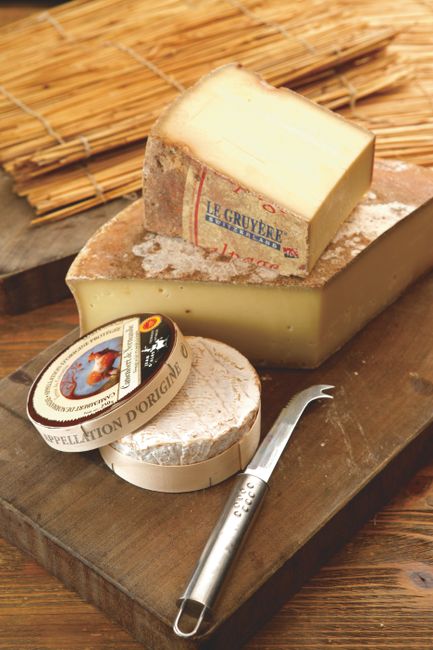
Gruyere is a firm, cooked-curd Swiss cheese made from raw cow's milk, traditionally produced in the region around Gruyeres, Switzerland. It's aged anywhere from 5 months to over a year, developing a nutty, slightly sweet flavor when young that turns deeper, earthier, and almost brothy as it ages. Unlike Swiss cheese sold in the US, true Gruyere has few or no holes and a dense, smooth texture that melts without becoming stringy.
Varieties
Younger Gruyere (around 5-8 months) is mild, buttery, and melts smoothly, making it the better choice for fondue and sandwiches. Older Gruyere (10 months to several years) develops a firmer, sometimes crystalline texture and a much stronger, more savory flavor closer to Parmesan, better suited to grating over finished dishes or eating on its own.
Buying tips
Look for the words "Switzerland AOP" or "Le Gruyere" stamped on the rind if you want the protected, authentic version; a lot of "Gruyere-style" cheese sold in the US is milder and blander. Aged Gruyere (12+ months, sometimes labeled "Reserve" or "Vieux") has a firmer, grainier texture and stronger flavor than the younger 5-8 month wheels. Buy from the deli counter and ask for a taste when possible, since age varies a lot by wheel.
Substitutes
Comte — 1:1
A close cousin from France with a similar nutty, savory profile and the same excellent melting behavior.
Emmental (Swiss cheese) — 1:1
Milder and slightly sweeter with a more elastic melt; works fine in sandwiches and gratins but lacks Gruyere's depth in fondue.
Beaufort — 1:1
Another Alpine cheese, firmer and more intensely nutty than Gruyere, good in dishes where you want a stronger flavor.
Fontina — 1:1
Softer and milder with an earthy edge; melts beautifully but won't give quite the same sharpness in French onion soup.
Storage
Wrap Gruyere in wax or parchment paper, then loosely in plastic or foil, and keep it in the warmer part of the refrigerator (like the door or a cheese drawer) rather than the coldest back wall. Rewrap after each use with fresh paper. Properly wrapped, a block keeps well for 3-4 weeks; if surface mold appears, cut away at least an inch around it and rewrap.
How to use
Gruyere is the backbone of French onion soup and classic cheese fondue because it melts smoothly without turning greasy or stringy. Grate it into quiche, gratins, souffles, and mac and cheese, or layer thin slices into croque monsieur and grilled cheese for a deeper flavor than cheddar alone. It also holds up well as a table cheese, sliced thick and served with bread, fruit, and cured meats.
What it pairs with
Pairs well with dry white wines like Chasselas or a light Riesling, and with crusty bread, apples, pears, and walnuts. In cooking, it partners naturally with caramelized onions, potatoes, ham, and mustard.
Nutrition
Gruyere is calorie-dense and high in saturated fat and sodium like most aged hard cheeses, but it's also a notably good source of calcium and vitamin B12, and its long aging process breaks down much of the lactose, making it easier to digest for some people who are lactose sensitive.
FAQ
Why does my Gruyere have no holes, unlike other Swiss cheese?
True Gruyere is made with a different bacterial culture and fermentation process than Emmental, which produces fewer or no eyes (holes). Small holes or none at all is normal and not a sign of lower quality.
Can I freeze Gruyere?
You can, but freezing changes the texture, making it crumblier and slightly grainy once thawed. It's fine for cooked dishes like gratins or soup where texture matters less, but not ideal for serving on a cheese board.
Is Gruyere the same as Swiss cheese from the grocery store?
No. Generic 'Swiss cheese' sold in the US is usually a mild, mass-produced Emmental-style cheese with large holes. Gruyere has a denser texture, deeper flavor, and is aged longer.
Why does Gruyere work so well in fondue?
Its protein structure and moderate fat content let it melt into a smooth, stretchy liquid rather than separating into an oily mess, which is why it's traditionally paired with Emmental and white wine in classic Swiss fondue recipes.
Have gruyere cheese on hand? Find recipes with our Recipe Generator →