
Nigiri Sushi
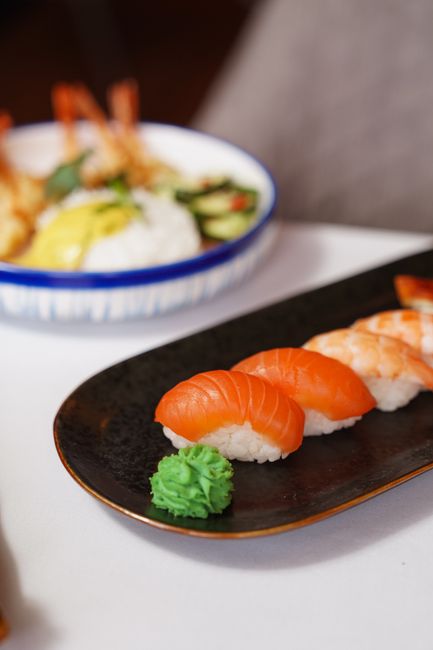
Nigiri sushi is a hand-formed oblong of vinegared sushi rice topped with a thin slice of fish, shellfish, or egg, usually with a small dab of wasabi pressed between the rice and topping. The rice is shaped by hand into a compact log, and the topping is draped over it, sometimes tied on with a thin strip of nori. Unlike maki, there's no seaweed wrap around the rice, and unlike sashimi, it always includes rice as the base.
Varieties
Nigiri differs from maki, which wraps rice and fillings in a sheet of nori, and from sashimi, which is sliced raw fish served with no rice at all. Common nigiri toppings each have their own name: maguro (tuna), sake (salmon), ebi (shrimp), unagi (grilled freshwater eel), and tamago (sweet egg).
Buying tips
For raw fish, buy only fish labeled 'sushi-grade' or 'sashimi-grade' from a fishmonger you trust; this labeling generally reflects a specific freezing process that kills parasites, not just general freshness. Buy it the same day you plan to eat it, and look for firm, glossy flesh without any sour or overly fishy smell.
Substitutes
Cooked shrimp (ebi) — 1 piece topping per 1 piece nigiri
Already cooked and butterflied before serving, so it sidesteps any concern about raw fish freshness. Mild, sweet flavor works well for people new to sushi.
Tamago (sweet Japanese omelet) — 1 slice per 1 piece nigiri
A fully cooked, vegetarian-friendly topping. Usually secured to the rice with a thin strip of nori since the egg doesn't cling on its own.
Cold-smoked salmon — 1 slice per 1 piece nigiri
Cured and smoked rather than raw, so it doesn't require sushi-grade sourcing, though the texture is denser and less buttery than fresh raw salmon.
Ripe avocado — 1 slice per 1 piece nigiri
A vegetarian substitute that mimics the fatty, soft mouthfeel of otoro or salmon belly reasonably well, though the flavor is obviously different.
Storage
Nigiri is meant to be eaten the day it's made. If you must hold it briefly, keep raw fish toppings refrigerated separately from the rice and assemble just before serving. Never refrigerate assembled sushi rice for storage; cold temperatures cause the starches to firm up and turn the rice hard and chalky within a few hours.
How to use
Served as individual pieces, usually two to a plate as part of a larger set. Dip the fish side lightly in soy sauce rather than the rice side, which soaks up too much sauce and falls apart. Eat pickled ginger between different types of nigiri to reset the palate rather than mixing it into the soy sauce.
What it pairs with
Pairs with pickled ginger (gari) and a light dab of wasabi, soy sauce for dipping, hot green tea, or a chilled, light junmai sake that won't overpower delicate fish.
Nutrition
A single piece of fish nigiri runs roughly 40 to 70 calories depending on the topping, most of it from the rice itself, which is seasoned with rice vinegar, sugar, and salt. Fish toppings add lean protein and, for fattier cuts like salmon or tuna belly, omega-3 fats.
FAQ
What's the difference between nigiri and sashimi?
Sashimi is just sliced raw fish or seafood with no rice. Nigiri is that same kind of topping pressed onto a hand-formed mound of vinegared sushi rice.
Should you dip nigiri in soy sauce rice-side or fish-side down?
Fish-side down. Dipping the rice side causes it to absorb too much sauce, oversalting the piece and often breaking the rice apart before it reaches your mouth.
Can you make nigiri with regular grocery store fish instead of sushi-grade?
Only if you cook it or cure it first, as with smoked salmon or cooked shrimp. Regular fresh fish sold for cooking hasn't been through the freezing treatment that makes sushi-grade fish safe to eat raw.
How much rice goes into one piece of nigiri?
About 15 to 20 grams, roughly a tablespoon, shaped into a compact oblong log around 2 inches long before the topping is added.
Have nigiri sushi on hand? Find recipes with our Recipe Generator →