
Roasted Beets
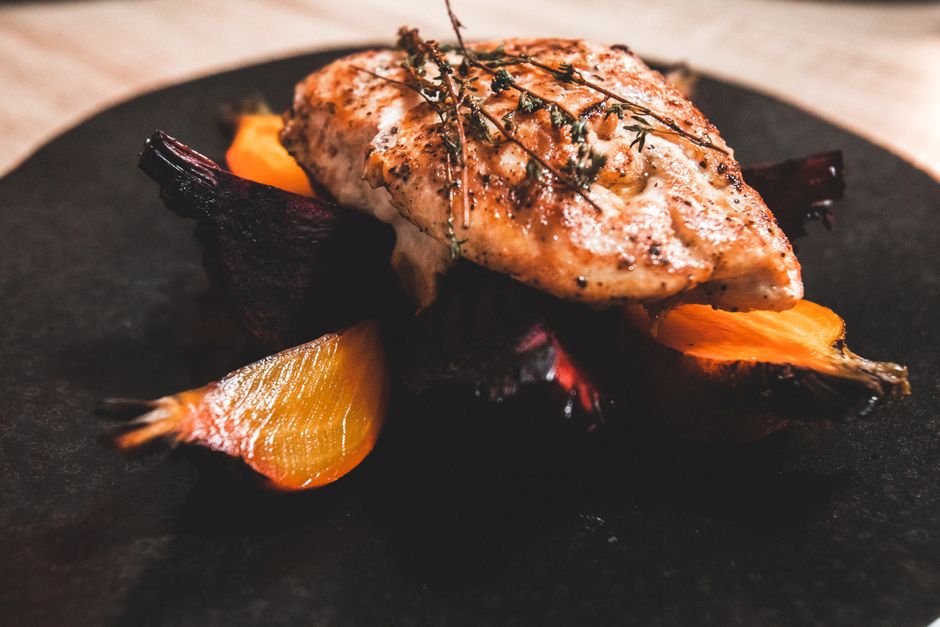
Roasted beets are whole or halved beetroots cooked slowly in a dry oven, usually wrapped in foil or covered on a sheet pan, until a knife slides through with no resistance. Roasting concentrates the beet's natural sugars and mutes the raw, earthy bitterness that comes through in boiled or steamed beets, leaving a denser, sweeter, almost caramelized vegetable underneath a skin that slips off easily once cooled.
Varieties
Golden beets have a milder, sweeter flavor than red beets and don't bleed color, which makes them easier to mix into a dish without staining everything else. Chioggia beets, with their pink and white candy-stripe interior, taste similar to red beets but lose their striped pattern once roasted or cooked at all.
Buying tips
Choose beets that are firm with smooth, unblemished skin and no soft spots; smaller and medium beets roast more evenly and taste sweeter than very large ones, which can turn woody. If the leafy tops are still attached and look fresh and unwilted, that's a sign the beet itself is fresh too.
Substitutes
Steamed or boiled beets — 1:1
Faster than roasting but wetter and less sweet; pat dry and toss with a little oil before using in a recipe written for roasted beets.
Vacuum-packed pre-cooked beets — 1:1
Sold in the produce section, already peeled and cooked; texture is close to steamed, not roasted, but workable in salads and grain bowls.
Canned whole or sliced beets — 1:1
Softer and more acidic from the brine; drain and rinse well and expect a milder, less concentrated flavor than roasting gives.
Raw beets, grated or shaved thin — 1:1 by weight
No roasting required; works in slaws and salads where a crisp, raw texture is fine, but the flavor is sharper and more mineral.
Roasted carrots or parsnips — 1:1
Not a beet flavor match, but a reasonable stand-in for color and sweetness in a roasted root salad if beets aren't available.
Storage
Cooled roasted beets keep in an airtight container in the refrigerator for 4 to 5 days. Peel and cut them just before using rather than in advance, since cut surfaces bleed color onto anything they touch, including other refrigerated food. They also freeze well for up to 3 months; cube them first so they thaw quickly.
How to use
Peel while still warm by rubbing the skin off under running water or with a paper towel, then slice, cube, or wedge for salads, grain bowls, and side dishes. Roasted beets work well finished with olive oil, citrus, or vinegar, and pair especially well with goat cheese, walnuts, and bitter greens. They can also be pureed with a little stock or cream into a smooth soup base.
What it pairs with
Pairs well with goat cheese or feta, citrus segments, toasted walnuts or pistachios, balsamic vinegar, dill, and bitter greens like arugula or radicchio.
Nutrition
Beets are a good source of folate and dietary fiber, and contain nitrates that support blood flow. Roasting doesn't add meaningful calories on its own, though beets are often oiled before or after cooking, which does.
FAQ
Do I need to peel beets before roasting?
No, roast them unpeeled with the skin on to hold in moisture; the skin rubs off easily by hand once the beets are cooked and cool enough to handle.
How long do beets take to roast?
Medium beets wrapped in foil at 400°F typically take 45 to 60 minutes; unwrapped beets on a sheet pan take slightly longer since they lose more moisture. A paring knife should meet no resistance when they're done.
Why did my roasted beets turn out tough or woody?
This usually means the beets were very large or old. Choose beets no bigger than a tennis ball and check for firmness without soft or wrinkled patches when buying.
How do I stop beet juice from staining my hands and cutting board?
Wear gloves when peeling and use a cutting board reserved for beets or one that's dark colored; a little lemon juice and salt scrubbed on hands or a light-colored board helps lift the stain afterward.
Have roasted beets on hand? Find recipes with our Recipe Generator →