Grilled Flank Steak Recipe
Flank steak is lean and has long muscle fibers, so a short soy-lime marinade tenderizes it while high, fast heat keeps it from drying out, and slicing thin against the grain afterward is what actually makes it easy to chew.
- Prep
- 15 min
- Cook
- 10 min
- Total
- 35 min
- Servings
- 6
Ingredients
- 2 lb flank steak
- 1/4 cup olive oil
- 1/4 cup soy sauce
- 3 tbsp lime juice, fresh
- 4 cloves garlic, minced
- 2 tbsp brown sugar
- 1 tsp ground cumin
- 1 tsp black pepper, freshly ground
- 1/2 tsp red pepper flakes
- 2 tbsp cilantro, chopped, for serving
Nutrition per serving
- Calories
- 420
- Protein
- 57g
- Carbs
- 6g
- Fat
- 17g
Based on the recipe as written, one serving. Recalculates if you swap an ingredient above. An estimate only, exact values depend on the specific ingredients used.
Need different units or a different yield? Try our Conversion Calculator →
Instructions
- 1In a bowl or zip-top bag, whisk together the olive oil, soy sauce, lime juice, garlic, brown sugar, cumin, black pepper, and red pepper flakes.
- 2Add the flank steak, turning to coat fully. Marinate in the refrigerator for at least 2 hours and up to 8 hours; longer than that and the acid starts to break down the surface texture.
- 3Remove the steak from the marinade about 30 minutes before cooking to take some of the chill off, and pat it dry with paper towels. Discard the used marinade.
- 4Heat a grill or grill pan to high heat. Grill the steak for 4-5 minutes per side for medium-rare, or until an instant-read thermometer inserted into the thickest part reads 130-135°F (54-57°C).USDA safe minimum for beef, pork, lamb, veal: 145°F (63°C), plus a 3-minute rest
- 5Transfer the steak to a cutting board and let it rest, loosely tented with foil, for 10 minutes.
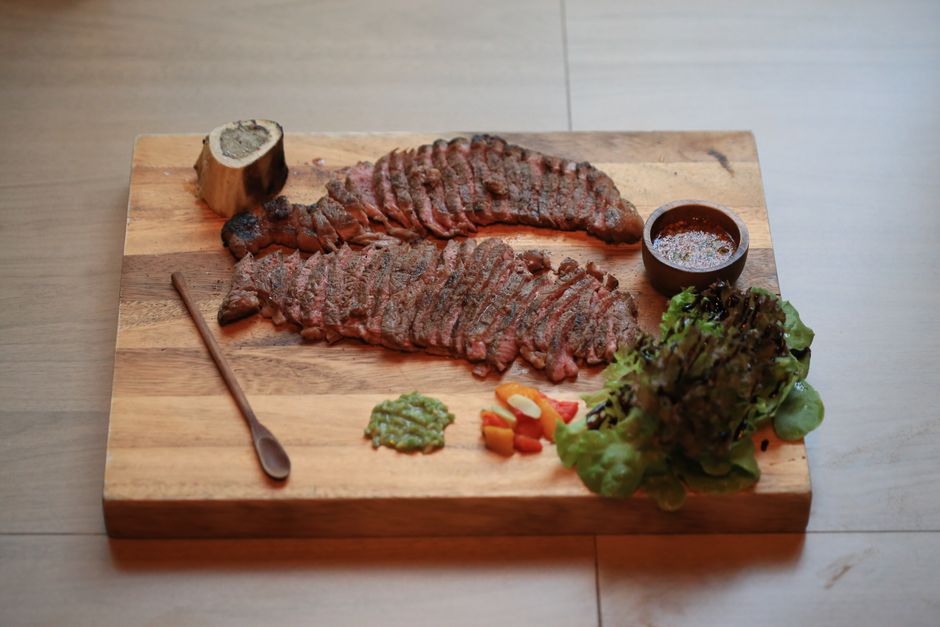
- 6Slice the steak thinly on a diagonal, cutting against the grain of the muscle fibers. Scatter with chopped cilantro and serve.
Tips & variations
- Look at the meat before slicing to identify which way the fibers run, then cut perpendicular to them; this matters more for flank steak than for almost any other cut.
- For extra char, finish the steak over the hottest part of the grill for the last minute per side.
- Leftover sliced steak works well in tacos, fajitas, salads, or stuffed into a baguette with chimichurri.
- Swap the soy-lime marinade for a chimichurri paste (parsley, garlic, red wine vinegar, olive oil) if a brighter, herbier flavor is preferred.
Storage & reheating
Store leftover sliced steak in an airtight container in the refrigerator for up to 4 days. Reheat gently in a covered skillet over low heat, or serve cold in salads and sandwiches; high heat or a microwave will toughen the meat further.
Tips from the Tulo kitchen
- Score the surface of the steak lightly with a knife before marinating to help the marinade penetrate faster.
- Bring the steak closer to room temperature before grilling so the outside doesn't overcook while the center catches up.
FAQ
What is flank steak, and how is it different from skirt steak?
Flank steak comes from the abdominal muscles and is thicker and wider than skirt steak, which comes from the diaphragm area; both are lean, long-grained cuts that need to be sliced against the grain, but skirt steak cooks faster because it's thinner.
How do I know when flank steak is done without a thermometer?
Press the center with tongs: medium-rare feels springy but yields easily, while well-done feels firm throughout. A thermometer reading 130-135°F for medium-rare is more reliable, since flank steak overcooks quickly past that point.
Can I marinate flank steak overnight?
Up to 8 hours is the practical limit; the acid and salt in most marinades will start to break down the surface into a mushy texture if left much longer.
Why is my flank steak tough even after marinating?
The most common cause is slicing with the grain instead of against it. Marinating helps flavor and slightly tenderizes the surface, but the direction of the slice is what determines how tough each bite feels.