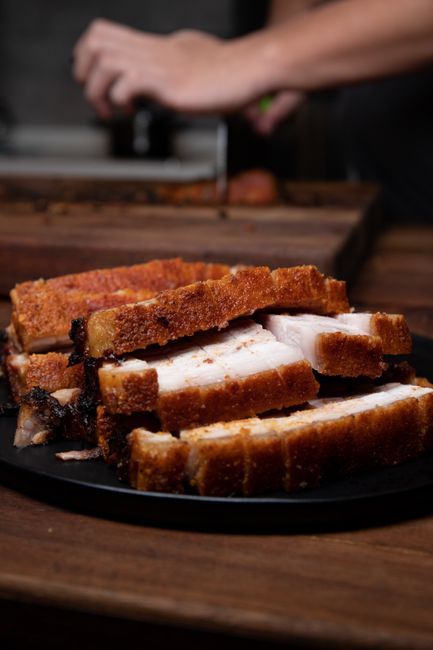
Roasted Pork Tenderloin Recipe
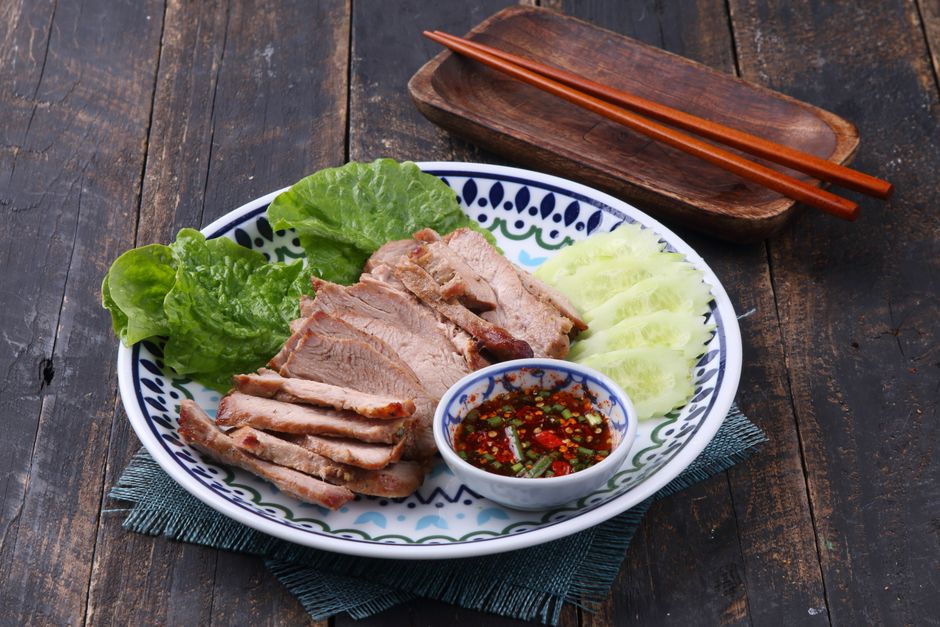
Pork tenderloin is a lean cut with almost no fat to buffer overcooking, so hitting the correct internal temperature of pork, 145°F for whole cuts, matters far more than a set cook time. Searing first in an oven-safe skillet builds a deep brown crust, then a short stint in a hot oven finishes the inside gently, and pulling it a few degrees early lets carryover heat and a short rest carry it the rest of the way without drying it out.
- Prep
- 10 min
- Cook
- 25 min
- Total
- 40 min
- Servings
- 4
Ingredients
- 1 1/2 lb pork tenderloin, trimmed of silverskin
- 2 tbsp olive oil
- 1 tsp kosher salt
- 1/2 tsp black pepper, freshly ground
- 3 cloves garlic cloves, minced
- 1 tbsp fresh rosemary, chopped
- 1 tbsp Dijon mustard
- 1 tbsp honey
Nutrition per serving
- Calories
- 128
- Protein
- 9g
- Carbs
- 5g
- Fat
- 8g
Based on the recipe as written, one serving. Recalculates if you swap an ingredient above. An estimate only, exact values depend on the specific ingredients used.
Need different units or a different yield? Try our Conversion Calculator →
Instructions
- 1Preheat the oven to 425°F (220°C). Pat the pork tenderloin dry with paper towels and trim off any remaining silverskin, it won't render and will make the meat curl unevenly.
- 2Season the tenderloin all over with salt, pepper, minced garlic, and chopped rosemary, pressing the seasoning into the surface.
- 3Heat the olive oil in a large oven-safe skillet over medium-high heat. Sear the tenderloin on all sides, about 2 minutes per side, until deeply browned.
- 4Whisk together the Dijon mustard and honey, then brush it over the seared tenderloin.
- 5Transfer the skillet directly to the oven and roast for 12-18 minutes, checking with an instant-read thermometer inserted into the thickest part starting around the 10-minute mark.
- 6Pull the tenderloin from the oven once the thermometer reads 140-145°F at the thickest part; this is the correct internal temperature of pork for whole cuts, per USDA guidance.USDA safe minimum for beef, pork, lamb, veal: 145°F (63°C), plus a 3-minute rest
- 7Tent the pork loosely with foil and let it rest for 5 minutes before slicing. The temperature will climb another 5 degrees or so as it rests.
- 8Slice into medallions and serve, spooning any pan juices over the top.
Tips & variations
- An instant-read thermometer is the only reliable way to judge pork doneness; color alone is misleading since brined or enhanced pork can stay pink even when fully cooked.
- Ground pork is a different category from whole muscle cuts like tenderloin, loin, or chops: because grinding can introduce bacteria throughout the meat rather than just on the surface, ground pork needs to reach 160°F.
- Pork chops and pork loin roasts follow the same 145°F rule as tenderloin; check the thickest part of a chop and the center of a roast, away from bone.
- If the glaze starts to darken too fast under high heat, tent the skillet loosely with foil for the last few minutes of roasting.
Storage & reheating
Store sliced pork in an airtight container in the refrigerator for up to 4 days. Reheat gently in a covered skillet over low heat with a splash of broth, or in a 300°F oven, to avoid pushing the meat past its original doneness. Freeze cooked pork for up to 2 months; thaw overnight in the refrigerator before reheating.
Tips from the Tulo kitchen
- Insert the thermometer sideways into the thickest part of the tenderloin rather than from the top, this avoids hitting the skillet or pushing straight through the other side, which gives a falsely low reading.
- Let the tenderloin sit at room temperature for 15-20 minutes before searing so the center cooks more evenly and hits temperature sooner.
FAQ
What is the correct internal temperature of pork?
For whole muscle cuts like tenderloin, loin, chops, and roasts, the USDA recommends 145°F followed by a 3-minute rest. Ground pork needs to reach 160°F because grinding can distribute bacteria throughout the meat rather than keeping it on the surface.
Is it safe to eat pork that's slightly pink in the middle?
Yes, as long as it has reached 145°F internally. Modern pork raised for the U.S. market carries a much lower trichinosis risk than in past decades, and a faint pink center at 145°F is both safe and typically juicier than well-done pork.
Why did my pork tenderloin come out dry even though I followed the recipe?
The most common cause is pulling it too late, waiting for the thermometer to read 160°F or higher instead of 140-145°F, or skipping the rest, which lets carryover heat finish the cooking gently instead of in a hot oven.
Where should I check the temperature on a pork tenderloin?
Insert the thermometer into the thickest part of the tenderloin, avoiding the thin tapered end, which cooks faster and will read a higher, misleading temperature.
Do pork chops need a different internal temperature than tenderloin?
No. Bone-in and boneless pork chops follow the same 145°F guideline as tenderloin and loin roasts; just check the thickest part of the meat, not near the bone, since bone conducts heat differently.