Spaghetti alla Carbonara Recipe
The residual heat of the just-drained pasta and rendered guanciale fat is enough to turn whisked eggs and cheese into a silky sauce without scrambling them, and starchy reserved pasta water thins that sauce to a glossy coating instead of a curdled mess.
- Prep
- 10 min
- Cook
- 20 min
- Total
- 30 min
- Servings
- 4
Ingredients
- 1 lb spaghetti
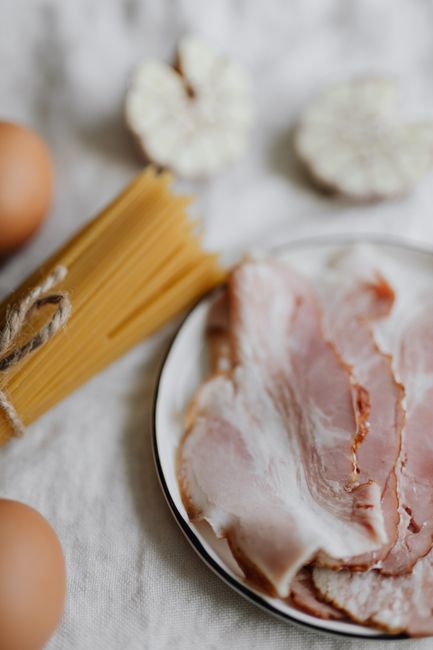
- 6 oz guanciale, diced
- 2 whole large eggs
- 2 large egg yolks
- 1 cup Pecorino Romano, finely grated
- 1 tsp black pepper, freshly cracked
- 2 tbsp kosher salt, for pasta water
Nutrition per serving
- Calories
- 750
- Protein
- 35g
- Carbs
- 84g
- Fat
- 29g
Based on the recipe as written, one serving. Recalculates if you swap an ingredient above. An estimate only, exact values depend on the specific ingredients used.
Need different units or a different yield? Try our Conversion Calculator →
Instructions
- 1Bring a large pot of water to a boil and salt it generously, it should taste like seawater.
- 2Add the spaghetti and cook according to package directions until just shy of al dente. Just before draining, scoop out and reserve at least 1 cup of the starchy pasta water.
- 3While the pasta cooks, add the diced guanciale to a large, cold skillet and set over medium heat. Cook, stirring occasionally, for 8-10 minutes, until the fat has rendered and the meat is crisp at the edges.
- 4In a medium bowl, whisk together the whole eggs, egg yolks, grated Pecorino Romano, and a generous amount of black pepper until smooth.
- 5Turn off the heat under the skillet with the guanciale. Add the drained pasta directly to the skillet and toss to coat it in the rendered fat.
- 6Working off the heat, pour the egg and cheese mixture over the pasta, tossing constantly and quickly with tongs, adding splashes of reserved pasta water as needed until the sauce turns glossy and coats every strand.
- 7Divide among warm bowls immediately and finish with extra Pecorino Romano and more cracked black pepper.
Tips & variations
- Use guanciale if it's available, it renders a milder, more delicate fat than pancetta or bacon, but either of those will work in a pinch.
- Let the eggs come to room temperature before whisking them in; cold eggs shock the sauce and make it more likely to seize into curds.
- Skip the cream. Traditional Roman carbonara has none, the sauce's creaminess comes entirely from egg, cheese, and starchy pasta water.
- For extra insurance against scrambled eggs, temper the egg mixture first by whisking in a splash of the hot reserved pasta water before adding it to the skillet.
Storage & reheating
Carbonara is best eaten immediately, since the egg-based sauce keeps cooking and thickening as it sits. Leftovers can be refrigerated in an airtight container for up to 2 days; reheat gently in a skillet over low heat with a splash of water or milk, stirring constantly, and expect a slightly less silky texture than fresh.
Tips from the Tulo kitchen
- Grate the Pecorino Romano finely on a microplane or the small holes of a box grater; coarsely grated cheese doesn't melt into the sauce as evenly and can clump.
- Keep the reserved pasta water nearby in a mug or measuring cup so it's ready to add in small splashes; adding too much at once thins the sauce past the point of clinging to the noodles.
FAQ
Why did my carbonara turn into scrambled eggs?
The eggs were likely added while the pan was still over direct heat, or the pasta wasn't hot enough to gently cook them. Always add the egg mixture off the heat and toss quickly and constantly.
Can I use bacon or pancetta instead of guanciale?
Yes. Pancetta is the closest substitute in flavor, and bacon works too, though it will add a smokier taste that isn't traditional to the dish.
Is carbonara supposed to have cream in it?
No. Authentic Roman carbonara gets its creaminess from eggs, cheese, and starchy pasta water, not from cream.
Can I make carbonara ahead of time?
It doesn't hold well since the egg sauce continues to set as it cools and thickens unevenly. It's best made just before serving and eaten right away.