
Spaghetti
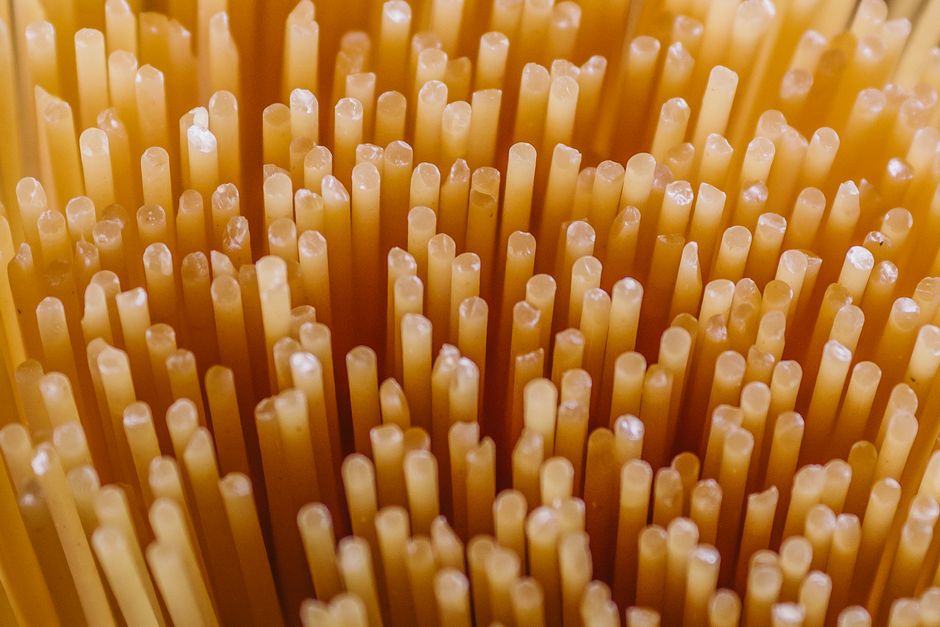
Spaghetti is a long, thin, cylindrical strand of pasta made from durum wheat semolina and water, sometimes with egg in fresh versions. The name comes from the Italian 'spago,' meaning string. It's one of the most widely produced pasta shapes in the world because its neutral shape carries almost any sauce, from thin oil-based dressings to thick meat ragus.
Varieties
Spaghettini is a thinner version of standard spaghetti, while spaghetto is technically the singular form of a single strand. Whole wheat and legume-based (chickpea, lentil) spaghetti swap in for standard versions with a denser texture and higher fiber and protein content.
Buying tips
Check the ingredient list for '100% durum wheat semolina,' which cooks up firmer and holds shape better than blends with regular flour. Bronze-die cut pasta, listed on premium packaging, has a rougher surface that grips sauce better than the smoother extruded kind.
Substitutes
Linguine — 1:1
Slightly flattened rather than round, but nearly identical cooking time and texture; works in almost any spaghetti recipe.
Angel hair (capellini) — 1:1
Much thinner and cooks in about half the time; best with light, thin sauces rather than heavy meat sauces.
Fettuccine — 1:1
Wider and flatter, holds up better under cream or heavy sauces, but changes the eating texture noticeably.
Bucatini — 1:1
Same length and thickness but hollow in the center, giving a chewier bite and better sauce cling.
Spaghetti squash strands — 1:1 by volume
Not a pasta at all; a low-carb, gluten-free swap for the noodle itself in sauced dishes, with a softer, wetter texture.
Zucchini noodles (zoodles) — 1:1 by volume
Very low starch and higher water content, so sauces need to be thicker or reduced to avoid a watery dish.
Storage
Store dried spaghetti in its original package or an airtight container in a cool, dry pantry, where it keeps well for one to two years. Once cooked, refrigerate in a sealed container tossed with a little oil to prevent sticking, and use within three to four days. Fresh, uncooked spaghetti should be refrigerated and used within a day or two, or frozen for up to two months.
How to use
Boil in generously salted water until al dente, typically 8 to 11 minutes for standard dried spaghetti, then toss immediately with sauce rather than draining and letting it sit. Reserve a cup of the starchy pasta water before draining to loosen and bind sauces. Works with tomato-based sauces, garlic and oil (aglio e olio), carbonara, bolognese, and cold pasta salads.
What it pairs with
Pairs well with olive oil, garlic, Parmesan, tomatoes, basil, ground beef or pork, shellfish like clams and shrimp, and red wine on the side.
Nutrition
A 2-ounce (56g) serving of dried spaghetti provides roughly 200 calories, 42g carbohydrates, and 7g protein. Whole wheat versions roughly double the fiber content, from about 2g to 5-6g per serving.
FAQ
Why does spaghetti stick together after cooking?
Starch released during boiling coats the strands; without enough sauce or a toss of oil right after draining, that starch causes clumping as the pasta cools.
How much dried spaghetti equals a serving?
About 2 ounces (56g) dry, roughly the diameter of a quarter held in a bundle, is a standard single serving before cooking.
Should you break spaghetti in half before boiling?
No, it's not necessary and it shortens the noodle for no benefit; a pot with enough water lets full-length strands submerge and soften on their own within a minute.
Is spaghetti the same as vermicelli?
No. Vermicelli is thinner than spaghetti, closer to angel hair, and in some Asian cuisines refers to rice-based noodles rather than wheat pasta.
Have spaghetti on hand? Find recipes with our Recipe Generator →