Ground Beef
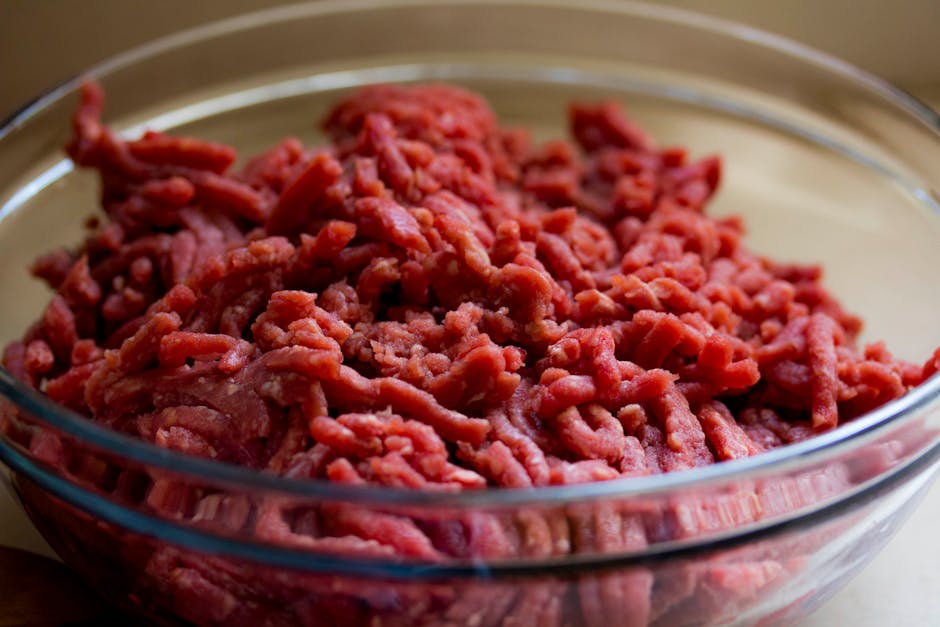
Ground beef is beef trimmings run through a grinder, sold by lean-to-fat ratio (like 80/20 or 90/10) rather than by cut name. The fat percentage determines how juicy a burger turns out and how much it shrinks on the grill, and unlike a steak, ground beef needs to be cooked to a specific safe internal temperature all the way through because grinding mixes any surface bacteria throughout the meat.
Varieties
The lean-to-fat ratio (80/20, 85/15, 90/10) matters more for burgers than the specific cut name. Ground chuck (from the shoulder) is the standard burger choice for its fat content and flavor; ground round and ground sirloin are leaner and better suited to dishes where the meat is simmered or sauced rather than grilled dry.
Buying tips
Choose beef that's bright cherry-red on the surface, not brown or gray, and check the sell-by date. For burgers specifically, 80/20 chuck gives the best sear and moisture; anything leaner than 90/10 tends to cook up dry unless mixed with fat or moisture. Ground beef labeled 'ground chuck' or 'ground sirloin' has a known cut source, while plain 'ground beef' can be a blend of trimmings.
Substitutes
Ground turkey (85/15 or 93/7) — 1:1
Leaner and drier than beef; add a tablespoon of olive oil or grated onion per pound to keep patties from drying out. Must reach 165°F, not 160°F.
Ground chicken — 1:1
Milder flavor and softer texture; mix with breadcrumbs or an egg to help patties hold together on the grill. Also requires 165°F.
Ground pork — 1:1
Fattier and sweeter than beef; works well blended half-and-half with ground beef for extra juiciness. Needs 160°F like beef.
Ground bison — 1:1
Very lean (often under 10% fat) and cooks faster than beef; pull patties a few degrees early or they turn dense and dry. Still needs 160°F.
Plant-based ground crumbles (pea or soy protein) — 1:1
Pre-formed patties are engineered to sear and brown like beef but don't carry the same bacterial risk; follow package temp, usually 165°F for food safety of the binder ingredients.
Storage
Keep raw ground beef in its sealed package on the coldest shelf of the refrigerator and use within 1-2 days, or freeze for up to 4 months in an airtight bag with air pressed out. Cooked burgers keep in the fridge for 3-4 days. Never refreeze ground beef that's already been thawed and cooked without chilling it first.
How to use
For burgers, use 80/20 ground chuck for the best balance of flavor and juiciness; leaner blends like 93/7 work better for meatloaf or tacos where fat isn't rendering off over a grate. Form patties about 3/4 inch thick with a shallow dimple in the center so they cook flat instead of puffing into a dome. Cook ground beef burgers to an internal temperature of 160°F measured at the thickest part with an instant-read thermometer; this is the USDA's safe minimum for ground beef and isn't a matter of preference the way steak doneness is, since grinding distributes any surface bacteria through the whole patty rather than leaving it on the exterior where searing kills it.
What it pairs with
Classic burger pairings include sharp cheddar, American cheese, caramelized onions, and a toasted brioche or potato bun. Fattier 80/20 blends stand up well to smoky barbecue sauce, while leaner blends pair better with moisture-adding toppings like avocado or a fried egg.
Nutrition
An 80/20 beef patty runs roughly 20-25 grams of protein and 20 grams of fat per 4-ounce serving, along with iron, zinc, and vitamin B12. Switching to 90/10 or 93/7 cuts the fat by close to half but also reduces juiciness and flavor noticeably.
FAQ
What temperature should a burger be cooked to?
160°F internal temperature, checked with an instant-read thermometer at the center of the patty. This is the USDA safe minimum for ground beef, not a doneness preference like medium-rare on a steak.
Is it safe to eat a medium-rare burger at 145°F?
No, not with standard ground beef. 145°F is the safe temperature for a whole cut like a steak or roast, where bacteria live only on the surface and get killed by searing. Grinding mixes any surface bacteria throughout the meat, so ground beef needs to reach 160°F all the way through.
Why do restaurant burgers sometimes come out pink in the middle if 160°F is the rule?
Some restaurants grind their own beef in-house under controlled sanitation and may offer a rare or medium burger with a disclosure, since the risk profile differs from pre-ground supermarket beef. At home, without that level of control, 160°F is the safe target.
How can I check if a burger is done without a thermometer?
Juices running clear instead of pink is a rough indicator but not reliable, since color can vary with myoglobin content and grill temperature. An instant-read thermometer inserted sideways into the thickest part of the patty is the only accurate way to confirm 160°F.
Does the internal temperature differ for turkey or chicken burgers?
Yes, ground poultry burgers need to reach 165°F, five degrees higher than ground beef or pork, because poultry carries different bacteria (like salmonella) that require a higher kill temperature.
Have ground beef on hand? Find recipes with our Recipe Generator →