Spaghetti
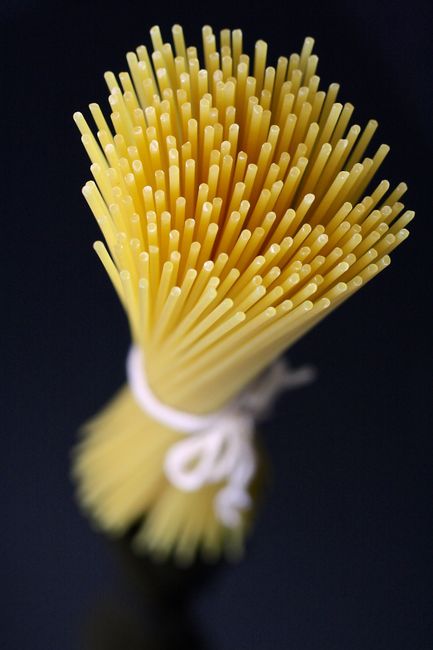
Spaghetti is a long, thin, cylindrical pasta made from durum wheat semolina and water, occasionally with egg in fresh versions. The name comes from the Italian word for 'thin string.' It's one of the most common pasta shapes worldwide because it holds sauce well along its length while cooking evenly in under 12 minutes.
Varieties
Spaghettini is a thinner version of standard spaghetti, while spaghettoni is thicker; both cook faster or slower accordingly. Vermicelli looks similar but is technically thinner still and more common in Southeast Asian cooking, where it's often made from rice rather than wheat.
Buying tips
Check the box for 'bronze-cut' or 'trafilata al bronzo' on Italian brands, which gives the surface more texture for sauce to grip. Avoid boxes with a lot of broken strands or powdery residue at the bottom, a sign of age or rough handling.
Substitutes
Linguine — 1:1
Flattened rather than round, but nearly identical in cook time and flavor; works in almost any sauced spaghetti dish.
Bucatini — 1:1
Thicker and hollow in the center, giving a chewier bite; needs 1-2 extra minutes of cooking time.
Angel hair (capellini) — 1:1
Much thinner, cooks in about 3-4 minutes, and pairs best with light oil-based sauces rather than heavy meat sauces.
Whole wheat spaghetti — 1:1
Same shape and cook time but a nuttier flavor and firmer texture; a direct swap for anyone wanting more fiber.
Zucchini noodles (zoodles) — 1:1 by volume
A low-carb, gluten-free substitute with a much softer bite and higher water content; sauce clings less, so use a thicker sauce.
Rice noodles or gluten-free spaghetti — 1:1
Best gluten-free swap that keeps the same shape and sauce-holding ability, though it can turn gummy if overcooked.
Storage
Store dried spaghetti in its original box or an airtight container in a cool, dry pantry, where it keeps for up to two years. Cooked spaghetti keeps in a sealed container in the refrigerator for 3-4 days; toss with a little oil first to keep strands from clumping.
How to use
Boil in generously salted water until al dente, usually 8-11 minutes depending on thickness, then toss immediately with sauce rather than letting it sit dry. Works in classic tomato and meat sauces, aglio e olio, carbonara, cold pasta salads, and baked dishes like spaghetti pie.
What it pairs with
Pairs well with tomato-based sauces, garlic and olive oil, clams and other shellfish, and rich cheeses like Parmesan and pecorino. Lighter sauces suit thinner cuts, while thicker cuts like bucatini hold up to heavier ragùs.
Nutrition
A 2-ounce (56g) dry serving of regular spaghetti has around 200 calories and 7g of protein but only about 2g of fiber; whole wheat spaghetti roughly doubles the fiber content for the same calories.
FAQ
How much dry spaghetti counts as one serving?
About 2 ounces (56g) per person, which is roughly the diameter of a quarter when bundled together.
Why does my spaghetti always clump together after cooking?
Insufficient water or not stirring in the first minute of boiling lets the starch on the surface glue strands together; use at least 4 quarts of water per pound of pasta.
Should you rinse spaghetti after boiling?
No, rinsing washes away the starch that helps sauce cling to the noodles; instead, drain and toss immediately with sauce or a small amount of oil.
Can spaghetti be cooked directly in sauce instead of water?
Yes, using the one-pan method with extra liquid; it takes a few minutes longer and releases more starch, which naturally thickens the sauce.
Have spaghetti on hand? Find recipes with our Recipe Generator →
Recipes using spaghetti
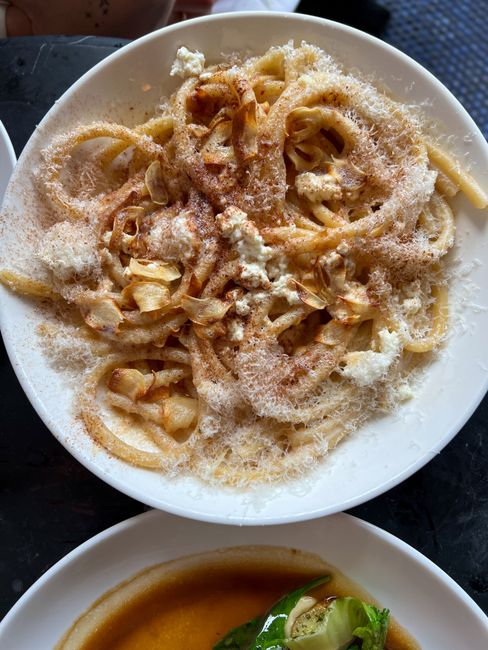
Garlic Noodles Recipe
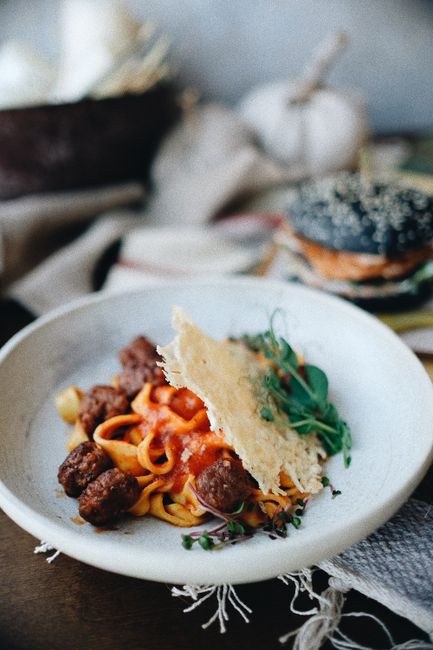
Olive Garden Copycat Never-Ending Pasta Bowl Recipe
Dirty Spaghetti Recipe
Spaghetti alla Carbonara Recipe